


This article is a sponsored feature from Mining.com.au partner Horizon Minerals. It is not financial advice. Talk to a registered financial expert before making investment decisions.
Processing access in Western Australia’s Goldfields is tightening, and it’s reshaping the playing field.
Mills that once had room for third‑party ore are now running close to capacity, leaving juniors and mid-tiers with less certainty as they compete for fewer tolling slots.
The old model of trucking ore to whoever had space is fading fast.
Major operators are prioritising their own feed, expansions are slow, and new discoveries are outpacing new infrastructure.
For smaller producers, that means longer waits, thinner margins, and development timelines dictated by someone else’s schedule.
It’s a structural shift that’s forcing a rethink across the region.
Early moves to control processing future
“Resourcing and infrastructure is pretty tight. So that’s a plus for us”, says mid-tier gold producer Horizon Minerals (ASX:HRZ) Managing Director and CEO, Grant Haywood. “We’ve got our own plant, but access to skilled (and good quality) people may become tougher, particularly in the Goldfields.”
Horizon is one of the few mining companies in the region responding rather than reacting.
Cash‑flow campaigns have bought breathing room, but the strategy is clearly moving beyond tolling.
The company is positioning itself to control its own processing future, not rely on the goodwill or spare capacity of others.
Black Swan conversion a strategic turning point
That’s where the Black Swan conversion comes in.
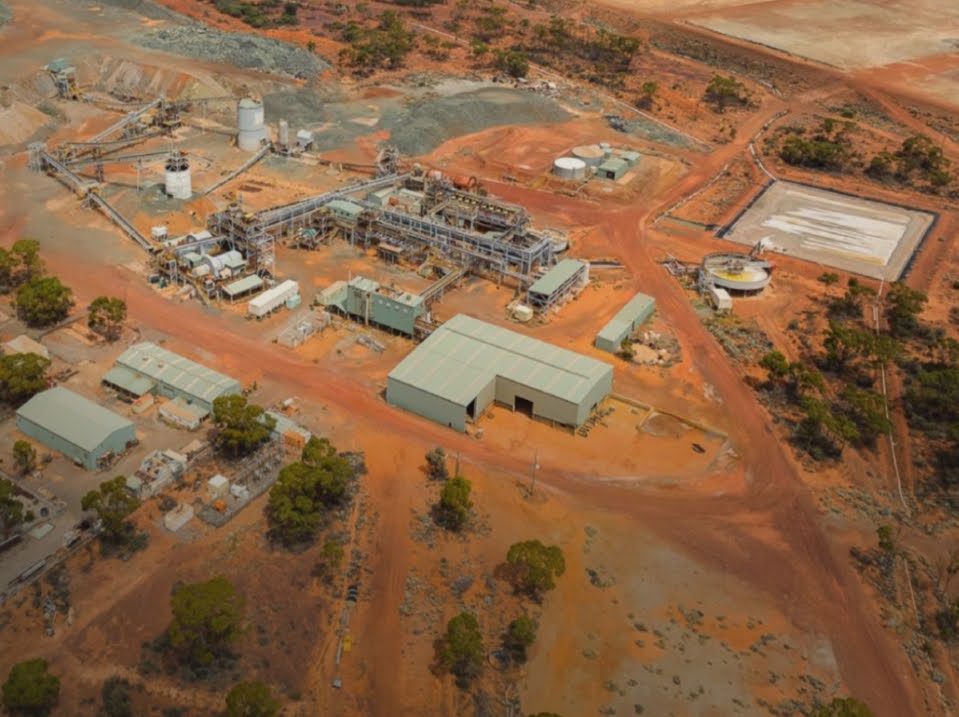
A capital‑light refurbishment of a 2.2 million tonnes per annum (Mtpa) plant in a tightening market isn’t just a technical exercise, it’s a strategic pivot.
Haywood tells Mining.com.au: “We think we’ve got a really strategic asset where Black Swan sits, compared to the other mills in the Goldfields”.
“We haven’t released our feasibility studies on Black Swan yet, but we’ve had people knocking on our door for over six months on getting an allocation to Black Swan and they know we’re not turning this project on until mid-‘27. That’s still a year-and-a-half away and people are already knocking down the door trying to get access to a plant because they know we’re building one, and therefore there’s a bit more infrastructure coming into the region.”
But its refurbishment, he adds, can be a “double-edged sword” and is not risk-free.
The plant has been sitting idle for more than a decade, and even though it has held up better than expected, any restart of long‑rested infrastructure comes with the chance of surprises. Horizon has tried to get ahead of that by leaning on GR Engineering (ASX:GNG) for the Prefeasibility Study (PFS) and repeated site visits, which has taken a fair chunk of the technical uncertainty out of the equation.
“We think we’ve got a really strategic asset where Black Swan sits, compared to the other mills in the Goldfields”
Where the project really picks up speed is on approvals. Black Swan’s brownfields status means most of the existing infrastructure can be brought back online without new permits. The only fresh approvals needed relate to the new gold circuit — a works approval and a mining proposal. The tailings facility is already well progressed, with multiple lifts signed off and enough capacity locked in for several years. In effect, Horizon is cutting years off the standard permitting timeline, giving it a structural advantage that helps balance out the inherent risks of refurbishment.
Haywood points out that securing grid power alone normally means a six‑month feasibility phase followed by a year of construction — an 18‑month lead time before anything even switches on. Horizon already has that in place, along with established water supply and existing site infrastructure. In practical terms, much of what typically slows a new build has already been permitted and built. That cuts risk on the approvals front and accelerates the entire development timeline.
He explains that on the flip side, when building from scratch, once you start construction it’s about 12 months to build (and they can build plants in 12 months), but typically it takes two to three years to get the permitting in place, plus all the study work before that to even start the permitting. “You’re looking at five years”, Haywood says.
Haywood adds: “We can really fast-track our process and we think we’ve de-risked it from the refurbishment side and then the CIL [carbon-in-leach] circuit on the back will be brand new anyway.”
Burbanks and beyond
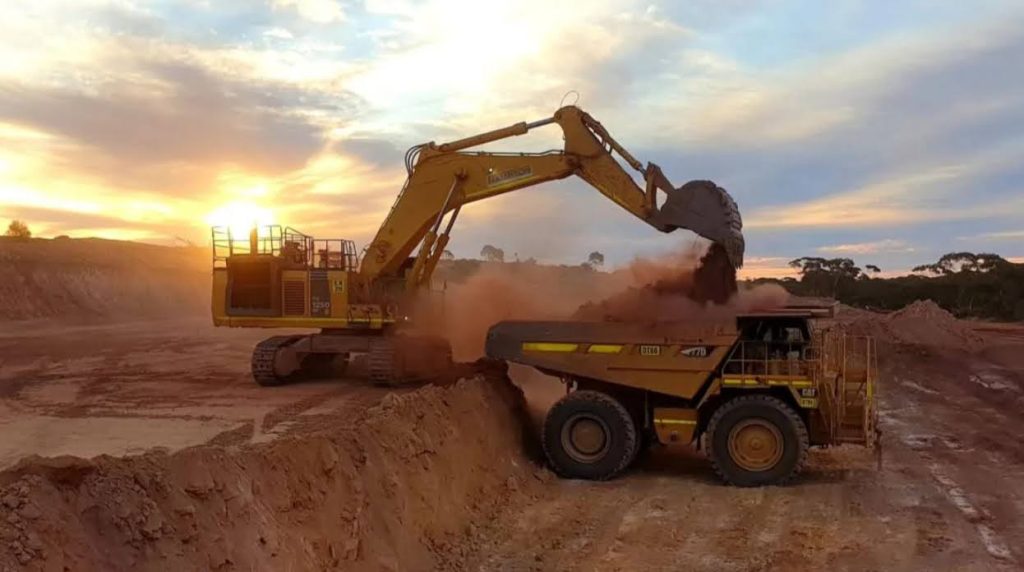
Horizon sees its Burbanks gold project as one of its cornerstone assets.
Boorara and Burbanks are the backbone of Horizon’s future feed strategy, with Haywood noting that together they make up roughly half of the company’s resource base.
Burbanks, in particular, stands out for its grade profile — narrow but high grade, the kind of system he describes as “a typical Coolgardie” system. It’s the sort of asset that can materially lift a production profile once it’s fully understood.
The challenge is classification. A large portion of Burbanks sits in the inferred category, which limits what Horizon can convert into reserves and lowers confidence in the current model.
The company is running a 30,000m program, with the first half focused on infill drilling to tighten spacing, upgrade the resource, and remove some of the geological uncertainty.
Until that work is complete, Burbanks is positioned more as a year‑two and year‑three contributor rather than immediate feed. The potential is clear, but Horizon needs the data density to unlock it — and that’s exactly what this drilling campaign is designed to deliver.
Regional experience means strategic advantage
Haywood backs the company’s 150 years of combined experience in the Goldfields and sees Horizon playing a key role in unlocking stranded deposits across the region.
He sees Black Swan as the lever that changes Horizon’s role in the region. With the plant due online in mid‑2027, he argues it will “help unlock some of that processing capacity that’s really not available in the region at the moment”. That flexibility extends to how Horizon might use it — acquisitions, JVs, or rights‑to‑mine structures are all on the table, depending on what delivers the best return.
He’s blunt about why Horizon is open to multiple deal types: the company has been on the other side of the equation. Raising capital as a junior is difficult, and he says that if others have development‑ready assets, Horizon can step in and “help them fund their aspirations and provide them with cash flow”. The team is constantly reviewing assets and potential investments, with Black Swan shifting the company’s centre of gravity further northeast of Kalgoorlie.
What matters, he says, is discipline. Horizon doesn’t want to sit on ground it won’t develop, but if an asset is close to production or simply needs capital to move forward, the company is prepared to take it on. The strategy is simple: unlock stranded ounces, improve the portfolio, and use Black Swan as the anchor that makes those deals viable.
Multi‑commodity optionality, long‑term upside potential
Horizon has some other sleepers in its stable as well.
Its Nimbus silver-zinc project has 20 million ounces of silver in it and 104,000 tonnes of zinc. And there’s a high-grade core of 6.4 million ounces of silver, which is running at 774 grams per tonne. This makes it a very high-grade gold-equivalent mine. Also, there’s the nickel option from the Poseidon merger as well.
But Horizon isn’t overselling it, which is refreshing.
The emerging gold trend at Black Swan suggests the company may be sitting on far more potential than the market has priced in.
“We’re dead set on being the next independent gold producer”
“We’re dead set on being the next independent gold producer”, Haywood says confidently.
“We’ve got all the fundamental pieces in place now and it’s about execution … and we’re probably one of the few development companies that are about to make that transition to an independent gold producer that hasn’t got a study in the market.
“All MDs will say it, but I think we’re hugely undervalued compared to some of our peers. We’re looking forward to getting our scoping study to market this quarter, and that’ll put some metrics around us, and it will show what our all-in sustaining cost is, and what our production profile looks like. [Horizon] has an aspirational target to be a 100,000 [ounce] producer, and we want to grow on that further. And we can deliver on that.”
The pieces are starting to align. If the execution holds, this could be one of the more compelling growth stories in WA’s Goldfields over the next couple of years.
Write to Andrew Banks at Mining.com.au
Images: Craig Manners/Unsplash & Horizon Minerals


