



If 2025 was the year gold reclaimed attention, 2026 is shaping up to be the year the precious metal tests conviction.
After clocking more than 50 all-time highs this year, the precious metal eased only briefly before regaining its upward momentum, trading around US$4,330 an ounce on the last day of 2025 (31 December). Gold’s price ticked up to around US$4,397 at the time of writing.
The World Gold Council reports that gold’s performance has been supported by a combination of heightened geopolitical and economic uncertainty, a weaker US dollar, and positive price momentum.
As previously reported at the beginning of Q4 2025, investors, industry executives, and everyday savers alike have been watching gold’s moves with a renewed intensity.
As such, the gold price is no longer just a barometer of investor sentiment, it has become a signal for the broader economic and political pulse.
Over the past month, gold’s price has risen 4.5% and is up more than 66.5% compared to the same time last year, as reported by Trading Economics.
According to Trading Economics, markets are currently pricing in two rate cuts by the Federal Reserve in 2026, amid signs of easing inflation and a weakening labour market.
But where does the market see gold for 2026?

Writing the future
JP Morgan head of global commodities strategy Natasha Kaneva says that while the gold rally will not be linear, JP Morgan believes the trends driving this rebasing higher in gold prices are not exhausted.
“The long-term trend of official reserve and investor diversification into gold has further to run,” Kaneva says.
“We expect gold demand to push prices toward US$5,000 per ounce by year-end 2026.”
Overall, JP Morgan Global research is forecasting prices to average US$5,055 an ounce by Q4 2026, rising toward US$5,400 an ounce by the end of 2027.
As reported on the 12th day of Christmas, Sunshine Metals (ASX:SHN) Managing Director Damien Keys told this news service that the world is not getting any less crazy at the moment, so “we can see a long forecast of good gold prices”.
Ready to stay ahead of the market?
Get stories like this, delivered direct to your inbox.
Keys adds that the uncertainty derived for the US with trade will be the main catalyst driving gold’s momentum, coupled with uncertainty with anything else going on with trading.
“I guess the US is spiraling into more debt. It is all great tailwinds for gold.”
WIN Metals (ASX:WIN) CEO Steve Norregaard added to this, explaining he is optimistic that the high price now is sustainable in the medium term.
“There is a lot of uncertainty worldwide, and there is a flight of money going into gold in preference to other commodities,” Norregaard says.
“So there is no reason why that won’t remain the focus whilst we’ve got world wars and uncertainty enveloping everywhere. No one’s talking about the gold price going down.”
State Street Investment Management also anticipates gold to reach US$5,000 per ounce in 2026.
In State Street’s base case forecast (US$4,000-4,500) gold prices are expected to consolidate and grind higher in 2026, probably in the high single digits or low double digit price return area as a conservative baseline.
Meanwhile, in its bull case scenario (US$4,500-5,000), the firm sees a 30% chance of gold prices hitting the US$5,000 mark. In the upside scenario, central bank and China retail demand are steady in 2026 compared to 2025, and exchange-traded fund (ETF) flows are between 75% and 100% the pace of 2025.
State Street notes that the US$5,000 price of gold is viable in 2026, especially if physical demand stays unencumbered by record global prices and the reallocation theme favours increased gold exposure.
During Q3 2025, gold demand hit 1,313 tonnes – representing the strongest quarterly total on record, as reported by the World Gold Council. ING says this demand surge was driven by investments, including purchases via ETFs, bars and coins, and buying by central banks.
CMC Markets notes that the forces driving gold’s demand are deeply rooted and unlikely to fade quickly.
New investors are entering the market, while existing holders are having little reason to sell unless they need cash or are finding a more attractive alternative. CMC says that this creates a form of momentum that underpins the longer term uptrend.

Explorers’ next chapter
With gold’s price forecast to exceed US$5,000 an ounce in 2026, gold-focused exploration companies are working to see how they can take full advantage of this early-stage bull cycle the market is currently in.
One thing remains certain among explorers and that is bringing projects into production while the gold price is high.
Speaking to Mining.com.au, Great Boulder Resources (ASX:GBR) Managing Director Andrew Paterson says the company is constantly looking at ways to accelerate the production outcome.
“At the same time we’re always growing our underlying resource base with high-quality field exploration and keeping an eye out for external opportunities,” Paterson tells this news service.
Earlier this month, Great Boulder upgraded its resource estimate of the Side Well Gold Project to 16 million tonnes @ 2 grams per tonne gold for 1.02 million ounces, with 61% fallen in the indicated category and 90% of the ounces considered prospective for open-pit mining.
The Mulga Bill deposit’s resource also increased to 642,000 ounces @ 2.4g/t, with 77% falling into the indicated category, with a grade component of 441,000 ounces @ 5.3g/t.
Paterson explains that in a selective market, companies need to show a value proposition to attract funding. For Great Boulder, there are numerous factors supporting that thesis.
“We’ve just achieved a one million ounce gold resource, we have strong positive newsflow with line of sight on our next 500,000 ounces, and we’re in a hot goldfield where several bigger companies are looking to secure mill feed for the future,” Paterson says.
The company expects three rigs to be active across its assets in the new year, with the potential to add a fourth.
Great Boulder is also expecting to finalise a mining agreement with traditional land owners followed by a grant of mining tenure and application for mining approval at the Ironbark deposit in Western Australia next year.
Paterson adds that the company is also looking for opportunities to consolidate tenure or build its project footprint in Western Australia.
“We have lots of things all at once,” he says.
The plot thickens
Rua Gold (TSX-V:RUA) is another explorer that aims to reach production in light of strong gold prices as CEO Robert Eckford tells Mining.com.au that the company seeks to be in production in 2028.
“Our project in the Reefton Goldfield on the South Island, New Zealand will have a refreshed technical report coming out in February, this will support both the commencement of studies and permitting to be permitted, designed and going into construction in 2028 and selling at these strong prices,” Eckford says.
“On the North Island we are focused on the Glamorgan Project in the Hauraki Goldfield. This is adjacent to the recently fully permitted North Waihi Mine. This is true blue sky potential with the region delivering multiple high grade multi- million ounce resources.”
Rua Gold plans to begin a 5,000m drilling program in the first half of 2026 at Glamorgan, which Eckford says is a “major catalyst” with investors looking to build positions ahead of the campaign.
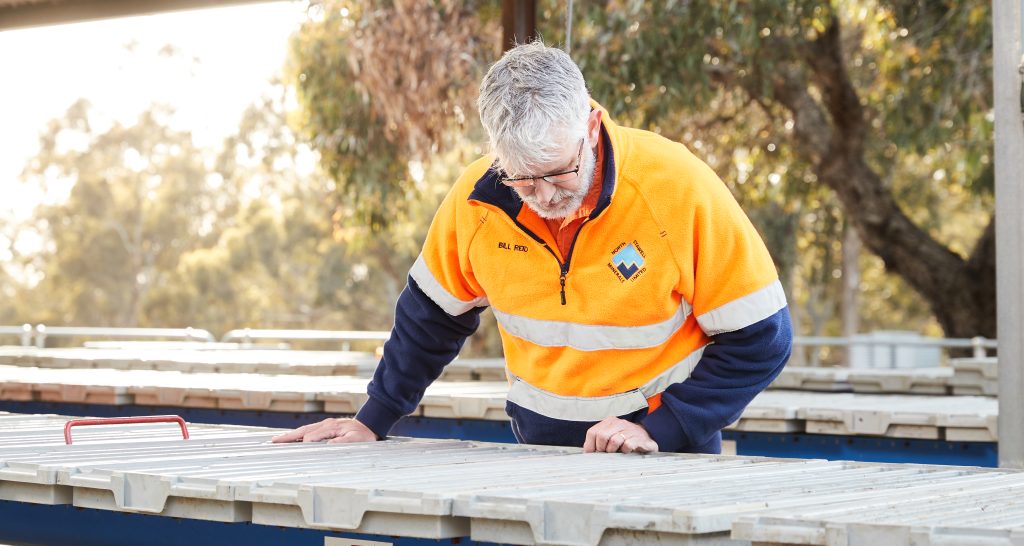
Meanwhile, North Stawell Minerals (ASX:NSM) is focusing primarily on discovery and building its resource table for 2026.
Speaking to this news service, Executive Director Campbell Olsen says having a healthy resource table is a solid hedge against most potential shocks to the national and global system.
“Obviously production of gold ore is where the primary value will be,” Olsen says.
“Secondly inventory is ‘value in the bank’ and comes a close second. Together this creates mine life, the longer the better for value.”
Olsen says that the rise in gold prices flows down through the production chain – in terms of valuation – and at the exploration level, encourages more activity.
“This is good news as investment is the only exploration lifeline. It also encourages a swarm of new and old projects to hit the market,” he says.
Olsen adds that the company has a willingness to use technology that is working well in discoveries. For example, the company’s partnership with the Commonwealth Scientific and Industrial Research Organisation (CSIRO) and fluid flow modelling has provided a focused exploration strategy and allowed North Stawell to avoid extensive background drilling and associated costs.
North Stawell has an immense amount of data of its Victorian project portfolio, which was generated by previous owners over the past 30 years.
In addition, the company has a deep relationship with Stawell Gold Mines, and as such, has access to deep learning on the type and style of mineralisation. North Stawell’s geologists are regularly visiting underground for a first hand view of mineralisation.
While gold has already delivered, the latest suggests that this is not a closing chapter. Gold’s rally may have made headlines in 2025, but the precious metal’s story is still being written.
Write to Aaliyah Rogan at Mining.com.au
Images: Mining.com.au, Great Boulder Resources & North Stawell Minerals


