Gold fell on Thursday after fresh US inflation data and surging crude oil prices reinforced bets that the Federal Reserve will raise interest rates at its policy meeting next week.
Spot gold dropped more than 1.5% to around US$4,320 ($6,026) an ounce before recovering some of its losses, while US gold futures saw a similar decline to below US$4,400 an ounce.
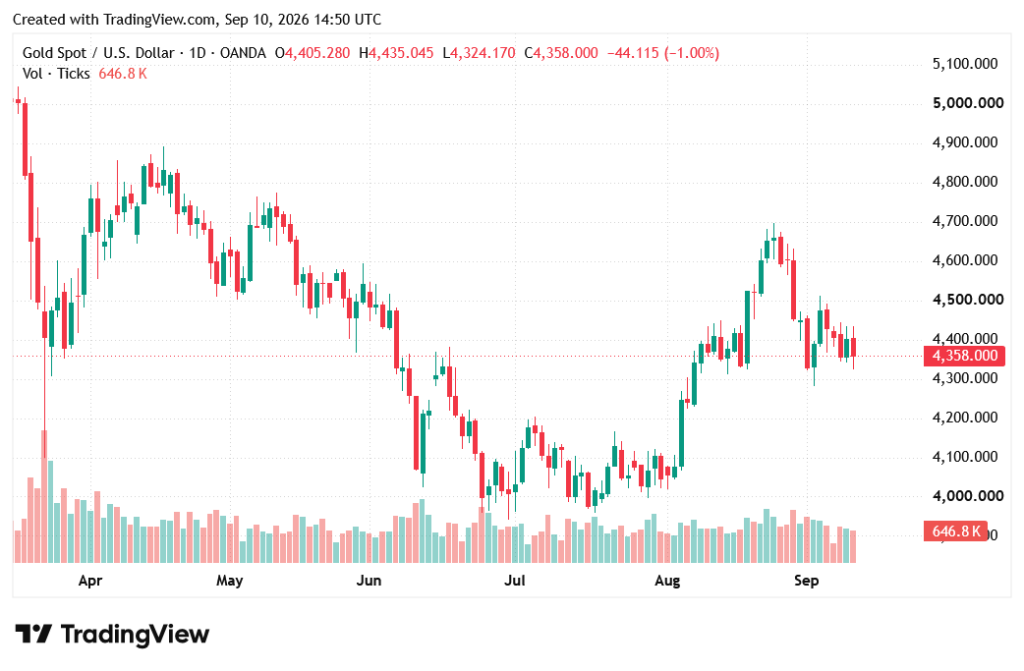
The sell-off followed the release of US producer price data for August, which came broadly in line with expectations but reaffirmed concerns that inflation remains elevated.
Energy prices were a key driver, rising 4.1% and helping push the producer price index (PPI) to an annual rate of 5.4%, well above the Fed’s 2% inflation target.
The PPI data “sort of tells us that there has been a bit of a pickup in underlying inflation in the US economy, and a part of that is due to rising energy costs”, Capital.com Senior Financial Market Analyst Kyle Rodda told Reuters.
Oil adds to inflation concerns
Energy prices have become an important gauge for the gold market in recent months, as rising costs increase inflationary pressure and strengthen the case for higher interest rates.
Higher rates generally weigh on gold because the precious metal does not pay interest, making yield-bearing assets relatively more attractive.
Those concerns intensified on Thursday as Brent crude surged above US$105 a barrel amid escalating tensions in the Middle East and fears of further disruption to global oil supplies.
Traders are now pricing in around a 70% probability of a Fed rate hike next week, up from 62% before the PPI release, according to the CME Group’s (NASDAQ:CME) FedWatch Tool.
Those expectations could shift again on Friday with the release of the more closely watched consumer price index (CPI).
Analysts see short-term pressure
Despite gold’s latest decline, some analysts view the move as a short-term reaction to inflation and interest rate expectations rather than the end of the metal’s broader recovery.
According to Bloomberg, analysts at Standard Chartered (LSE:STAN) still see gold recovering in the coming months, pointing to potential de-dollarisation and government intervention in bond markets as supportive factors.
Concerns that efforts to contain US borrowing costs amid large deficits and rising debt could gradually erode the value of the dollar helped drive a 10% rally in gold last month, reviving the so-called “debasement trade” thesis coined by JPMorgan Chase & Co (NYSE:JPM).
On Wednesday, the US Treasury announced plans to purchase up to US$6 billion of longer-dated debt, which failed to stop a sell-off in long-term bonds.
Meanwhile, a majority of economists surveyed by Reuters expect the Fed to leave rates unchanged at its 15–16 September meeting and keep them steady for the remainder of the year.
“We would expect a September hike to generate a knee-jerk correction, but not to derail the broader recovery,” UBS Group (NYSE:UBS) strategist Joni Teves wrote in a note.
“A hold would likely deliver a stronger upside response,” she adds.
With markets increasingly divided over the Fed’s next move, Friday’s CPI report could prove pivotal for gold ahead of next week’s policy decision.
Write to Jackson Chen at Mining.com.au
Image: Atlanta Fed