MDF Global MDF Global
Apple’s iPhone boom highlights critical minerals powering smartphones•Presenting a united front for Queensland’s copper sector•Thailand seeks Myanmar mine access amid arsenic pollution•Egypt to set up state-backed company to license artisanal gold miners, free detainees•Brixton closes $7.4 million raise for Thorn, Langis projects•Heliostar banks record $78.7 million for Ana Paula push•Mining giants bet billions on 2030 supply crunch•Gunnison Copper reports Q3 output, revenue surge•Triumph Gold targets $15.46 million for Yukon push•African Rainbow Minerals faces a jobs dispute at Nkomati mine•Angola seeks 10% stake in De Beers under Anglo’s proposed exit•Gold price rebounds but heads for biggest weekly loss since June•Teck copper strike reaches BC port as operator sues union•Copper benchmark rocked by miner-smelter tug-of-war•Zimbabwe mining bill targets community, environmental safeguards•Mount Isa critical minerals hub secures Feasibility Study funding•Eramet initiates $814.5 million capital raise to reduce debt•Richemont backs natural gemstones, declines De Beers comment•‘Tis the season for administration as Comlek falls a second time•OceanaGold Philippines trials wireless blasting at Didipio mine Apple’s iPhone boom highlights critical minerals powering smartphones•Presenting a united front for Queensland’s copper sector•Thailand seeks Myanmar mine access amid arsenic pollution•Egypt to set up state-backed company to license artisanal gold miners, free detainees•Brixton closes $7.4 million raise for Thorn, Langis projects•Heliostar banks record $78.7 million for Ana Paula push•Mining giants bet billions on 2030 supply crunch•Gunnison Copper reports Q3 output, revenue surge•Triumph Gold targets $15.46 million for Yukon push•African Rainbow Minerals faces a jobs dispute at Nkomati mine•Angola seeks 10% stake in De Beers under Anglo’s proposed exit•Gold price rebounds but heads for biggest weekly loss since June•Teck copper strike reaches BC port as operator sues union•Copper benchmark rocked by miner-smelter tug-of-war•Zimbabwe mining bill targets community, environmental safeguards•Mount Isa critical minerals hub secures Feasibility Study funding•Eramet initiates $814.5 million capital raise to reduce debt•Richemont backs natural gemstones, declines De Beers comment•‘Tis the season for administration as Comlek falls a second time•OceanaGold Philippines trials wireless blasting at Didipio mine
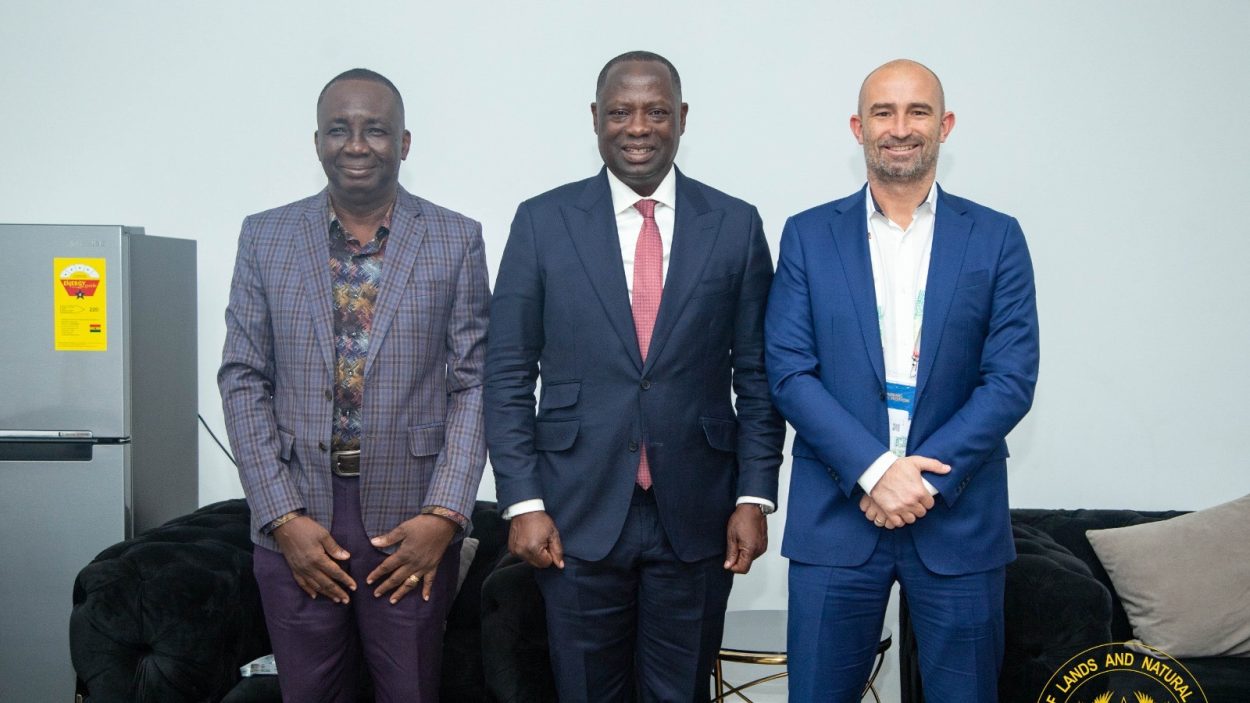
Lands and Natural Resources Minister Emmanuel Armah-Kofi Buah holding meetings with representatives of major miners in Ghana

Ghana moves to standardise mining pay

Ghana has ordered its mining regulator to standardise salaries, wages, and employment conditions across the sector as the government prepares to shift more mine operations to local contractors.

The Ministry of Lands and Natural Resources has directed the Minerals Commission to ensure workers do not suffer cuts to pay, benefits, or conditions when operations move from owner mining to contract mining.

The regulator must also develop a contractor classification system based on capacity and submit implementation proposals by 30 November.

The move follows union concerns that the government’s local-content drive could reduce employment conditions as multinational miners transfer more work to Ghanaian contractors.

Major operators affected by the broader policy include Newmont (NYSE:NEM), AngloGold Ashanti (NYSE:AU), and Zijin Mining Group (HKEX:2899).

Local-content push widens

Ghana has already been drafting safeguards around contractor transitions involving Newmont and Zijin, as previously reported by Mining.com.au.

Lands and Natural Resources Minister Emmanuel Armah-Kofi Buah says the government wants contract mining to expand Ghanaian participation without compromising workers’ welfare.

The ministry says there will be zero tolerance for unfair labour practices, cartelisation, bid-rigging, and fronting arrangements that undermine local-content objectives.

The pay standardisation push also comes amid broader scrutiny of Ghana’s mining framework, including legislative, regulatory, and cybersecurity issues.

Ghana has been tightening local-content rules across its mining industry, including employment, procurement, and ownership requirements. The Minerals Commission says the framework is intended to increase Ghanaian participation in mining while building domestic businesses and employment.

Ghana is Africa’s largest gold producer and hosts operations owned by several major international mining companies.

(with files from Reuters)

Write to France Pinzon at Mining.com.au

Main image: Ministry of Lands and Natural Resources

Add to Watch List:
Author Image
Written By France Pinzon
France is an editor and writer with more than 15 years of experience in lifestyle media publishing, brand communications, and strategy. She has held senior editorial roles across print and digital publications and co-founded a boutique digital marketing agency. She is also a novelist and a collector of typewriters.