MDF Global MDF Global
Apple’s iPhone boom highlights critical minerals powering smartphones•Presenting a united front for Queensland’s copper sector•Thailand seeks Myanmar mine access amid arsenic pollution•Egypt to set up state-backed company to license artisanal gold miners, free detainees•Brixton closes $7.4 million raise for Thorn, Langis projects•Heliostar banks record $78.7 million for Ana Paula push•Mining giants bet billions on 2030 supply crunch•Gunnison Copper reports Q3 output, revenue surge•Triumph Gold targets $15.46 million for Yukon push•African Rainbow Minerals faces a jobs dispute at Nkomati mine•Angola seeks 10% stake in De Beers under Anglo’s proposed exit•Gold price rebounds but heads for biggest weekly loss since June•Teck copper strike reaches BC port as operator sues union•Copper benchmark rocked by miner-smelter tug-of-war•Zimbabwe mining bill targets community, environmental safeguards•Mount Isa critical minerals hub secures Feasibility Study funding•Eramet initiates $814.5 million capital raise to reduce debt•Richemont backs natural gemstones, declines De Beers comment•‘Tis the season for administration as Comlek falls a second time•OceanaGold Philippines trials wireless blasting at Didipio mine Apple’s iPhone boom highlights critical minerals powering smartphones•Presenting a united front for Queensland’s copper sector•Thailand seeks Myanmar mine access amid arsenic pollution•Egypt to set up state-backed company to license artisanal gold miners, free detainees•Brixton closes $7.4 million raise for Thorn, Langis projects•Heliostar banks record $78.7 million for Ana Paula push•Mining giants bet billions on 2030 supply crunch•Gunnison Copper reports Q3 output, revenue surge•Triumph Gold targets $15.46 million for Yukon push•African Rainbow Minerals faces a jobs dispute at Nkomati mine•Angola seeks 10% stake in De Beers under Anglo’s proposed exit•Gold price rebounds but heads for biggest weekly loss since June•Teck copper strike reaches BC port as operator sues union•Copper benchmark rocked by miner-smelter tug-of-war•Zimbabwe mining bill targets community, environmental safeguards•Mount Isa critical minerals hub secures Feasibility Study funding•Eramet initiates $814.5 million capital raise to reduce debt•Richemont backs natural gemstones, declines De Beers comment•‘Tis the season for administration as Comlek falls a second time•OceanaGold Philippines trials wireless blasting at Didipio mine
Energy Fuels

Energy Fuels begins heavy rare earth expansion at White Mesa Mill

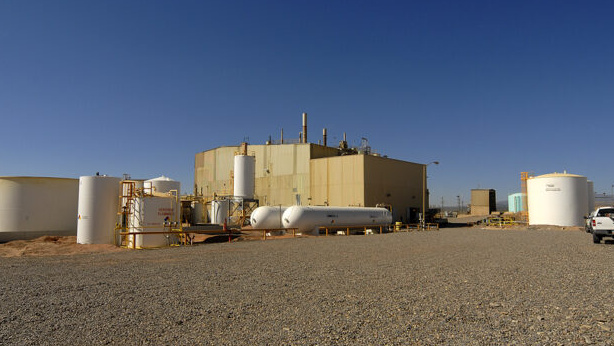
Energy Fuels (TSX:EFR) has begun expanding its White Mesa Mill in Utah to enable commercial-scale production of heavy rare earth oxides, marking the next phase of the company’s integrated mine-to-magnet strategy.

The expansion will add annual production capacity of about 20 tonnes of terbium (Tb), 120 tonnes of dysprosium (Dy), 140 tonnes of samarium (Sm), 20 tonnes of europium (Eu), and 140 tonnes of gadolinium (Gd) oxides. The first Tb and Dy circuits are expected to be commissioned by the end of 2027, with the remaining circuits scheduled for 2028.

White Mesa currently has capacity to produce 1,000 tonnes per annum of neodymium-praseodymium (NdPr) oxides, which are light rare earths.

Energy Fuels said the expansion represents a key step in developing an integrated rare earth supply chain, with the oxides destined for use in metals, alloys and permanent magnets serving the automotive, robotics, data centre, energy, and defence sectors.

“Heavy rare earth production is a severe pinch point in North American and European permanent magnet supply chains,” CEO Ross Bhappu says. “Given our ongoing success in piloting heavy rare earth oxides, we are now ready to advance to commercial-scale production.”

The expansion has been designed to process monazite concentrate from the Donald Project joint venture in Australia, where Energy Fuels is approaching a final investment decision. 

The mineral sands project is expected to supply 8,500-9,500 tonnes of monazite concentrate annually from 2028, helping fill the mill’s existing NdPr capacity while supplying feedstock for the new Tb and Dy circuits.

Energy Fuels estimates the expansion will cost about US$104 million ($150 million) and expects it to be funded largely through government grants and loans. Last month, the company received a conditional loan commitment of up to US$725 million from the US Department of War.

A second expansion is planned for 2029, supported by feedstock from Donald and the company’s other mine operations. This is expected to increase White Mesa’s annual production capacity to 6,294 tonnes of NdPr, 80 tonnes of Tb and 288 tonnes of Dy oxides.

Energy Fuels is a US-based critical materials company, focused on uranium, rare earth elements, heavy mineral sands, vanadium, and medical isotopes.

Write to Jackson Chen at Mining.com.au

Image: Energy Fuels

Add to Watch List:
Author Image
Written By Jackson Chen
Jackson is a Canadian-based writer with over a decade of experience covering the global mining industry. Over the years, he has reported on a wide range of topics, from commodities and major industry deals to emerging technologies shaping the future of mining. Jackson holds a Master's degree in economics.