

Cavalier Resources (ASX:CVR) reports testwork carried out by ALS Laboratories has returned ‘outstanding’ results from column leaching the mineralised oxide portion of the Crawford Gold resource.
The Crawford Gold Project sits centrally within the company’s exploration and development projects and is just 20km east of the township of Leonora. The project currently holds a 117,800oz gold JORC-compliant mineral resource.
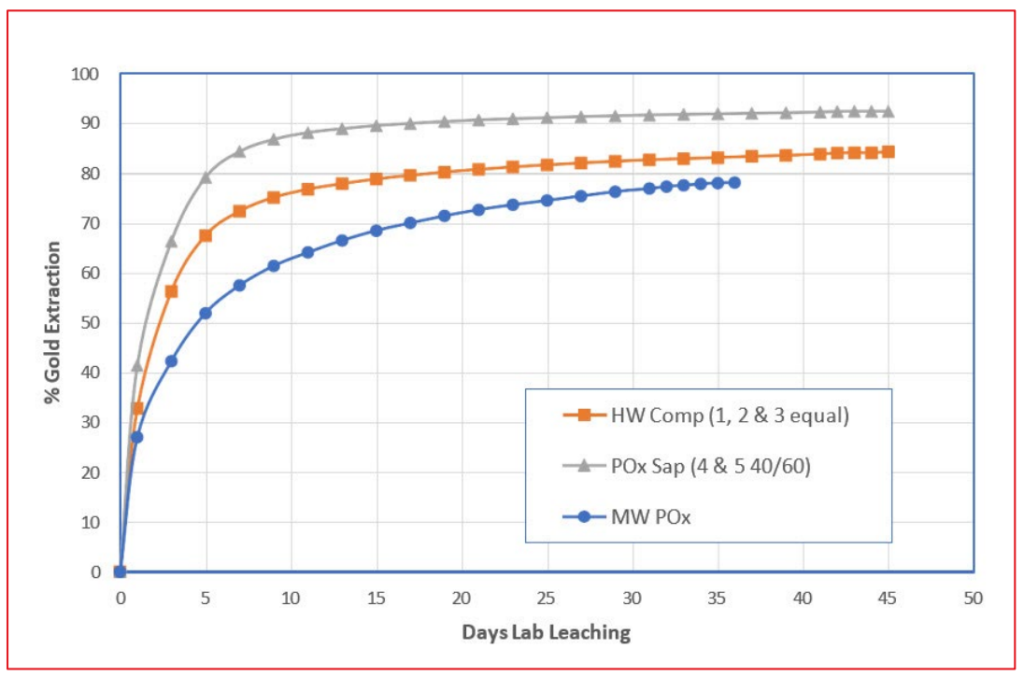
Cavalier says high recoveries range from 77.4% peaking to a high of 92.5% gold extraction.
Extraction rates were rapid compared to industry standard heap leach metrics. With low consumption rates and minimal crushing requirements, the company also anticipates relatively low heap leach operating costs.
Cavalier notes the natural pH of the oxide material not only further reduces costs due to minimising lime requirements; it also mitigates any potential acid mine drainage issues.
Daniel Tuffin, Executive Technical Director, says these results ‘far exceed’ all of the company’s prior assumptions for heap leach recoveries, extraction rates and operating costs for the gold bearing oxides at the Crawford Gold Project.
“They confirm and validate the company’s decision to pause the Prefeasibilty Study to review the potential of processing ore on site, removing the need to rely on third party mills in the greater Leonora area in order to enable the generation of future cash flows for further development and exploration activities.”
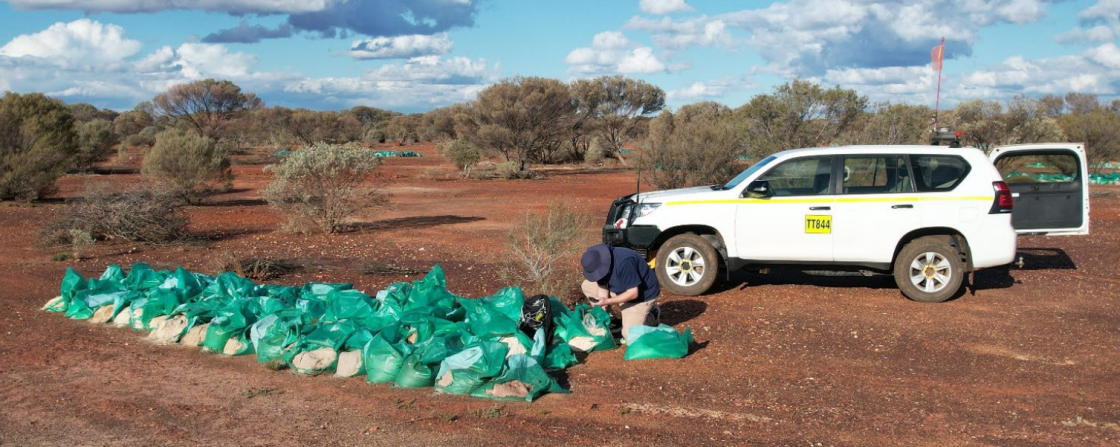
Six reverse circulation composite samples, weighing a total of 570 kilograms, were supplied to ALS representing various weathering, oxidation and rock types that occur within the oxidised portion of the Crawford gold resource.
The test program consisted of head assays, sizing analyses with fraction assays, coarse-crush intermittent bottle roll tests (IBRT), agglomeration/percolation testing and column leach testing.
Each of the 6 main composite samples was tested individually through the IBRT program, with three column tests conducted on composited material. Based on the IBRT results and sample rock type and oxidation levels, 3 columns were set up at as-received size.
Equal portions of CRC01, CRC02 and CRC03 were combined into a highly weathered (HW) composite, while CRC04 and CRC05 were combined in a 40:60 ratio to form a partially oxidised saprolitic clay composite (POx Sap).
CRC06 was leached separately as medium weathered, partially oxidised conglomerate (MW POx). The gold content was observed to be relatively consistent among the splits of each sample, indicating the absence of coarse or spotty gold. Given Cavalier’s intention to initially focus on the mining and processing of oxides, and that the resource contains significant “natural” fines due to extensive weathering, all composites supplied and tested were completely weathered to medium weathered and representative of the lithology.
This positively affected screening – all composites tested in this program passed screening at 100% weight at 80% of the final extracted gold leached out after five days for the HW and POx Sap Composites. The lower grade MW POx composite leached 66% of recovered values in 5 days.
However, Cavalier says leaching continued very slowly through to the end of the leach cycle for the MW POx composite. There was no indication of slumping or permeability issues during the tests. Cyanide consumptions were low, ranging from 0.08 kg/t for the MW POx to 0.25 kg/t for the HW composite.
The company adds that consumptions were kept low by the high solution pH provided by the cement in agglomeration and the relatively short leach times. Field consumptions would be expected to be slightly lower.
No lime was added with the exception of adjusting the initial pH of the makeup water. The cement in agglomeration assisted in maintaining off-flow solutions above pH 10. A slightly lower dose could have been employed for the HW and the POx Sap composites.
Write to Adam Orlando at Mining.com.au
Images: Cavalier Resources