Ocean advocates are pressing the 31st Conference of the Parties (COP31) negotiators to strengthen marine protections as regulators continue debating rules for commercial deep-sea mining.
The United Nations climate conference begins in Antalya, Türkiye, on 9 November and runs until 20 November. Türkiye is hosting the summit, while Australia is leading negotiations.
More than 150 experts and leaders have called for ocean protection to be incorporated into climate plans, financing arrangements, and ministerial discussions, according to the Financial Times.
A separate letter backed by 105 countries was delivered during preparatory meetings in Fiji in October. It calls for ocean-based measures to be integrated across the Paris Agreement’s implementation.
Neither initiative proposes specific mining regulations. Deep-sea mineral extraction beyond national jurisdictions is principally governed by the International Seabed Authority (ISA), rather than the UN climate convention.
However, campaigners argue that potential seabed disturbance, sediment plumes, biodiversity loss, and uncertainty surrounding the ocean’s climate functions warrant a precautionary approach.
The ISA says no commercial extraction is occurring in international waters. Its members have yet to adopt an exploitation code, with negotiations scheduled to resume in March 2027.
The authority maintains that commercial mining should not begin until comprehensive regulations are finalised. Meanwhile, 46 countries have publicly supported a moratorium or precautionary pause, according to the International Institute for Sustainable Development.
Interest in seabed minerals continues despite the unresolved international framework. The Metals Company (NASDAQ:TMC) has applied through US subsidiary TMC USA for an exploration licence and commercial recovery permit covering polymetallic nodules in the Pacific Ocean.
The US National Oceanic and Atmospheric Administration advanced the application to environmental review in August, but has not approved commercial mining.
The nodules contain manganese, nickel, cobalt, and copper used across batteries, electronics, infrastructure, and defence technologies.
Write to France Pinzon at Mining.com.au
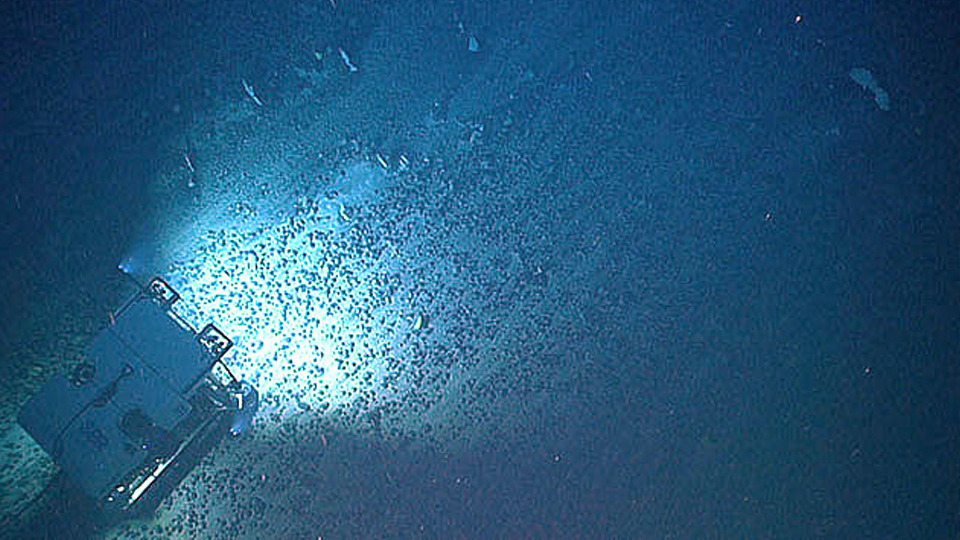
Main image: US National Oceanic and Atmospheric Administration