


This article is a sponsored feature from Mining.com.au partner Cobalt Blue Holdings Ltd. It is not financial advice. Talk to a registered financial expert before making investment decisions.
With a core focus on contributing to the ‘Energy Transition’ via its Broken Hill Cobalt Project, Cobalt Blue (ASX:COB) has emerged on the radar of key end users looking to secure responsibly sourced cobalt supply.
In order to complete next year’s Definitive Feasibility Study (DFS) and provide product samples for potential commercial partners, Cobalt Blue was driven to design, build, and commission a Demonstration Plant.
Now complete, the plant at Broken Hill is tipped to treat up to 4,000 tonnes of ore and
produce 50-100 tonnes of cobalt product.
Market conditions ripe for growth
S&P Market Intelligence reports that global demand for cobalt in 2022 is forecast to rise
14.7% to 195,000 tonnes, up from 170,000 tonnes in 2021 and 132,000 tonnes in 2020.
According to Fitch Solutions, most of this demand will flow into portable electronics including smartphones and laptops, which will account for 36.3% of global consumption.
The other significant and growingly conspicuous consumer is the automotive sector, which
accounts for 23% of demand globally. The explosive growth in electric vehicles shows no
signs of abating, as automotive manufacturers race to roll out new EV models to keep up
with burgeoning demand.
It is estimated that 85% of all EVs will be powered by cobalt-based batteries in 2030.

Demonstration Plant ramps up
The BHCP Demonstration Plant includes two main phases. Initially, mined ore will be
crushed, milled and treated to produce a cobalt-pyrite concentrate at the Pyrite Hill site.
Following this, the concentrate will be trucked to the Demonstration Plant in Broken Hill for
extraction and recovery of cobalt as mixed hydroxide precipitate (MHP) and/or cobalt sulphate.
Up to 4,000 tonnes of ore will be mined from Pyrite Hill to support 20 weeks of continuous
operation at the demonstration plant.
“The reason we are running this schedule is to test the plant’s operational performance ahead of building the full-scale plant from next year”
According to Cobalt Blue Investor Relations Manager Joel Crane, this volume of ore will result in about 800 tonnes of concentrate at a feed rate of 9 tonnes per hour.
Crane adds the demonstration plant will operate in aggregate for 20 weeks on a 24/7 basis.
“The program will be split into campaigns, to allow for analysis and optimisation of the plant performance.
“The reason we are running this schedule is to test the plant’s operational performance
ahead of building the full-scale plant from next year.”
Pyrite Hill no fool’s gold
The Pyrite Hill deposit extends for more than 1.2km along strike, over 300m down dip and
varies in thickness from 10m to 100m.
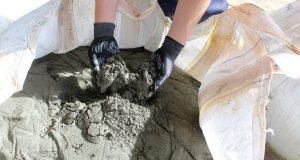
Cobalt Blue began extracting ore at the deposit in June 2022 to feed the Demonstration Plant, with Crane explaining that the ore delivered for processing so far has been separated
into 6 parcels, representing sequential portions from the mining operations.
Broken Hill Processing Plant
The Broken Hill Processing Plant forms the second component of the Demonstration Plant’s
operations. Cobalt Blue will undertake a pyrolysis process, which will see material placed
into a kiln that thermally treats the pyrite at over 700ºC to produce artificial pyrrhotite
(calcine) and elemental sulphur.
Importantly, this process will eliminate the production of sulphuric acid and the costs
associated with storing and transporting it.
The pyrrhotite is then leached at low pressure and low temperature in an autoclave with over 95% cobalt recoveries in the solution, and additional sulphate recoveries are produced
through remelting.
The final stage of this process involves removing minor metals through precipitation,
ion-exchange, and solvent extraction, and precipitation of cobalt and nickel into a mixed
hydroxide product (MHP) intermediate.
“Having sample product is invaluable during negotiations as there is no ambiguity in what we are selling”
MHP produced through Cobalt Blue’s process has achieved +30% cobalt and 7% nickel, unlike competing products which typically contain an inverse proportion of these metals.
Crane adds: “Cobalt Blue also has the option of further processing its MHP into a cobalt sulphate and a nickel sulphate solution. Target recovery targets are in the order of 90% for cobalt and 75% for sulphur.”
Representative samples power customer confidence
As the Demonstration Plant commences, the BHCP has now become an integrated mine
and refinery, with the plant producing representative samples of MHP and cobalt sulphate to prospective offtake parties.
Crane explains in order to successfully engage with potential offtake partners, there must not be any ambiguity as to the specification of the product the company produces.
“Having sample product is invaluable during negotiations as there is no ambiguity in what we are selling.
“Battery producers require qualification before final purchasing agreements, being qualified
before construction of full-scale plant gives us an advantage over other projects that do not
invest in demonstration operations.
“We are looking for key contributors to the battery supply chain that understand the
significance of reliable and ethical supply, and long-term relationships.”
Demonstrating the plant’s importance
As Crane notes, the Demonstration Plant has formed an integral part of the overall operation at BHCP.
“It is important for 3 key reasons, one, it is so we can demonstrate we can achieve what was scoped out in the Prefeasibility Study in 2020. The second is it allows optimisation of a
full-scale plant design, performance, and of the costs determined in the Definitive Feasibility Study. And thirdly, it enables Cobalt Blue to send samples to potential commercial partners for pre-qualification.”
The Demonstration Plant is designed to generate significant quantities of product for market testing and to optimise for a commercial-scale operation.
The importance of the Demonstration Plant lies in the fact that it will allow Cobalt Blue to test market these larger scale samples of up to 100kg in which the partner is examining purity and repeatability of production results. These large samples are required for acceptance testing and production of laboratory-scale batteries.
By the December quarter of 2021, the precursor Pilot Plant had produced Cobalt Blue’s first
cobalt sulphate samples which were delivered to its partners. All samples that had been sent were within commercial tolerances with feedback centred on customising products to
individual customers.
The production and dispatch of the cobalt sulphate samples were at the time an important
milestone for the project, effectively marking the end of the Pilot Plant operations and the
beginning of the next phase for the project.
“The approximate 5x grade improvement from concentration is a key project enabler, with phase one of this large scale work continuing to confirm expectations”
A complete supply qualification audit (of which the samples represent a portion) is a necessary step to securing commercial agreements that will be required to underpin the
BHCP transition to construction. Qualifying as a supplier can take some 12 months but is an essential step to a long-term project/offtake partnership.
Cobalt Blue Chief Executive Officer Joe Kaderavek adds: “The approximate 5x grade
improvement from concentration is a key project enabler, with phase one of this large scale
work continuing to confirm expectations.”

Strategic asset for Broken Hill
Cobalt Blue is a mining and mineral processing company focused on the development of the Broken Hill Cobalt Project in New South Wales, Australia.
The project, which had earlier this year received ‘major project status’ from the Australian Federal Government, is located 23km west of Broken Hill and 400km by rail from Port Pirie,
consists of three granted tenements with a total area of 63km-square.
The project is expected to generate 450 jobs during construction, with a further 410 jobs
each year during production over 17 years.