



The Mining & Energy Union (MEU) has called for stronger transition support for workers displaced by coal power plant closures as Australia strives to lower its carbon emissions.
The call follows a new report from New South Wales-based research firm e61 Institute that shows coal-fired power station workers face a far steeper income hit post-redundancy than workers in other industries.
MEU General President Tony Maher says with more and more coal-fired plants due to close over the coming decade, the workers that operate and the communities that host these power stations should not be left to shoulder the burden of decarbonisation.
“We know that we are facing a succession of closures in the years and decades ahead and that workers in those power stations are anxious about the future.
One of the ways to keep our skilled power station workers in the jobs they are trained for is through redeployment schemes which provide a pathway for redundant workers to transfer to power stations with longer operating timeframes.
As we work towards building the industries of the future, the current workforce faces immediate upheaval.“
“As we work towards building the industries of the future, the current workforce faces immediate upheaval”
He says a pooled redeployment scheme that upskills and provides new pathways for displaced workers must be part of government climate change planning to ensure that no Australian is left behind.
The e61 report examines the lived experience of displaced workers from coal-fired plants and how this compares to other sectors, using those still working in coal-fired power plants as a counterfactual. The report acknowledges that the results of the research are not necessarily causal estimates of the cost of job loss from power plant closures.
In any case, e61 reports some key findings.
Firstly, redundant workers across the board typically experience a drop in earnings of around 43% in the year after redundancy; second, coal-fired power plant workers experience a larger drop on average, with earnings down 69% in the year after redundancy; and finally, redundant workers from coal-fired plants continue to earn around 50% less after 4 years post-redundancy compared to 29% for all other workers.
This disparity is not strongly influenced by the skill of the workers, either; e61 reports that low-skilled occupations in coal plants see similar earnings losses to high-skilled occupations, but the low-skilled workers suffer greater losses than low-skilled workers in other sectors.
“The net-zero transition will bring many benefits, but it is important that any transition costs are carefully managed,” the e61 report says.
“The net-zero transition will bring many benefits, but it is important that any transition costs are carefully managed”
Of course, the idea of a ‘just transition’ — a phrase coined to describe the balance of a switch to renewable energies and job security for those in non-renewable-energy sectors — is not new by any means.
An Australian Just Transition Authority was a promise under Bill Shorten’s failed 2019 Labor campaign, with the would-be Prime Minister outlining plans to train workers displaced by the clean energy transition, prioritise community needs to minimise the impacts of coal-fired plant closures, and put displaced workers first in line for new jobs. And while policy may have remained lacking ever since, it’s still a key part of the decarbonisation conversation.
In an August 2023 report, the Australian Council of Trade Unions (ACTU) said it was ‘entirely predictable’ that taking action on climate change would come at the cost of regional jobs and economic activity.
The ACTU said at a minimum, the Australian government needed an authority to invest in re-skilling, retraining, and redeploying workers in the economies of communities impacted by the shift to renewable energy.
“Germany has managed to phase out its hard coal mines without a single forced redundancy as a result of significant government planning, investment, and institutional support over a period of 2 decades,” the ACTU said.
Clearly, Australia’s energy transition is going to have the greatest impact on the workers, family members, and communities that are employed in or are host to Australia’s remaining 18 coal-fired power stations.”
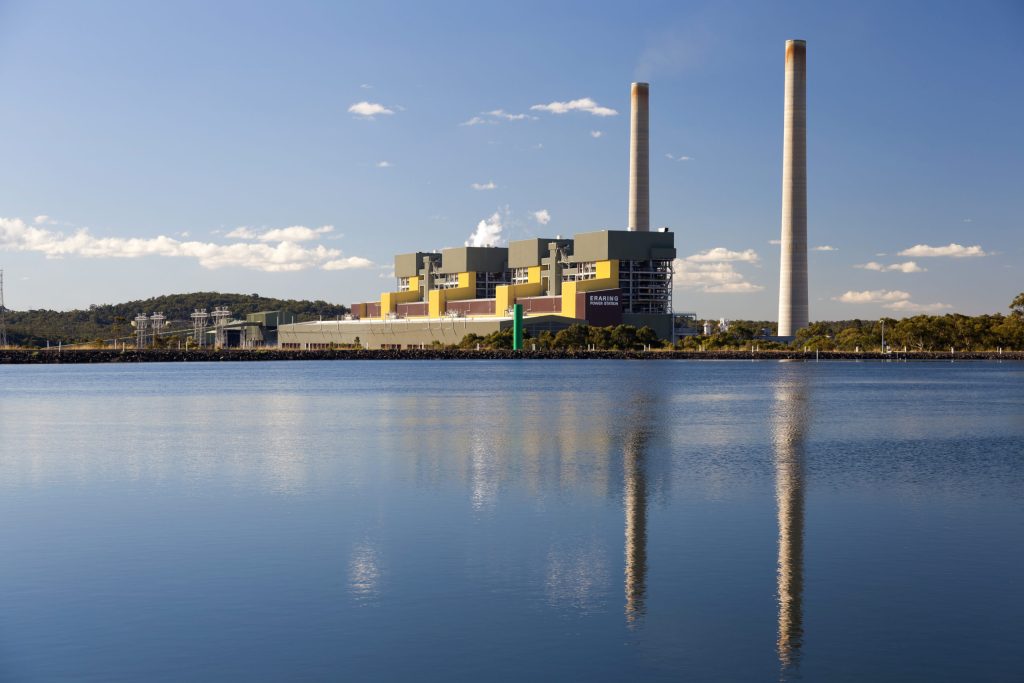
This all comes amid ongoing calls from environmental groups such as Australia’s Climate Council for the government to stop approving new coal, oil, and gas projects as existing projects are on the way out. For reference, two-thirds of old coal power plants are expected to close by 2033, according to an October speech by Daniel Westerman, the CEO of the Australian Energy Market Operator.
The Climate Council, however, believes just as renewable energy is the future of Australian power, jobs in the renewable energy sector should be the future of Australian coal power plant workers.
“Now is the time for [NSW Premier Chris Minns] to accelerate the move towards affordable, clean energy sources like wind, solar, batteries and pumped hydro,” Climate Council CEO Amanda McKenzie said in September, citing the looming closure of the 2,880-megawatt Eraring coal power plant closure, currently slated for 2025.
“The renewable energy boom is our best shot at tackling the climate crisis. With the right policies, NSW can create thousands of new clean energy jobs, drive down power bills, and continue to deliver reliable electricity supply for homes and businesses.”
“With the right policies, NSW can create thousands of new clean energy jobs, drive down power bills, and continue to deliver reliable electricity supply for homes and businesses”
Mining.com.au reached out to the Climate Council for further comment on the potential loss of income faced by workers in coal-fired power plant stations, but the organisation declined to comment.
Write to Joshua Smith at Mining.com.au
Images: Mining & Energy Union and Origin Energy


