



Energy investors are facing an interesting dynamic at the moment.
Bloomberg columnist Javier Blas says crude oil flows are currently at 80% of their pre-war levels. This is via both the Strait of Hormuz and other routes. That equates to around 12.8 million barrels of oil a day in September.
Oil prices remain high regardless. Physical ‘Dated’ Brent currently trades around US$19 ($27) above the December futures contract, indicating a tight market.
Crude oil is one component of the energy matrix. Coal is another.
Mining Weekly reports that India is burning through its coal stockpiles as hydro and solar power cannot meet total demand.
These inventories are now at the lowest level in three years. The report adds that India is experiencing its driest monsoon in 17 years as the El Niño weather pattern curbs rainfall.
This is not the only issue pressing on the coal market. Bloomberg reports that coal exports from Indonesia, the world’s largest exporter, are at a five-year low.
The restricted flow of gas through the Strait of Hormuz means more power generation has switched back to coal, sending the thermal coal price to a two-year high.
Coal remains a vital source of power in the global economy:
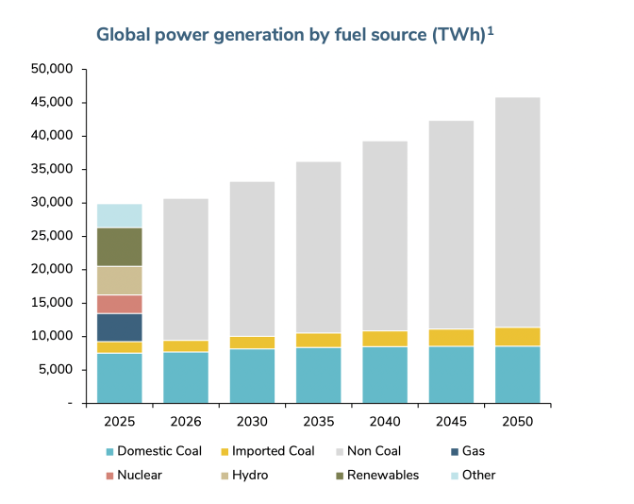
Source: New Hope (ASX:NHC)
There is now also uncertainty about whether, when, and how the US might restrict diesel exports. This would be very problematic for its trading partners, especially Europe, which is already facing high liquefied natural gas prices and lower inventories than normal.
The diesel price is up 70% in the US since the start of the Iran war.
The US economy produces about 5.3 million barrels a day of distillate fuel, of which approximately 30% is available for export.
Write to Callum Newman at Mining.com.au
Main image: Unsplash


