



China’s steel industry has been a major force shaping global iron ore demand, but signs of a prolonged slowdown are coming into focus amid property sector weaknesses.
The China Iron and Steel Association (CISA) is urging mills to restrain output, signalling softer steel demand and weaker iron ore and dry bulk flows. Shanghai Metals Market (SMM) reports CISA’s call is not mandatory but could curb feedstock demand.
Pre-holiday restocking lifted buying, with Australian shipments to China up 6.2% week-on-week in September’s third week. Only 7.8% of blast-furnace mills were profitable in mid-September, favouring cheaper Australian ore despite high coke prices; shorter Australian voyages could cut ton-mile demand.
As steel demand shifts and steelmakers face pressure to reduce emissions, the focus turns to where future supply will come from and what type of ore will be required.
For iron ore explorers and developers, that could make factors such as grade, product quality, infrastructure, and access to emerging steel markets increasingly important.
Global steel demand is forecast to grow 0.3% this year — reaching 1.724 billion tonnes (Bt), followed by a 2.2% increase in 2027 to 1.762Bt, according to the World Steel Association.
Leading iron ore producing nation
The world’s leading iron ore producer is Australia, which contains around 29% of the world’s iron ore reserves and produces more than 940 million tonnes (Mt) per year.
Australia’s iron ore sector is the nation’s biggest export earner, generating more than $137 billion per year. China is the largest buyer of Australian iron ore, purchasing more than 84% of these shipments.
Explorers and developers with projects in Australia are set to play a key role in the global iron ore sector. This includes Macro Metals (ASX:M4M), which owns two key projects — Turner and Catho Well — in Western Australia.
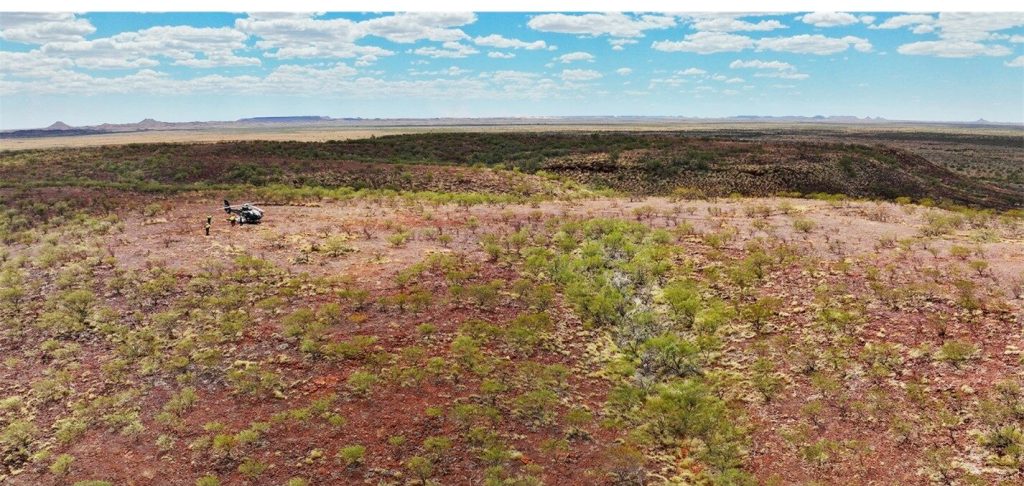
Western Australia alone produces nearly 40% of the world’s iron ore, remaining the largest global supplier of the commodity.
Macro Metals’ flagship Turner Project contains channel iron deposit (CID) style targets which are considered to be ancient, iron-rich river beds shaped by weathering and erosion.
The company sold its Agbaja Project in Nigeria in August, providing the company with net proceeds of $5.1 million after estimated transaction costs. These funds will support the advancement of both Western Australian projects and the continued growth of its mining services business in a non-dilutionary manner.
Macro Metals’ mining services strategy focuses on delivering an integrated, pit-to-port capability while also providing safe, efficient, and value-driven services to tier one, mid-tier, and emerging miners.
Ranked eighth in the world
Meanwhile, Canada is the world’s eighth largest iron ore producer, with mine production totalling 70Mt in 2024.
The Labrador Trough, a region bordering Québec and Newfoundland and Labrador, is the source of the vast majority of Canada’s iron ore. The region has over 60 years of profitable operation, with more than 2Bt of iron ore produced to date.
The district is well served, with all the required infrastructure in place. This includes low-cost renewable hydroelectric power, capacity on a common-carrier rail network, port facilities at Sept Îles, modern towns, and skilled workers.
As such, iron ore explorers and developers positioned in the district have an opportunity to demonstrate the prospectivity of their projects and how they can contribute to the future supply of iron ore.
High Tide Resources (CSE:HTRC) is one of those companies with an opportunity, as it advances its high-purity iron ore project, Labrador West Project, in the southern Labrador Trough.
The project is set among four mines, including Rio Tinto’s (ASX:RIO) and Mitsubishi’s (TYO:8306) Carol Lake mine, Champion Iron’s (ASX:CIA) Bloom Lake mine, ArcelorMittal’s (NYSE:MT) Mont-Wright mine, and Tacora Resources’ Scully mine.
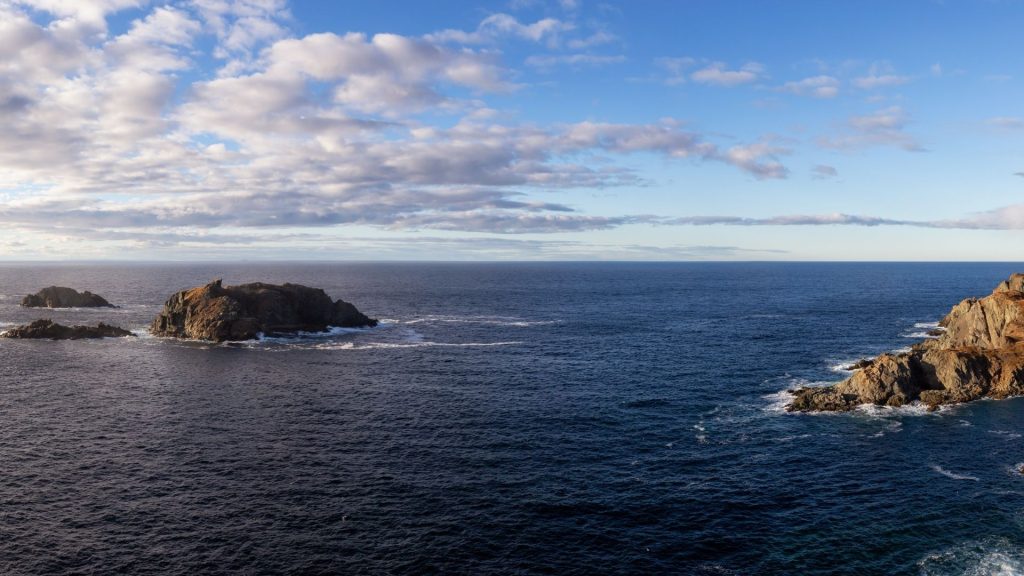
Labrador West, covering 2,475 hectares, has a maiden mineral resource estimate (MRE) of 655Mt @ 28.8% iron (Fe) in the inferred category.
The company is planning to update the project’s MRE later this year.
This follows High Tide’s return of iron oxide intercepts from six drill holes. Those results included 128.9m @ 30.2% Fe from 7.2m and 179.6m @ 26.7% Fe from 161m.
CEO Steve Roebuck says all 13 holes reported so far have intersected iron oxide mineralisation.
“Impressively, 11 of the drill holes have been outside the existing resource boundary and will be very beneficial when it comes time for the updated mineral resource estimate later this year,” Roebuck says.
China’s changing landscape is reshaping the outlook for iron ore, but it also raises questions about where future demand will come from and which projects will be best positioned to meet it.
For explorers and developers such as Macro Metals and High Tide Resources, the challenge is about more than adding tonnes to the global supply chain.
Grade, quality, infrastructure, and access to certain markets could determine which projects can remain competitive as the global steel industry enters its next phase.
Write to Aaliyah Rogan at Mining.com.au
Main image: iStock


