


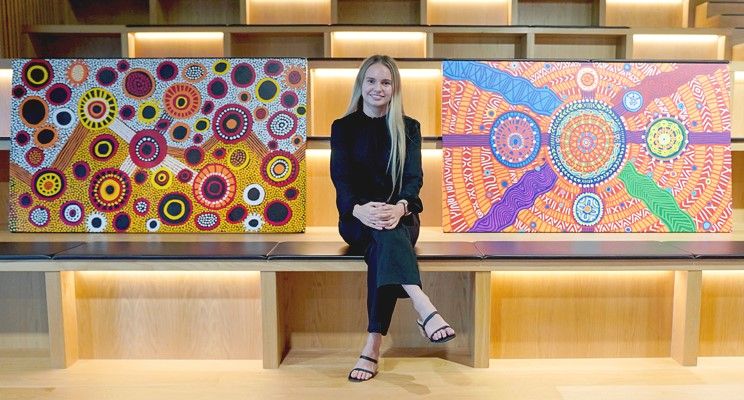
In Jameika Maddock’s first year of university, she wasn’t chasing a lifelong dream of working in energy. Rather, she was simply looking for an opportunity.
Speaking to Mining.com.au ahead of the Women in Sustainable Energy and Resources’ (WISER’s) Brisbane Champagne High Tea held last week, Maddock said an internship at Origin Energy had presented itself – not part of her grand plan, just something “worth exploring”.

“After completing my first 12-week internship, I knew I wanted to return and gain further exposure to the sector,” Maddock says.
“What stood out to me was the opportunity to be part of an industry driving meaningful change, particularly in relation to innovation and sustainability. I also saw how my legal studies could be applied in a practical and impactful way, supporting complex projects and contributing to outcomes that matter.”
The mining and energy sectors are deeply interconnected, with mining consuming 11% of global energy while also providing materials needed for the global energy transition.
According to Earth Org, global renewable electricity capacity is forecast to grow 2.6 times its 2022 level by 2030, roughly doubling the pace of 2019-2024.
Overall, renewable energy is forecast to meet more than 90% of electricity demand growth and surpass coal as the world’s largest electricity source by 2025-2026. Australia’s coal industry currently makes up 45% of the total power generation, and has long formed the backbone of Australia’s power system, as previously reported.

Humbled and empowered
Maddock says that one of her proudest moments of her career came with a title that carried both weight and possibility: becoming the first law graduate at Origin Energy (ASX:ORG).
“As an Indigenous woman, being the first was both humbling and empowering,” she tells this news service.
“It reinforced for me the importance of representation and creating pathways where they may not have existed before.”
Indigenous participation in Australia’s mining sector has continued to evolve and reach new highs as the country looks beyond engagement and more towards a collaborative approach.
According to the International Institute for Sustainable Development’s Women and the Mine of the Future Global Report, Indigenous women made up 17% of all Indigenous people employed.
In Australia, the majority of mining employment is in Western Australia and Queensland. In 2016, women made up 19% of the Indigenous workforce, a slightly higher percentage than the non-Indigenous workforce.
The International Institute for Sustainable Development reports that the proportion increases to 24% of the Aboriginal and Torres Strait Islander workforce. This proportion of Indigenous women in the mining workforce in Australia can be partly explained by dedicated government and company initiatives to increase employment opportunities for Indigenous populations in Australia.
As previously reported, the Australian Government launched a $707 million investment to its Close the Gap scheme in early 2024, with an economic development program to create 3,000 new jobs in remote communities.
Closing the Gap is a national strategy implemented by Australian governments and Aboriginal and Torres Strait Islander organisations, to improve the livelihoods of Indigenous Australians.
Employment and education targets include increasing the amount of Aboriginal and Torres Strait Islander youth between ages 15 and 24 years to 67% by 2031, and increasing the amount of Aboriginal and Torres Strait Islander people between ages 25 and 64 who are employed by 62% by 2031, as reported by the Australian Institute of Health and Welfare.
The achievement of being the first law graduate at Origin Energy was not just symbolic for Jameika Maddock. She worked closely with her team to help establish the role and shape what a law graduate pathway could look like within the organisation.

Shifting the trajectory
Maddock notes that first internship did more than introduce her to the energy sector. It shifted her trajectory.
She explains that if there has been one defining thread in her career so far, it has been learning to sit with discomfort.
“As a graduate, it took time to realise that my perspectives were genuinely valued and that I had a responsibility to contribute,” she says.
“I also had to reframe mistakes as part of the learning process rather than something to fear, using them as fuel to continuously improve. That mindset has shaped me into a more confident, resilient professional who actively seeks growth and encourages others to do the same.”
As previously reported on International Women’s Day (8 March), this year’s theme ‘Give to Gain’ feels particularly relevant to the mining industry. The theme signifies a simple, yet powerful truth: process is an exchange.
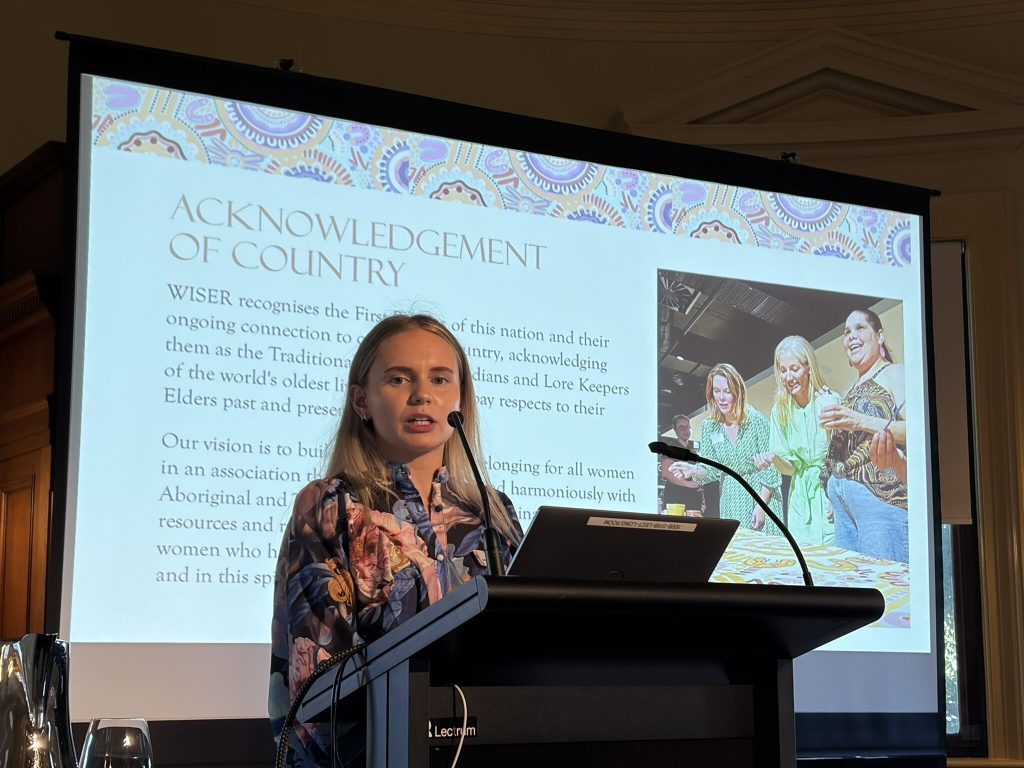
For Maddock, International Women’s Day represents support, community and gratitude – personally and professionally.
“Its a time to reflect on the women who have supported me, shared their knowledge and helped create spaces where I feel I belong and can grow,” she says.
“Professionally, I feel incredibly inspired by my current workplace, where I regularly see women in leadership and decision‑making roles. Seeing managers and leaders above me who are women reinforces that women belong in these positions and that these pathways are not only possible, but achievable.
“That representation is powerful – it shifts perspectives and builds confidence, particularly for those earlier in their careers.”
Behind every milestone, Maddock is quick to acknowledge the people who have helped her reach it.
She says her family has been a constant source of encouragement and keeps her grounded when needed.
“Throughout my career, I have also been fortunate to have mentors and colleagues who have invested their time and energy in my development,” Maddock notes.
“They created safe spaces to ask questions, offered honest and constructive feedback, and shared their insights with generosity and transparency. They taught me that growth comes from being challenged as much as it does from being supported.”
Jameika Maddock was the 2025 Queensland Resources Council (QRC) Indigenous Awards winner for Indigenous Rising Star. She is passionate about legal reform, community impact and advancing Indigenous interests in the energy sector – bringing vital perspectives on resource governance and sustainability across the sector.
Write to Aaliyah Rogan at Mining.com.au
Images: Origin Energy, WISER, iStock & the International Institute for Sustainable Development


