



This article is a sponsored feature from Mining.com.au partner Canuc Resources. It is not financial advice. Talk to a registered financial expert before making investment decisions.
Canuc Resources (TSX-V:CDA) is positioning itself for a new chapter in Canada’s mining history, with the potential for an iron oxide copper-gold (IOCG)-style discovery in Sudbury, Canada, one of the country’s most prolific mining jurisdictions.
President and CEO Christopher Berlet says that the ground just 20km east of the historic Sudbury basin hosts four major fault zones, Southeast Bay, McLaren Lake, Mount Aetna, and Washigami Lake, each with a legacy of ‘high-grade’ copper and gold mines that date back to the late 19th century.
“We’re in an IOCG environment in Canada’s number one mining jurisdiction,” Berlet says, adding that the minerals being uncovered also include cobalt, nickel, and platinum group metals.
The Sudbury basin was born of a meteorite impact 1.2 billion years ago, later becoming a global source of nickel through the First and Second World Wars. Mining in the region started with copper and nickel, but now the region is increasingly understood to be part of a large, ‘high-grade’ IOCG system.
“We think we have potential for a major discovery of a different deposit type than what came from the impact crater,” Berlet says.
“There’s copper and gold in there, but we also have cobalt, nickel, and platinum group metals (PGMs) in the metals suite that we’re seeing.”
The prospectivity of the region has brought in some of the majors, including Glencore (LSE:GLEN), whose Sudbury operations include exploration work, mines, and a smelter employing over 1,200 permanent employees with an additional 1,200 contractors.
Vale Base Metals, which acquired former Canadian nickel major Inco, also has long-running operations dating back to the 1880s at the Totten Mine. Vale’s current operations in the region include one open-pit mine, five underground mines, and a mill, smelter, and refinery, working across copper, nickel, cobalt, PGMs, gold, and silver.
“You’ve got the biggest balance sheets in the business in Sudbury,” Berlet says.

Canuc’s IOCG roots in Mexico
Though now firmly setting its sights on the Sudbury basin, Canuc actually started out with projects in Mexico first, where research initiated by then Head of Economic Geology at the Colorado School of Mines, Dr Murray Hitzman, identified the potential for IOCG in the property right beside that of Canuc.
Berlet explains that Hitzman started the IOCG classification in the 1990s but, when looking in Mexico, initially noted the apparent lack of magnetite.
“When you find magnetite, you’ll find the lower levels of the IOCG system,” Berlet says.
“We found that report and then we found massive magnetite about a kilometre northeast from where he was standing when he wrote that report.
“This mass of magnetite contained up to bonanza grades of silver.”
Mexico is known to have some of the best silver endowments globally, and Berlet notes that it makes sense that an IOCG-type deposit would also contain silver in the iron-rich endowment derived from the mantle.
Canuc holds full ownership of the San Javier Silver-Gold Project in Mexico, a project that sits between claims held by Barksdale Resources (TSX-V:BRO) on the west and Axo Metals (TSX-V:AX) — formerly held by Osisko Development — on the east.
Canuc has been acquiring claims between 2009 and 2020, and now holds 28 claims at the centre of this larger mining camp.
“Our objective has always been to acquire these claims along strike where there were old silver mine workings. So, we were acquiring claims strategically in the centre of a proven mining camp and then the mining camp came back into action,” Berlet says.
“Along this 10km-long trend, our big silver anomalies are offset from the middle of that trend by about 1.5km, and our geological supposition is that this is actually the centre of the system — the core, in which you have the iron and the silver. And because there’s this zonation of metals, we’re getting bonanza grades of silver in the veins in the mine workings.”
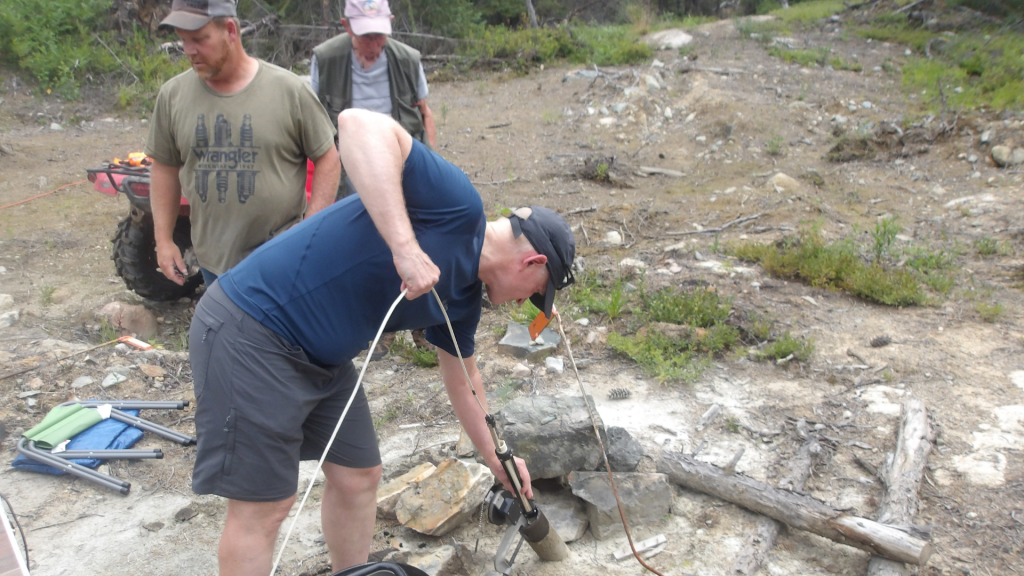
East Sudbury expansion
In Sudbury, Canuc has recently announced the acquisition of 13 new mining claims at the East Sudbury Project, adding 271 hectares to the company’s expanding landholding in the area.
East Sudbury is Canuc’s IOCG exploration project, now spanning 20,078 hectares and supported by extensive mining infrastructure, an abundance of experienced industry professionals, and multiple centres of mining and processing excellence.
“Importantly, we have a drill that’s been going there for six months and we’ve hit real evidence of IOCG-style mineralisation,” Berlet says.
“Then we have another gold zone around 800m north of there, so we are finding the largest, most continuous gold zones on this property since they’ve been working it in the 1970s.”
Canuc is running two major exploration initiatives in Sudbury at the moment, one paid for by the Canadian Government to conduct seismic surveys along the McLaren Lake fault zone.
“The government’s geologists have determined that’s the best place for them to spend money in Canada — along this fault.”
In addition to the exploration work, Canuc has also secured a tailings opportunity: the Scadding Gold Tailings Project.
Scadding is held by Environmental Tailings Corporation, with Canuc receiving a 4% net smelter royalty from gold produced there.
“There are around 150,000 tonnes of tailings, grading 1.2 grams per tonne gold,” Berlet says.
“We can recover around 5,000 ounces, and at a C$6,000 ($6,070.41) gold price, that gives us $30 million with a $1 million CAPEX (capital expenditure) at a small, 100 tonne per day plant, with OPEX (operating expenditure) around $2–3 million. That’s a very profitable $25 million operation.”
Alongside these tailings, Berlet noted that MacDonald Mines Exploration also held a considerable land package that was distressed for a number of reasons. Canuc was able to acquire MacDonald Mines at a favourable price, expanding the opportunity for exploration and development there as well.
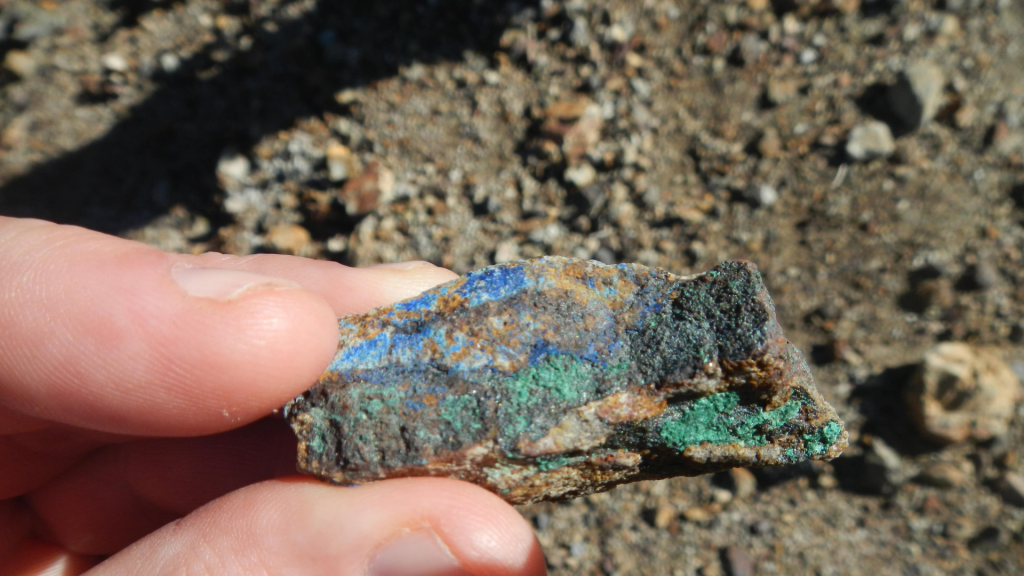
Gold resource development and IOCG discovery ambitions
Canuc is advancing on multiple tracks, calculating resources from its newly discovered gold zone, while at the same time, drilling has already intersected real evidence of IOCG-style mineralisation, with assays confirming a suite of gold, copper, cobalt, nickel, and PGMs.
Exploration momentum is being reinforced by Canadian Government spending along the McLaren Lake fault zone, where experts see the strongest potential for new large-scale IOCG-type discoveries.
Concurrently, Bell Geospace is conducting gravity gradient surveys across all four major faults, lighting up anomalies that could potentially also mark these IOCG deposits.
With assays pending, a maiden resource calculation due in September 2026, and near-surface gold zones already identified, Canuc is positioning itself to leverage both immediate cash-flow opportunities and longer-term IOCG discovery potential.
Write to Amy Rotman at Mining.com.au
Images: Mining.com.au and Canuc Resources


