


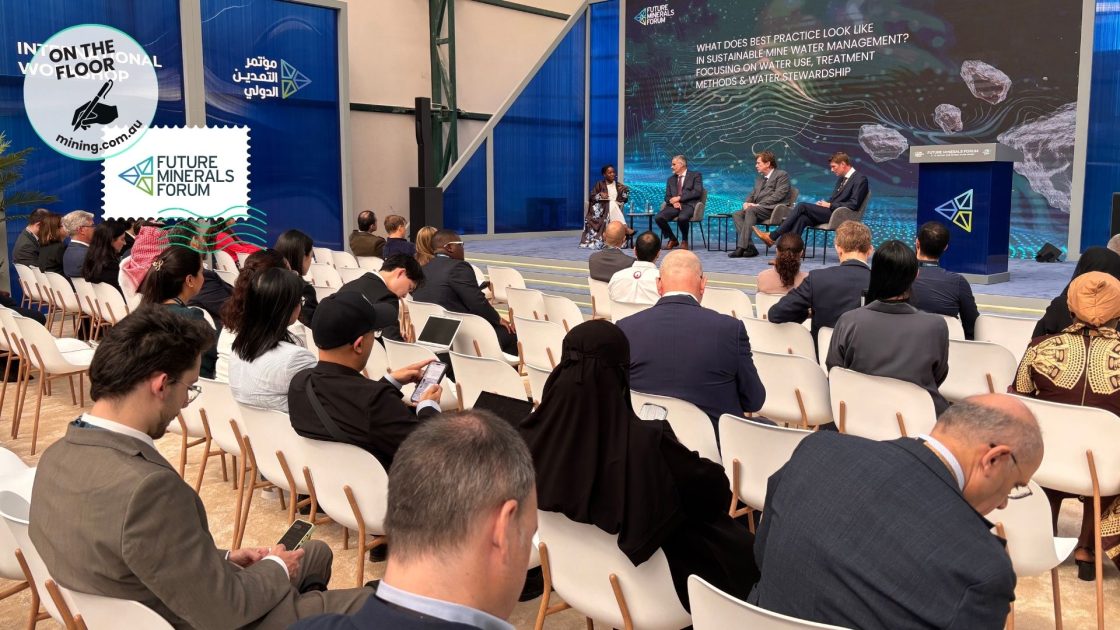
Business Sweden is seeking to take an active part in building the European Union’s (EU) partnerships with international markets for critical minerals.
Speaking to Mining.com.au amid the Future Minerals Forum – held between 13-15 January 2025 in Riyadh, Saudi Arabia – Business Sweden Director of Sustainable Mining Program Mikael Johansson says the organisation is promoting Sweden and the Swedish mining industry at the event.
“To showcase how Sweden and Swedish mining companies can support ambitious development of the Saudi mining industry,” Johansson tells this news service.
“Sweden is a leading mining nation with highly productive and sustainable mines, and we have a vast ecosystem of experts and solution providers who can support the transformation of the Saudi and global mining markets when it comes to productivity, safety, automation, digitalisation and electrification and also other areas.”
Johansson adds that the EU has a strong focus on critical minerals to increase its own production capacity, self-sufficiency, and to be an active global partner.
“The key will be to move from planning to hands-on implementation and with the recent Critical Raw Materials Act, Resource EU initiative, and other measures and collaborations, the invention is to speed up,” he says.

Sweden’s mining industry
At the Saudi Arabia event, Business Sweden hopes to find topics and projects where the nation can contribute and where it can have an active exchange and collaboration.
Business Sweden currently has a growing team in Saudi Arabia, with the aim to be a close business partner with the nation in many industries including mining.
At FMF 2026, Business Sweden is joining with the Swedish country pavilion together with five other companies – ABB, Atlas Copco, Epiroc, Sandvik, and Scania. The organisation is also hosting a presentation and panel discussion on day two of the event where Luleå Tekniska University will take part.
According to the Geological Survey of Sweden, while the number of mines has fallen from around 240 in 1990 to 13 in 2024, production has gone in the opposite direction.
In 2021, ore production in Sweden recorded the highest ever with 88.6 million tonnes. The nation is the largest iron ore producer in the EU – totalling 80 million tonnes per year valued at more than €8 billion ($13.92 billion).
Sweden ranks fourth in the EU for copper production, largely due to the Boliden’s (FRA:BWJ) Aitik open-pit mine which produces around 18 million tonnes of ore annually. The nation is also the EU’s second largest gold producer, with an annual output of 2 tonnes valued at roughly €80-100 million.
Indentec Solutions reports Sweden also produces large quantities of silver, lead, and zinc.
Johansson notes the nation wishes to have a strong role in ensuring supply of minerals, particularly critical minerals.
“There are several exploration programs in the pipeline and currently several of the strategic EU CRMA projects are in Sweden,” he says.
The CRMA is a comprehensive response to the challenges surrounding the EU’s critical minerals demand.
EU demand for rare earth metals is expected to increase six-fold by 2030 and seven-fold by 2050, while lithium demand is anticipated to rise twelve-fold by 2030 and twenty-one-fold by 2050. Europe currently relies heavily on imports, often from a single third country, a recent crisis that has underlined EU strategic dependencies.
The act aims to ensure that the EU can rely on strong, resilient, and sustainable value chains for critical raw materials.
Saudi’s transformation
On day one of FMF during the Ministerial Roundtable, the Saudi Government highlighted its focus is on ensuring local value maximisation across multiple industries that will aid in long lasting value, as Mining.com.au reported.
There was a clear call for governments and businesses to “come together” with one common global cause in order to “accelerate mineral supply, ensure benefits, reach communities while providing jobs for many young people”.
Saudi Arabia is working to reshape its economic future, in which mining sits at the centre of the transformation.
Under the Saudi Vision 2030, Riyadh says mining will become a major new contributor to national gross domestic product (GDP), attract significant foreign investment, and drive downstream value creation across the broader economy.
As part of the strategy’s goal, the sector’s contribution to GDP is set to triple by 2030, reaching roughly SAR 260 billion (about $103.2 billion), as well as generating thousands of jobs.
As 2026 unfolds, the Kingdom is expanding exploration, liberalising frameworks, and courting international partners. The nation has launched one of the world’s largest geophysical and geochemical survey programs, covering 600,000km2 including the Arabian-Nubian Shield — a geological province rich in mineral potential.
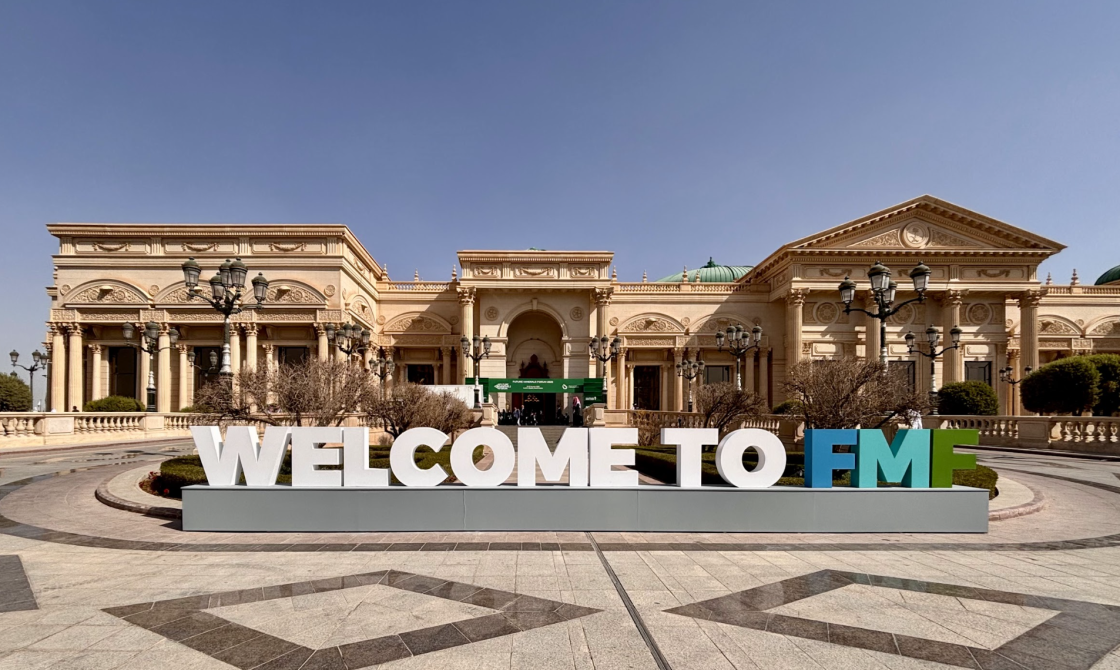
Mining.com.au has a team on the floor at the King Abdulaziz International Conference Centre in Riyadh, Saudi Arabia, and is also an official media partner.
Marking its fifth year, FMF 2026’s theme ‘Dawn of a Global Cause’ aims to progress Riyadh’s innovation, strengthen global cooperation through regional forums while also strengthening existing ones, and campaign to build a new narrative on minerals.
Previously speaking to this news service late last year, FMF Director of Strategy and Content Aldo Pennini says “in essence, the theme is a call to create a global movement built around minerals as a foundation for prosperity and stability”.
This year’s Future Minerals Forum is expected to increase its attendance from 18,000 in 2025 and 3,500 in 2022.
Write to Aaliyah Rogan at Mining.com.au
Images: Business Sweden & Mining.com.au


