


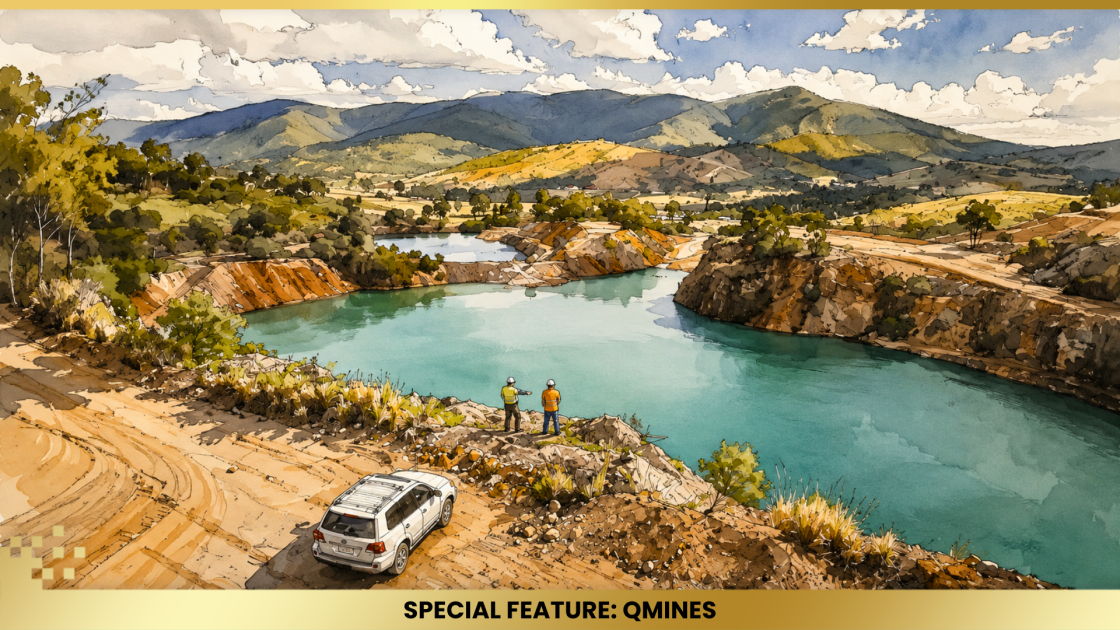
This article is a sponsored feature from Mining.com.au partner QMines. It is not financial advice. Talk to a registered financial expert before making investment decisions.
QMines (ASX:QML) is carving out a bold position in Australia’s copper-gold landscape as a young, fast-moving explorer and developer built around focus, discipline, and scale.
Led by Chairman and Managing Director Andrew Sparke, a founder with extensive capital markets experience, the company has spent the last six years turning a simple vision into a near-term production story. It starts with shallow, ‘high-grade’ brownfield assets, rapidly derisks them, and builds a centralised hub that can grow into a multi-mine operation.
This strategy is deliberately focused, bringing one mine to cash flow first before unlocking a broader pipeline of deposits. It is also backed by strong government support and a commitment to sustainable operations that sets QMines apart in the market.
With multiple deposits across Queensland and a business model focused on acceleration without shareholder dilution, QMines is shaping itself as a modern, sustainability-driven copper and gold company with serious growth momentum.
Sparke says the goal from the outset was to build one of Australia’s next copper and gold producers, based in Queensland, which he notes is one of the best jurisdictions in Australia.
“It started with a vision of what QMines could look like, and so the last six years have been about derisking that vision and getting the company toward cash flow.”
Sparke’s goal is a big one. Becoming Australia’s next big pure-play copper and gold producer is no small feat, but is the vision of success that QMines has outlined.
“We want to be in production and we don’t want to just have one mine, we want to have multiple mines,” Sparke says.
“In doing so, we know we’re going to generate a lot of value for our shareholders.”
That ambition also begins with brownfield assets, allowing QMines to accelerate its business plan with minimal dilution.
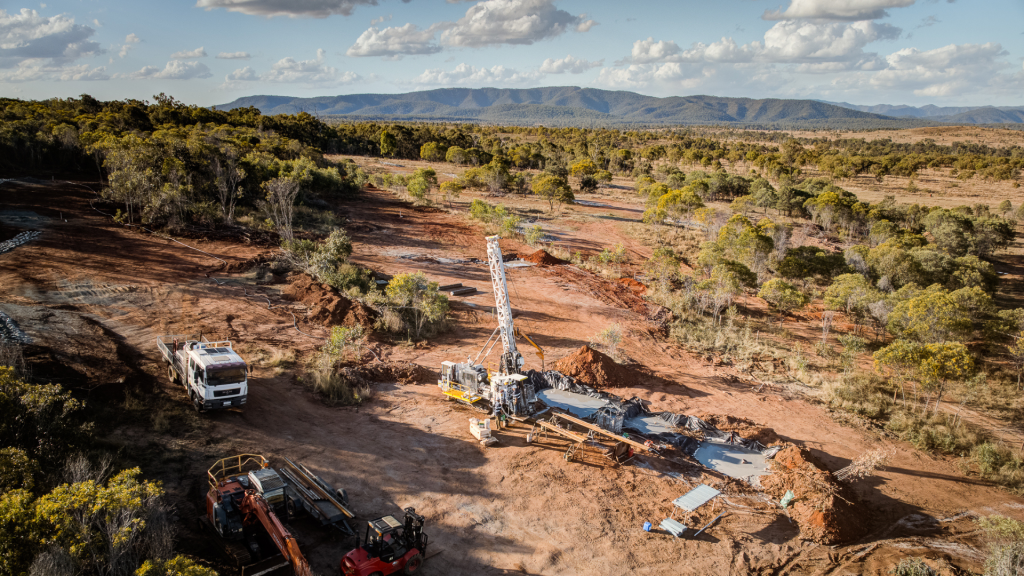
Mt Chalmers emerges as the foundation of QMines’ multi-mine strategy
QMines went hunting for copper assets.
“What better place to start than in Queensland, the region with the most copper producing mines in Australia,” Sparke says.
He notes that the company looked at around 40–50 different assets before coming across Mt Chalmers.
“And what a ripper it is,” Sparke says.
“It’s shallow, it’s high-grade, and it had historic production. As a capital markets guy focused on generating shareholder returns, this gave me a sense that it was really derisked because it had already been successfully mined once before.”
Mt Chalmers is strategically located just 20km from a large regional town, Rockhampton, with a significant amount of existing infrastructure in place including roads, rail, grid power and port access.
“It has all the right rudiments for an asset that can generate a lot of value for shareholders and can allow us to accelerate our plan to get into production relatively quickly,” Sparke says.
The Prefeasibility Study (PFS) for Mt Chalmers outlines a 10.4 year mine life with annual production of 1 million tonnes per annum, including 65,000 tonnes of copper, 160,000 ounces of gold, 30,600 tonnes of zinc, 1.8 million ounces of silver, and 583,000 tonnes of pyrite.
The project indicates a capex of $191.9 million, net present value of $373 million, and projected revenue of $1.64 billion over that mine life.
Sparke notes that in addition to Mt Chalmers, QMines has purchased two additional projects in the region: Develin Creek and Mt Mackenzie. The acquisitions align with the company’s focus on becoming the dominant consolidator of copper and gold assets in Central Queensland.
“The first deposit we’re looking at mining is Mt Chalmers, but there is an absolute boatload of growth potential here. We have a strong organic growth strategy that we can use to add more value over time, which is exciting,” Sparke says.
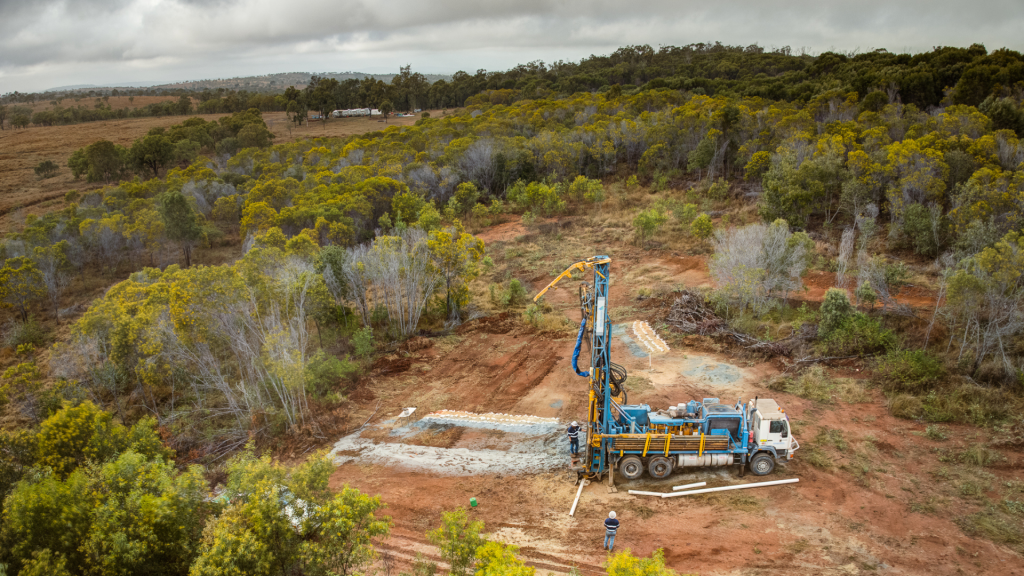
Building a Central Queensland hub
These acquisitions fit with the other part of Sparke’s bold vision for QMines: to build a centralised production hub for the region, with Mt Chalmers acting as the foundation.
The Mt Chalmers project includes four known deposits, though the company is starting mining at just one to begin with. At Develin Creek, 90km away, there are three additional wholly owned deposits that are not currently in the mine plan.
“We’ve got three deposits at Mt Chalmers not in the mine plan and another three at Develin Creek, and if you look further beyond, we recently also purchased 100% of a new project, Mt Mackenzie, that has another three deposits that are unmined as well.
“So we have around nine deposits that give us this really strong organic growth profile.”
For now, the company is focused on bringing its first Mt Chalmers deposit into production so it can fund future growth through free cash flow and begin generating shareholder value.
“We don’t want to try and bring them all online at the same time, but we’re also not wasting time,” Sparke says.
“Once we get to cash flow in the next couple of years, we can then use that cash to accelerate the growth trajectory of the business while also returning value to shareholders, hopefully in the form of dividends.”
Sparke says that this staged approach reflects his capital-markets-driven monetisation model, shaped by years of financing experience. The strategy is designed to accelerate the business once cash flow begins, therefore reducing the amount of capital required and dilution for shareholders.
QMines has assembled a strong team that is ready to mobilise and execute the company’s plan to deliver its Definitive Feasibility Study (DFS) by early 2027.
“We’ve got metallurgical test work, engineering studies, environmental approvals, and several other workstreams all happening behind the scenes, and a third rig being mobilised to site. There are also resource growth activities happening in parallel,” Sparke says.
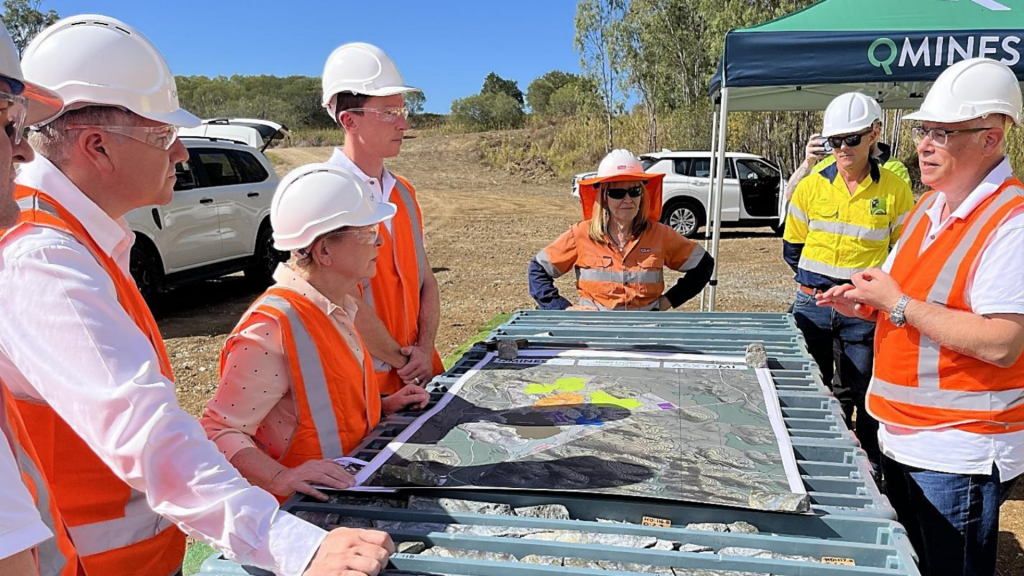
Government backing adds momentum as QMines moves toward mining
Added to that momentum, in May 2026, QMines received a $15 million strategic investment by the Queensland Investment Corporation’s (QIC) Critical Minerals and Battery Technology Fund (QCMBTF).
Sparke notes that this investment will fund the work for the DFS as the company moves toward mining. He also welcomes the due diligence involved with this funding, a six- to nine-month process where QIC consultants reviewed the project in detail.
“I think that’s important for investors. It shows that there are no real red flags here because the QIC ultimately made that investment,” Sparke says.
“There was certainly some feedback, but what it shows is the quality of work that we’ve done as a team, and that the science and engineering work we’ve done on the PFS was really sound.
“It validated a lot of the work that we’ve done and showed that these reputable industry consultants believe that this project is going to go ahead.”
While the investment is a critical step for any company, it’s that validation that QMines received on Mt Chalmers that is giving them the confidence to push forward.
Sparke notes that there’s a real enthusiasm coming from various government departments, with the Queensland finance minister visiting the site in early July.
Mt Chalmers’ status as a brownfield asset also adds to that enthusiasm from an environmental perspective, being able to execute the project with minimal disturbance and in an environmentally sensitive manner.
Driving a cleaner copper future
That environmental focus extends through QMines’ profile, with Sparke noting the company is one of only three ASX-listed resource companies today that
has achieved zero-carbon status.
“At the moment, we’ve got solar panels on site, we’ve got battery backup systems, we’re doing a lot of water recycling using aerated wastewater treatment systems (AWTS) to recycle our black and grey water,” Sparke says.
“You name it, we’re doing it.”
QMines’ sustainability ambitions are also backed by rigorous Climate Active certifications initiated by the Australian Government, with the company reporting on energy and water savings, and new environmental practices. Sparke notes that for companies willing to put in the work, it is possible to adopt more sustainable practices as a business grows.
QMines is still small, with around 15–20 part- and full-time staff and contractors, but is expecting to grow that to hundreds within the next 18–24 months.
“We’re always looking for ways to show the market and the regulators that we can do this sustainably, in an industry that has never been seen as environmentally friendly,” Sparke says.
“We’re not perfect and we’re still learning, but hopefully the market can see that we have the right intent.”
Key steps as QMines nears cash flow
As QMines advances the DFS for Mt Chalmers, Sparke says that shareholders should expect a steady cadence of milestones as the company continues to derisk the project with drilling, permitting, and the mining licence application.
Exploration remains a key pillar of activity, with the company mobilising its third drill rig to Mt Chalmers. Following 13km of drilling over the past year, Sparke notes that a resource upgrade is imminent at Mt Mackenzie.
“We still want to keep growing other deposits around the existing mine site. Nearly every deposit that we own is still open, there’s so much growth potential here at Mt Chalmers, Develin Creek, and Mt Mackenzie.”
These steps form part of the broader company transition from explorer to producer, with additional derisking initiatives underway as QMines moves toward a final investment decision, targeted for Q3 2027.
“It’s not that far away, so it’s starting to get real and very exciting,” Sparke says.
“As a founder who started with a whiteboard and a marker six years ago, it’s nice to see that as a young listed company, we’re getting very close to cash flow where we can return a lot of value to shareholders.”
Sparke believes the market has yet to fully recognise how far along the company actually is. With a $40 million market capitalisation, $15 million in cash, several million dollars in property, and its own drilling company, he says QMines is significantly undervalued compared to what is within reach.
“There is a large amount of value here to unlock,” Sparke says.
“We’re not far away from throwing off $200–300 million in free cash flow in those first critical couple of years, and we already have a 10-year mine plan.
“It’s an exciting time to be a QMines shareholder.”
For new investors, Sparke reiterates that he’s not giving financial advice, but he does believe that those willing to follow QMines through the final 12–18 months of derisking are stepping into the early stages of what he hopes will become one of Australia’s next and potentially largest pure-play copper and gold producers.
Write to Amy Rotman at Mining.com.au
Images: Mining.com.au, QMines


