

Bayan Mining and Minerals (ASX:BMM) has reached an agreement to exclusively licence IP from Macquarie University for its solar cell recycling technology.
The company says the agreement is a key milestone in Bayan’s strategic growth, enabling it to take advantage of a major economic opportunity in the critical mineral recycling/recovery market.
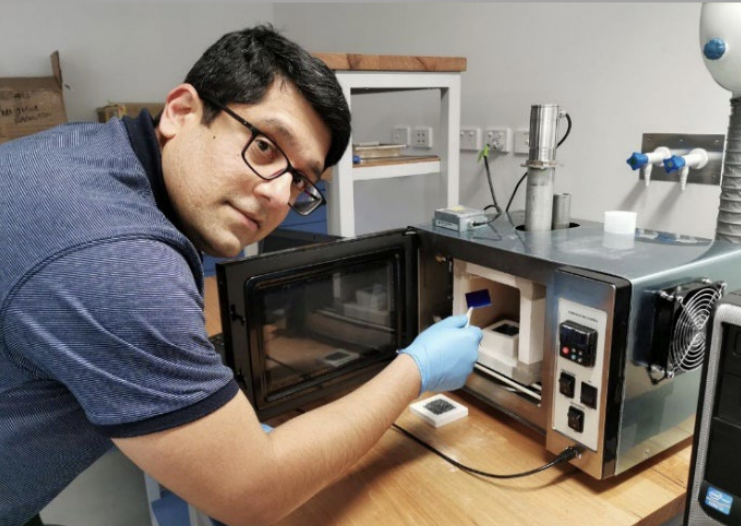
Led by Dr Binesh Puthen Veettil, the team from the School of Engineering at Macquarie University have developed a new microwave technology that seeks to solve the challenge of electronic waste from end-of-life solar panels.
Currently, the recycling process is technically challenging with only an estimated 15% of solar panels making it to a recycling facility, and the remainder going straight to landfill once they have reached their 20-25-year end of life span.
According to Bayan, in the rare instance they are recycled the solar panels, in the traditional method, are crushed and heated at about 1,400°C before being washed in harsh chemicals to remove the plastics.
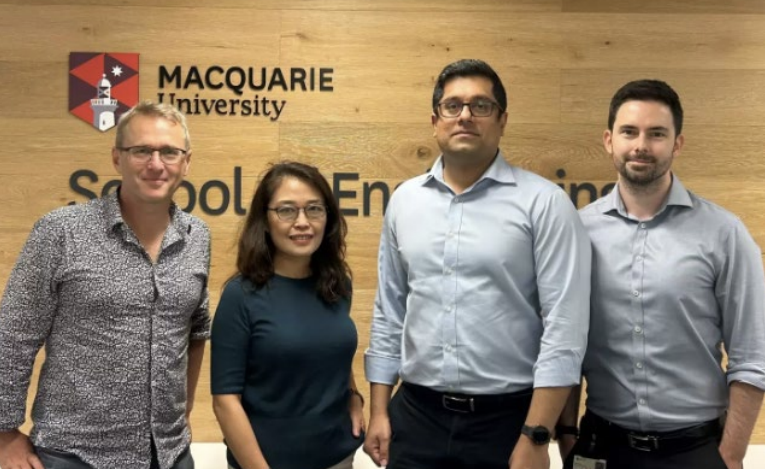
Veettil’s research in collaboration with the School of Photovoltaics at UNSW, the Australian Centre for Advanced Photovoltaics, and further supported by the Australian Government through the Australian Renewable Energy Agency highlights the immense need and impact this technology will bring.
In this new method, the microwave energy is used to selectively heat the materials within a solar panel. In this process, the silicon cells and other microwave-absorbing components rapidly heat up, while surrounding materials remain relatively cool.
This targeted heating causes the plastic encapsulant, ethylene vinyl acetate (EVA), which holds the panel layers together to soften and degrade. As the EVA loses adhesion, the glass, silicon, and metal components can be easily separated through mechanical peeling rather than through extensive processing.
Bayan says this method eliminates the need for traditional high-temperature baking or energy-intensive chemical treatments such as nitric acid (HNO₃), sulfuric acid (H₂SO₄), and hydrogen fluoride (HF), making delamination more efficient and environmentally friendly.
“This whole process can be undertaken at room temperature and de-risks the process from potential contamination concerns. Microwave recycling has a low overall environmental impact compared to traditional recycling methods,” Bayan reports.
“One of its key advantages is major energy savings, which significantly reduces the carbon footprint of the process. By eliminating the need for high temperature furnaces and chemical treatments, this method minimises greenhouse gas emissions and completely removes the risk of toxic chemical waste streams.
“The only emissions generated may come from minor fumes released as the encapsulant plastic is heated. However, since the plastic is only softened rather than burned, these emissions are far lower than those produced by thermal incineration.”
Additionally, no chemical effluent is created, making the process reportedly far cleaner and safer than acid-based or solvent-based extraction methods. By using microwave-based separation, solar panels can be recycled more effectively, preserving valuable materials such as high-purity silicon, silver, and other critical metals for reuse.
This innovation represents a breakthrough in sustainable solar panel recycling, reducing energy consumption while improving material recovery rates, Bayan reports.
Globally the solar cell market is projected to reach US$39.81 billion ($66.85) by 2037, growing at a compound annual growth rate of about 8.2%. By 2045, Australia is potentially set to dispose of 34.6 GW of serviceable panels that will require recycling or repurposing, which is equivalent to the total installed solar capacity in Australia as of August 2024.
Global demand for critical minerals continues to surge during the transition to clean energy. Solar panels consist of 95% recyclable materials, including silver, aluminium, silicon, copper, indium, and gallium, all of which are essential to global clean energy supply chains.
Rare metals, such as gallium, are essential for solar fuel cells, semiconductor chips, and other high-tech applications, making their recovery from e-waste materials a strategic priority.
Write to Adam Orlando at Mining.com.au
Images: Bayan