


The market for autonomous vehicles (AV) is reaching an inflection point as technologies across the entire value chain advance amid mainstream acceptance of AVs in a growing number of sectors.
Commonly referred to as a self-driving or driverless vehicle, an AV is a type of vehicle that is capable of navigating and operating without human intervention. These vehicles use a combination of advanced technologies and sensors to identify their environment, make decisions, and control their movement.
Continuous advancements in sensor technologies, artificial intelligence, and machine learning are driving improvements in the capabilities of these types of vehicles. These technologies perform a crucial role in enhancing the perception, decision-making, and overall safety of autonomous systems.
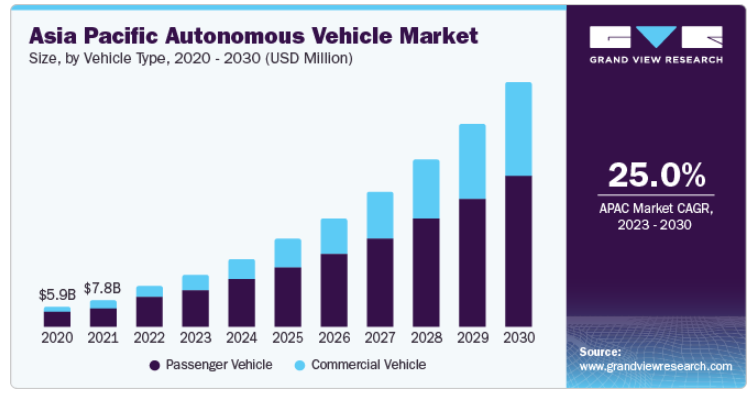
According to Grand View Research, the global autonomous vehicle market size was valued at US$42.37 billion ($65.93 billion) in 2022 and is expected to grow at a compound annual growth rate of 21.9% from 2023 to 2030.
Industries adopting self-driving transport demonstrate a willingness to embrace innovative technology, Grand View Research notes.
As these industries experience the benefits of increased efficiency, reduced costs, and enhanced safety brought by autonomous transport, it encourages further adoption and investment in autonomous vehicle technology across various sectors.
The mining sector has been an early adopter of self-driving or driverless vehicles. Resources companies are increasingly adapting their business models and are shifting from limited specialised deployments to autonomous fleets that provide a lower cost base and higher efficiency.
For example, in September 2023, Sweden-based Volvo Autonomous Solutions, a company that offers autonomous transport solutions, and Boliden, a Swedish mining company, teamed up for a long-term partnership to introduce self-driving transport solutions in Boliden’s operations.
They are working on various projects, starting with using autonomous transport at Boliden’s Garpenberg site in Sweden.
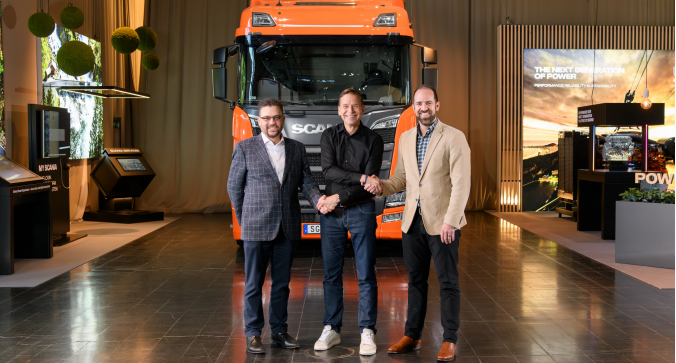
In Australia, Scania and services provider Regroup will launch what is touted as the ‘world’s first fleet’ of autonomous in-pit mining trucks in the Pilbara in 2025 with a rollout planned at Element 25’s (ASX:E25) Butcherbird mine.
‘World-first’ fleet of autonomous mining trucks
Building on an October ASX announcement of the start of sales for commercially available autonomous trucks, Scania will supply its first fleet of autonomous trucks to Australian mining services supplier Regroup.
The fleet of 11 autonomous rigid G 560 8×4 tippers, transporting manganese ore for Element 25 at its Butcherbird site, is planned to start work in late 2025 in Western Australia’s Pilbara region.
Element 25, Scania, and Regroup will work collaboratively to finalise the particulars regarding this solution, and to align with the expansion of the Butcherbird mine.
Regroup Managing Director Michael Still says establishing its first fleet of autonomous vehicles in the Australian mining industry is a major milestone for the company and the sector itself.
“It is not lost on us that we are able to collaborate with one of our key, and long-standing partners in Element 25 as we look to roll this solution out across their site. We have always been aligned in our values in supporting industry innovation and the electrification of the global vehicle fleet. It is great that we can demonstrate this on site,” says Still.
“Regroup has excelled at initiating and delivering sustainable and renewable practices, and these new autonomous trucks are just the first step in our transport plan. We are looking forward to adding Scania zero emission autonomous mining trucks as the next step.
“In addition to the autonomous trucks coming next year, we have also ordered a driver-operated battery electric Scania rigid 8×4 truck that we will look to incorporate into the Element 25 Butcherbird operation which will serve as a water cart, underlining our overall aim of decarbonising our mining activities.”
Regroup, which Still says has grown tenfold over the past four years, provides plant, people, and expertise across several construction and mining sectors.
“We’ve grown quickly from 22 staff to 250. In that same time, we have spent and committed over $100 million on new assets. So, we’re very serious about fresh fleet. We live by the principle in our business called ‘a poor man pays twice’ so we don’t buy on the cheap. We buy new for several reasons,” Still says.
Accelerating AV adoption in mining
In 2023, Scania delivered 91,652 trucks, 5,075 buses, as well as 13,871 industrial and marine power systems to customers. Net sales totalled more than US$30 billion, of which about 20% were services related.
Scania Australia Managing Director Manfred Streit says the company, which was founded in 1891 and operates in more than 100 countries, has been working closely with several partners in the local mining industry over recent years to ‘finesse’ its autonomous truck program.
The implementation of autonomous mining vehicles at Butcherbird is expected to deliver improved productivity, reduced carbon intensity through improved fuel efficiency, enhanced safety and lower costs compared to a traditional mining fleet. The rollout is intended as a stepping stone on Element 25’s journey to fully electric autonomous ore haulage at Butcherbird.

To support the optimisation of site power infrastructure and planned renewable energy generation at Butcherbird, the program will also include the rollout of a fully battery electric vehicle equipped as a water truck. This vehicle will provide important operational data, particularly around duty cycles and charging infrastructure, which will inform a future transition to a fully electric mobile fleet at the site.
According to Element 25, automation of mining transport at Butcherbird will offer improvements in operational safety, sustainability, and logistical efficiency, as well as reducing energy requirements, mining footprint, and infrastructure requirements. The solution is expected to reduce operational costs and therefore provides significant advantages across all aspects of the business.
The company intends to construct a large-scale processing facility at Butcherbird to produce a nominal 1.1 million tonnes per annum of high-quality manganese oxide concentrate, which will be targeted at customers in the downstream steel industry.
It will also be the feedstock for Element 25’s “first-of-its-kind” battery-grade high-purity manganese sulphate monohydrate processing facility which it plans to construct in Louisiana, US, in partnership with General Motors (NYSE:GM) and Stellantis (NYSE:STLA).
Dull, dirty, difficult or dangerous
One company making inroads in the autonomous mining vehicle industry is SafeAI. Since 2017, SafeAI has been deploying autonomous vehicle technology for heavy industry — and is now entering an era of massive industry adoption.
The company takes mining vehicles and retrofits them with a suite of sensors to make them autonomous. All types of mining vehicles — regardless of function and original manufacturer — can reportedly be retrofitted by SafeAI, making its system accessible to almost every mine operation.
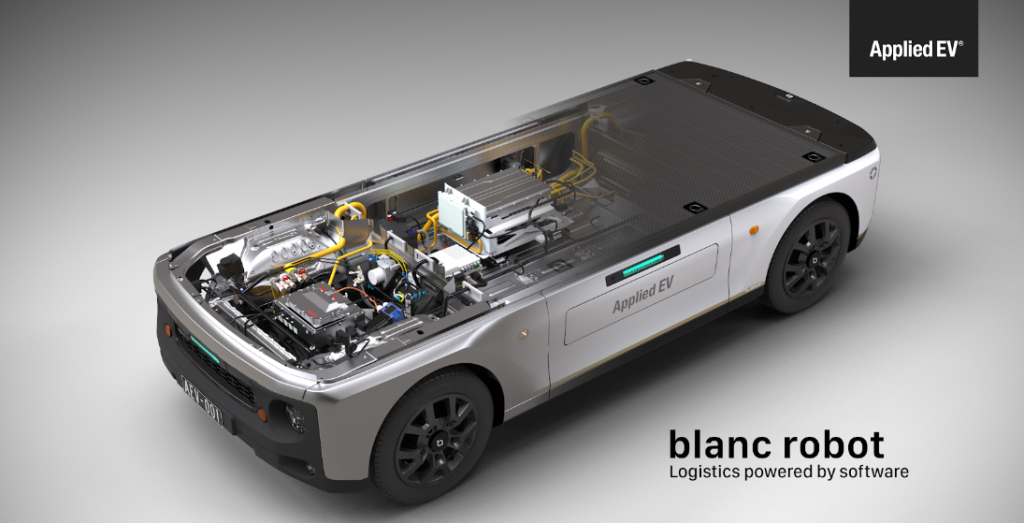
Another company seeking to capitalise on the burgeoning AV market is vehicle control system technology company Applied EV, which has launched its new Blanc Robot, a unique vehicle designed for autonomous-only operations that can help solve global driver shortages in last mile logistics.
CEO Julian Broadbent says as business models are evolving, shifting from limited specialised deployments to autonomous fleets that provide a lower cost base and higher efficiency, Applied EV is “creating a clear path to commercialisation with safety rated vehicles that can be mass produced”.
Manufactured with no cabin and a configurable table-top chassis for a variety of jobs, the Blanc Robot is capable of operating in industrial applications where tasks by a traditional driver may be considered “dull, dirty, difficult, or dangerous”.
Last mile logistics refer to the final stage of the product’s journey from the warehouse or distribution centre to its final destination. While a critical part of the delivery process, last mile logistics can be complex and costly for providers.
Applied EV is ready to complete the assembly of the first 100 Blanc Robot vehicles, with all the body structures manufactured by Suzuki Motor Corporation (TYO:7269), now shipped from Japan. This milestone is a step towards mass production.
The sixth generation Blanc Robot is based on Suzuki’s long wheelbase ‘Jimny’ platform, which aims to significantly reduce production costs and enable high volume production.
Based on a safety-rated software and hardware architecture, Applied EV Blanc Robot is considered a true software defined machine. All functions and features are software controlled including three secure interfaces, autonomous and AI driving software, non-driving vehicle functions, and secure data and diagnostics for third party applications.
Applied EV’s Chief Executive says the demand for autonomous vehicle fleets that integrate seamlessly into both emerging logistics companies and established enterprises has never been stronger.
“While transportation businesses are eager to adopt cutting-edge technologies, they require complete, real, and actual ‘solutions’ to drive meaningful implementation at scale. Applied EV, in collaboration with our partners, has addressed this challenge with a turnkey solution,” says Broadbent.
“Powered by software, our vehicles come in a range of sizes and can be tailored for unique autonomous driving applications. The Blanc Robot marks the first purpose-built autonomous vehicle released for scale, produced by Suzuki and running on Applied EV software. The first 100 production units are underway in Australia, with the capacity to scale to tens of thousands to meet demand.”
Continuous advancements
Continuous advancements in AI, machine learning, sensor technologies, and connectivity are increasingly expanding the capabilities of AV, which in turn deliver improvements in decision-making and safety in various markets.
Advancements in AI, connectivity, and sensor capabilities are crucial for the market’s growth, enabling vehicles to make more informed decisions and navigate complex environments efficiently.
According to Applied EV, these technological strides enhance vehicle safety and reliability and also expand the scope of autonomous applications across industries, from logistics and transportation to ridesharing and delivery services.
The cost-efficiency brought about by these advancements makes autonomous solutions more appealing to businesses seeking innovative and competitive edge offerings, ultimately propelling the market’s expansion and adoption, Applied EV’s Chief Executive adds.
Write to Adam Orlando at Mining.com.au
Images: SafeAI, Applied EV, Element 25