


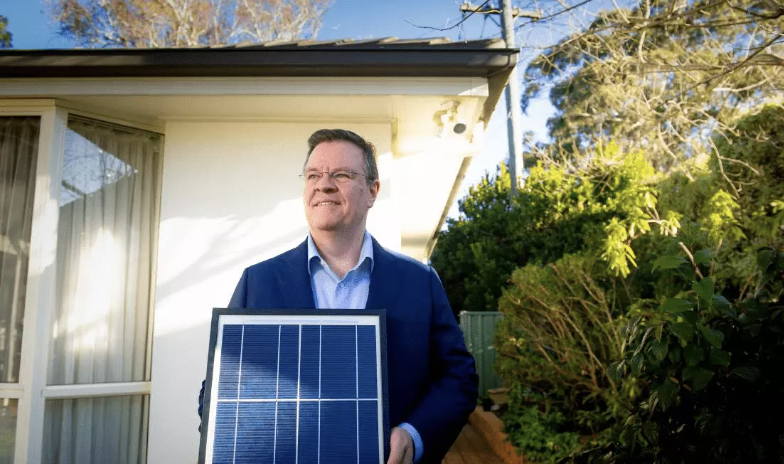
The Australian Services Union welcomes the Australian Government’s announcement that, if re-elected, it will subsidise home battery installations, calling it a practical step that will make renewable energy more affordable and accessible for working people.
ASU National Secretary Emeline Gaske says the policy will help more households slash their power bills and play a role in tackling the climate crisis.
“This is a smart, practical reform that puts power back in the hands of working Australians,” Gaske says.
“Labor’s home battery subsidy will mean lower bills, cleaner energy, and more families benefiting from Australia’s solar success story.”
The Cheaper Home Batteries Program will provide a 30% discount on the up-front cost of a typical battery system, potentially saving households thousands on installation and cutting energy bills by up to 90%.
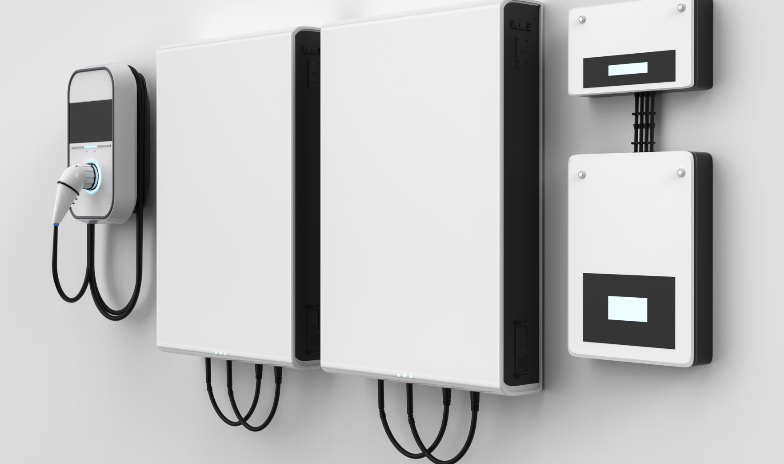
The Smart Energy Council says Labor’s commitment to a $2.3 billion Cheaper Home Batteries Program will not only slash power bills for 10 million Australians with solar but also ensure all Australians are at least $1.3 billion better off in 2030 through reduced wholesale electricity costs.
“This really is a battery bill buster program,” says Smart Energy Council Chief Executive John Grimes.
Gaske adds that the program backs what communities have been doing for years – “embracing solar and demanding cleaner, cheaper energy solutions”. He says there is more work to do to ensure renewable energy reaches the people who need it most.
Battery minerals are those used in rechargeable batteries. This includes lithium, nickel, cobalt, graphite, manganese, alumina, tin, tantalum, magnesium and vanadium.
According to the Chamber of Minerals and Energy WA (CMEWA), the rapid uptake of battery-based energy storage systems around the world is driving global demand for batteries.
Lithium is so soft that it can be cut with a kitchen knife and so low in density that it floats on water. Thanks to its energy density, it can store a lot of power compared to its physical size.
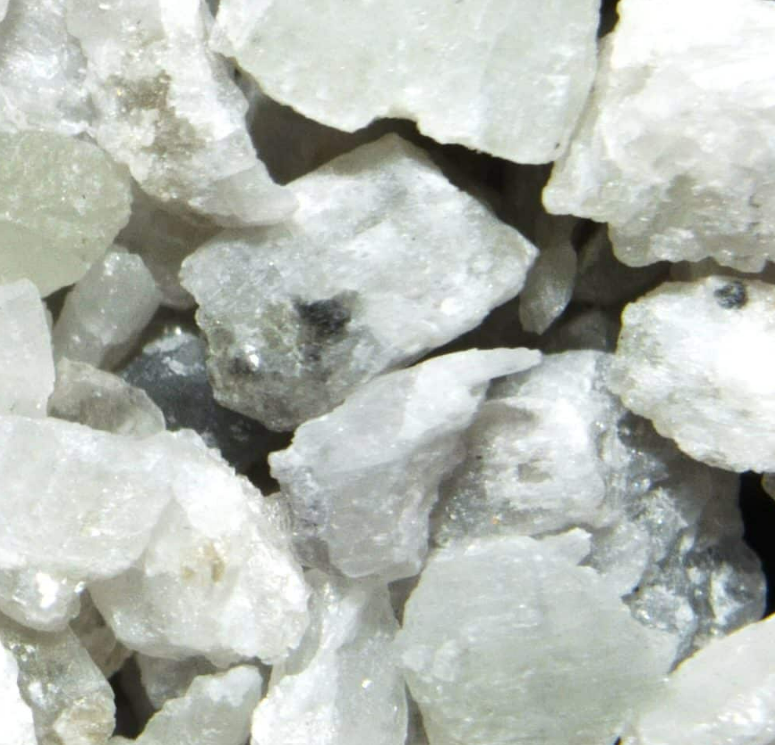
Australia has substantial reserves of all the minerals used in the manufacture of rechargeable batteries. In terms of lithium, the CMEWA says Western Australia is the global leader in hard rock lithium production (41% of global supply), the second largest producer of cobalt and has the largest potential resource of Class 1 nickel.
“It also produces non-battery minerals used in the manufacture of electric vehicles and energy storage systems such as rare earths elements. Western Australia is the world’s second largest producer of rare earths (16%), with nearly a quarter of global reserves,” the CMEWA says.
Global lithium demand is forecast to grow by almost 13% a year to 2030, driven by rising electric vehicle adoption and battery energy storage system (BESS) deployment. The current oversupply in the global lithium market is expected to diminish over the outlook period, leading to an improved supply-demand balance by 2030. Global refining capacity and downstream demand are expected to remain heavily concentrated in China.
Western Australia is now home to seven hard rock lithium projects, most of which are exporting a spodumene concentrate product. An increase in lithium-producing projects has meant substantial increases in sales quantity and value over the past few years. In 2017–18, some 2.1 million tonnes of spodumene concentrate was produced (worth $1.6 billion). This was an increase of 140% and 167% respectively.
In terms of nickel mines in Western Australia, the state has some of the world’s largest known reserves of nickel and some of the world’s largest and highest-grade nickel deposits.
Although Australia has significant cobalt reserves, there are no dedicated cobalt mines. Most cobalt is mined at varying quantities as a byproduct of copper, gold, or nickel mining. About 40 of Australia’s gold and nickel operations are co-located with some form of cobalt deposit. Most deposits are in WA, though there are small producers in other states.
Australia is one of the largest producers of cobalt outside the Democratic Republic of Congo, accounting for 5% of global production in 2017.
The Smart Energy Council says the Cheaper Home Batteries Program will allow households without solar to save up to $2,300 a year if they get solar and a solar battery, whilst those with solar can save up to an extra $1,100 by adding a solar battery.
There are currently 77 solar batteries on the Australian market, starting at around $4,000 for a 5kWh battery. A range of between 5-15 kWh for home batteries is an appropriate model for Australian households, and $372 per kWh will make a massive difference in bridging the gap between people who couldn’t previously contemplate getting a solar battery.
Write to Adam Orlando at Mining.com.au
Images: EVM & Smart Energy Council


