


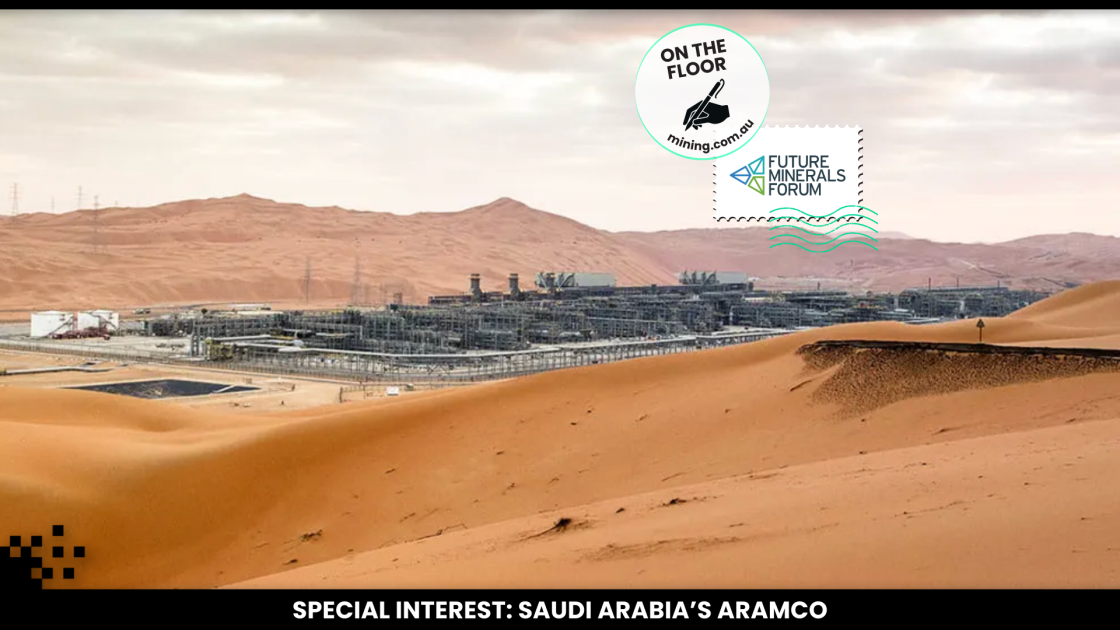
Headquartered in Dhahran, Aramco is Saudi Arabia’s state-owned, integrated energy and chemicals giant, the world’s largest oil producer, and one of its most valuable companies.
It manages vast hydrocarbon reserves and is expanding into chemicals and new energy technologies while playing a central role in global energy markets and Saudi economic diversification.
Aramco has a history that stretches back to the early 1930s, when a concession was granted to Standard Oil Company of California (SOCAL) (now Chevron) by the Kingdom to explore for oil, forming the California-Arabian Standard Oil Company (CASOC).
SOCAL later partnered with Texaco, and the company became the Arabian American Oil Company (Aramco) in 1944, eventually becoming fully Saudi-owned and renamed Saudi Aramco in 1988, marking the transition from a US-led venture to the world’s largest oil producer.
Today, as Saudi Arabia pursues Vision 2030’s ambitious economic diversification strategy, Aramco’s legacy — and its evolving role — provides a unique lens on the sandy Kingdom’s broader industrial transformation, including the rising significance of mining as a strategic economic pillar.

Origins in the desert
Aramco traces its origins to 1933, when Saudi Arabia signed a concession agreement with Standard Oil Company of California, leading to the establishment of the California Arabian Standard Oil Company to explore for petroleum.
Drilling began in 1935 in the Dammam field — a venture that initially delivered limited results. Following years of persistence, commercial oil production finally began in 1938 at Dammam No. 7, affectionately known as the Prosperity Well.
That early achievement marked more than commercial success – it laid the foundation for Saudi Arabia’s transformation into a global energy supplier.
Over subsequent decades, production expanded rapidly. By 1949, crude output reached 500,000 barrels per day, and significant infrastructure — notably the Trans-Arabian Pipeline — extended Aramco’s reach beyond the Gulf, connecting oil flows to Mediterranean markets.
Its rapid increase in oil production meant the company had to expand distribution efforts as well. In 1950, Aramco completed the 1,21km Trans-Arabian Pipeline (Tapline) — at the time the longest in the world. The Tapline linked eastern Saudi Arabia to the Mediterranean Sea, sharply cutting the time and cost of exporting oil to Europe.
And, after two years of exploration in the shallow Arabian Gulf waters, we located the Safaniyah field in 1951, the world’s largest offshore oil field discovered so far. In 1958, Aramco’s crude oil production exceeded 1 million barrels per day.
By 1962, Aramco reached another milestone, with cumulative crude oil production reaching 5 billion barrels. And by 1971, average daily production of crude oil had ramped up to 4.49 million barrels, which was roughly 1.6 billion barrels per year.
This era was followed by milestones of nationalisation as the Saudi government acquired full ownership by 1980, paving the way for the formal establishment of the Saudi Arabian Oil Company — or Saudi Aramco — later in the decade.

Global expansion, technological innovation
With full state ownership, Saudi Aramco embarked on an era of diversification and global integration. It did not simply operate as a national oil producer, it became a global energy enterprise with refining, marketing and strategic investments spanning Asia, Europe, and North America.
Innovation became part of the company’s identity. From the development of advanced reservoir simulators in the late 1990s to the creation of the TeraPOWERS trillion-cell simulation platform, Aramco invested in technological capabilities that strengthened its operational edge and reduced exploration and production risk.
The transformation extended to business structure. Joint ventures in downstream markets, such as Motiva in the US, expanded the company’s footprint in refining and distribution and reflected a strategic shift toward integrated energy value chains.

Driving energy leadership
For much of the 20th century, Aramco’s achievements helped define Saudi Arabia’s place in the global economy. The abundant oil reserves underpinning its growth provided the capital and international confidence to transform the country’s economic structure.
Yet, as oil dependency became a strategic vulnerability, Saudi policymakers and industry leaders began to reimagine the future. This reimagining culminated in the launch of Vision 2030 in 2016, a sweeping blueprint to reduce reliance on hydrocarbons, broaden the economic base and create sustainable growth engines for the decades ahead.
Vision 2030 places mining among the top strategic sectors for diversification — elevating mineral resources as a “third pillar” of the economy alongside oil and petrochemicals.
Under the Vision 2030 framework, mining’s contribution to GDP is expected to rise dramatically, supported by expanded exploration, regulatory reform and foreign investment. The Kingdom completed a nationwide geological survey that increased the estimated value of mineral wealth to over US$2.5 trillion, revealing significant deposits of phosphate, gold, rare earths and other strategic metals.
Aramco’s deep roots in the energy sector position it to play a multifaceted role in the Kingdom’s broader industrial landscape, including emerging mining ecosystems. While the company itself remains focused on hydrocarbons and energy systems, its experience in scaling complex, capital-intensive projects is highly relevant to the rapidly expanding mining sector.
Saudi Arabia’s drive to attract foreign miners, streamline licensing and deploy modern technologies echoes the regulatory evolution that has underpinned Aramco’s own journey from concession to national champion. Vision 2030 initiatives have widened the opportunities for international capital, with exploration licenses awarded to global and local firms driving activity in copper, gold, zinc and silver belts across the Kingdom.
Just as Aramco once transformed the energy supply chain from discovery to global distribution, Saudi mining is building the frameworks that will enable mineral value chains to flourish — from extraction through processing to export and industrial use.
Strategic intersection: Energy and minerals
Aramco’s ongoing push into lower-carbon energy solutions and technological development aligns with broader Vision 2030 imperatives. The company has invested in carbon capture technologies, including direct air capture pilot units and large-scale capture initiatives that aim to reduce emissions and potentially support sustainable feedstocks for chemicals and fuels.
These activities highlight Aramco’s evolving role — not just as a producer, but as a technological and infrastructure enabler. In a future where energy and mineral resources intersect, such capabilities may prove relevant to sectors like hydrogen production, heavy industrial feedstocks and energy-intensive mineral processing.
Saudi Arabia’s broader mining strategy reflects such strategic intersections: regulatory and institutional reforms make the country more competitive for capital; mining licensing and partnerships expand resource activities; and the government positions minerals as integral to long-term economic resilience.
Aramco’s century-long story offers several insights for Saudi Arabia’s mining ambitions. First, scale matters — but achieving it requires patient capital, stable policy and technological capability.
Aramco’s early years demonstrated the value of perseverance in exploration and the importance of infrastructure investment once resources were proven. Saudi mining similarly relies on large-scale geological surveys and regulatory frameworks that reduce risk for international investors.
Second, integration drives value. Aramco’s evolution into refining, distribution and integrated energy solutions shows how value chains expand beyond raw resource extraction. The mining sector’s long-term success will hinge on building processing capacity and regional industrial linkages — not merely exporting raw materials.
Third, strategic alignment with national policy is critical. Vision 2030’s elevation of mining reflects a deliberate policy choice to diversify beyond oil. The mining sector’s growth trajectory — measured in licences, investment commitments and GDP contribution — reflects the strength of that alignment.
As Saudi Arabia now enters 2026, Aramco stands as eminder of past success and a symbol of future aspiration. The Kingdom’s economic transformation is far from complete, but the contours of its diversified future are visible: energy expertise merging with mining potential, regulatory confidence attracting global capital, and strategic planning guiding industrial expansion.
The Kingdom is touting Aramco’s history as not a relic of a bygone oil era but a foundation upon which broader industrial growth can be built. Just as it once moved Saudi Arabia from obscurity to global energy leadership, the Kingdom’s mining sector aims to propel the nation toward a new chapter of resource-driven growth that extends beyond hydrocarbons.
In this context, Aramco’s legacy and Saudi Vision 2030’s ambitions together shape a narrative of continuity and change — one that places both energy and minerals at the heart of the Kingdom’s global economic identity.
The Kingdom is hosting the Future Minerals Forum (FMF) at the King Abdulaziz International Conference Centre in Riyadh, Saudi Arabia from 13-15 January. Mining.com.au is an official media partner and will have a team on the floor at this year’s event.
Write to Adam Orlando at Mining.com.au
Images: Aramco & FMF26


