



This article is a sponsored feature from Mining.com.au partner Zeus Resources. It is not financial advice. Talk to a registered financial expert before making investment decisions.
Zeus Resources (ASX:ZEU) has made a very strategic move targeting antimony on the doorstep of one of the world’s major consumers of the critical mineral.
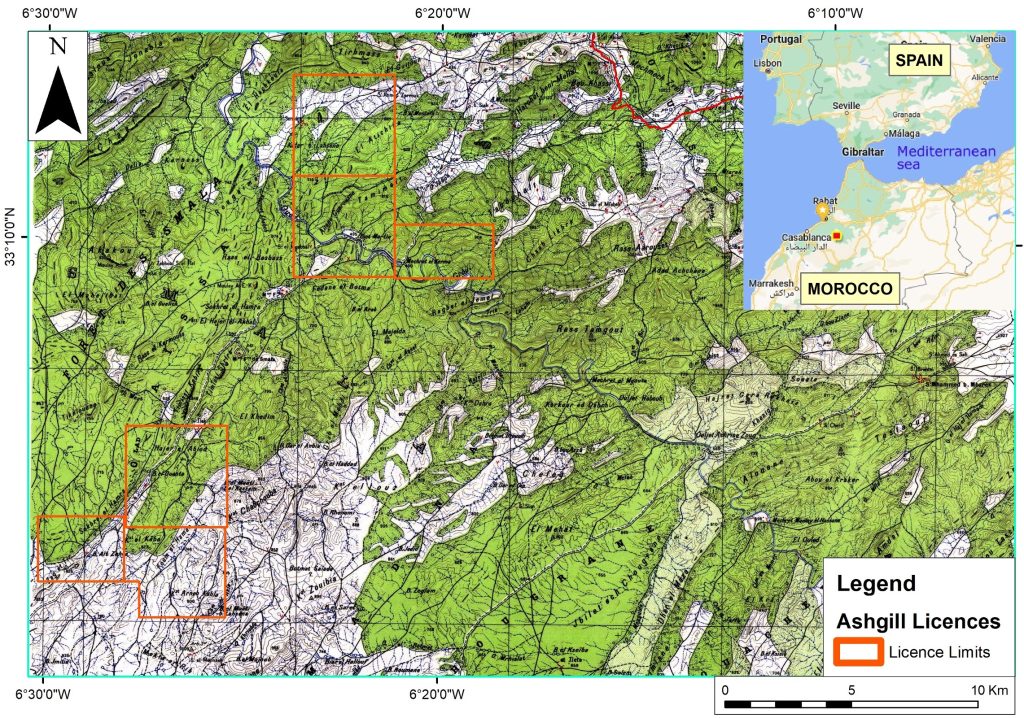
In March, the junior explorer struck a deal to acquire the Casablanca Antimony Project in central Morocco – which ranked as the second most attractive destination for mining investment in Africa in 2023, according to the Fraser Institute’s Annual Survey of Mining Companies.
The project is covered by six exploration licences spanning 79km2 and is host to several historical and recent artisanal mine workings. Historical rock chip results show high antimony grades of up to 61.9%, with multiple samples grading over 40%.
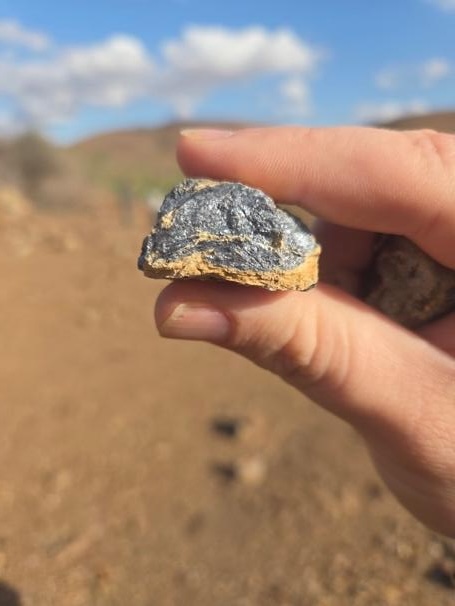
Executive director Hugh Pilgrim says these surface grades are “exceptional by any global standard”.
“Most antimony deposits operate in the range of 1-3%, with economic cut-offs often below 1%,” he tells Mining.com.au.
“Our results confirm that we’re dealing with semi-massive to massive stibnite mineralisation at surface, which is rarely seen and highly significant. It gives us early confidence in the potential scale and grade continuity of the system.”
Pilgrim adds that the presence of multiple artisanal workings is a strong validation of the mineral system, with the historical sites often highlighting areas of concentrated mineralisation that were previously mined using basic methods.
“Our team uses these locations as vectors for structural interpretation, and they often align with anomalous geochemistry and mapped veining,” he explains.
“We see them as a valuable guide to high-priority zones, especially as we transition to modern geophysics and drilling.”
Early indications are that Casablanca has a strong exploration footprint, with surface mineralisation already mapped over more than 4km of strike and significant veining observed over 250m.
The Smaala-Oulmes Fault is a regional north-northeast striking structure with known dilation zones — ideal structural traps for hydrothermal mineralisation.
“The scale of the system, combined with consistent stibnite mineralisation and historical workings, suggests significant project-scale potential,” Pilgrim notes.
But Casablanca’s exploration and development potential is just part of the story. The project’s location is also of strategic importance to Zeus.
Morocco is located in North Africa and is the closest African country to Europe, located directly across the Strait of Gibraltar from Spain, with the two continents separated by just 13km at the narrowest point.
Strategic mineral critical to EU defence
Antimony plays a crucial role in several areas with applications in electronics, defence, energy storage, and renewable technologies, however its importance to Europe centres more around its defence applications.
The metal is used to harden lead in bullets and armour-piercing rounds and is also a key component of laser-guided missiles, military electronics, battery technology, flame retardants, night vision and roofing.
The European Union (EU) is injecting record levels of cash into its defence sector, particularly after the US pulled its support for Ukraine, which Bloomberg Economics estimates may cost the EU US$3.1 trillion ($4.8 trillion) over 10 years.
In January, the European Commission revealed it will commit an additional €1.065 billion ($1.8 billion) to collaborative defence research and development projects, and in March released a white paper proposing a €800 billion ReArm Europe Plan/Readiness 2030 to finance a massive ramp-up in defence spending.
The EU, US, Australia and Japan all classify antimony as a critical mineral vital to national security and the clean energy transition.
“Antimony is a high-impact critical mineral with limited global supply and increasing strategic demand,” Pilgrim says.
“Zeus identified antimony as a key opportunity within the global shift toward energy security, defence preparedness, and critical minerals independence.”
China controls about 80% of production and over 50% of global reserves. The Asian powerhouse has also banned the export of its antimony and continues to import significant quantities.
Additionally, global antimony production has dropped from 187,000 tonnes in 2011 to 110,000 tonnes in 2023, pointing to a tightening in supply.
This has culminated in the market coming under “acute stress”, according to Pilgrim.
“Recent export restrictions and tightening domestic policies have disrupted supply to key Western markets,” he says.
“At the same time, demand is increasing in solar photovoltaic, flame retardants, and defence. This disconnect has led to sharp price increases and a renewed scramble by Western governments to identify alternative sources.”
Antimony is not traded on any formal metal exchange — prices are privately negotiated between buyers and sellers, often through long-term, confidential contracts.
Prices have more than quadrupled since early 2024, reaching nearly US$55,000 a tonne in April amid the tightening supply and rising demand.
Europe looks beyond China for supply
This is where projects like Casablanca become key to expanding the global supply chain.
“Projects like Casablanca — proximate to Europe but outside politically sensitive supply chains — stand to benefit significantly,” Pilgrim notes.
Morocco offers a rare combination of geological prospectivity, regulatory stability, and proximity to high-demand markets.
The country has a decades-long mining history, well-developed infrastructure, and strong government support for resource development as well as a mining code that supports foreign investment and streamlined permitting.
Pilgrim says Zeus’ initial visit to the Casablanca site confirmed Morocco’s reputation as a mining-friendly jurisdiction.
“The permitting framework is transparent and efficient, and we were able to engage directly with senior officials in the Ministry of Mines,” he tells this news service.
“We were also impressed by the existing infrastructure, including sealed roads and grid power, which significantly de-risks future development.
“Importantly, there is a strong cultural familiarity with mining, including local knowledge of historical workings and mineral systems.”
Casablanca’s location offers clear geopolitical and logistical advantages.
With direct port access and established transport corridors, Pilgrim says shipping into Europe can occur in days instead of weeks, avoiding the bottlenecks and risks associated with Asian or Russian supply chains.
“From a strategic standpoint, we are positioned to become a reliable, Western-aligned supplier of a critical mineral that European governments are actively prioritising,” he says.
“That proximity has real commercial and policy implications.”
Zeus completed initial rock chip sampling in the first quarter of this year while undertaking due diligence over the project. This work returned grades of up to 46.52%.
The company identified several priority zones for follow-up geophysics and drill targeting.
Additionally, preliminary stream sediment results indicated anomalous levels of gallium, which is also on the critical minerals list due to its role in semiconductors and military technologies.
While Zeus’ core focus remains antimony, this discovery has prompted the company to assess the potential for the co-development of gallium and other strategic byproducts where economically viable.
Write to Angela East at Mining.com.au
Images: Mining.com.au & Zeus Resources


