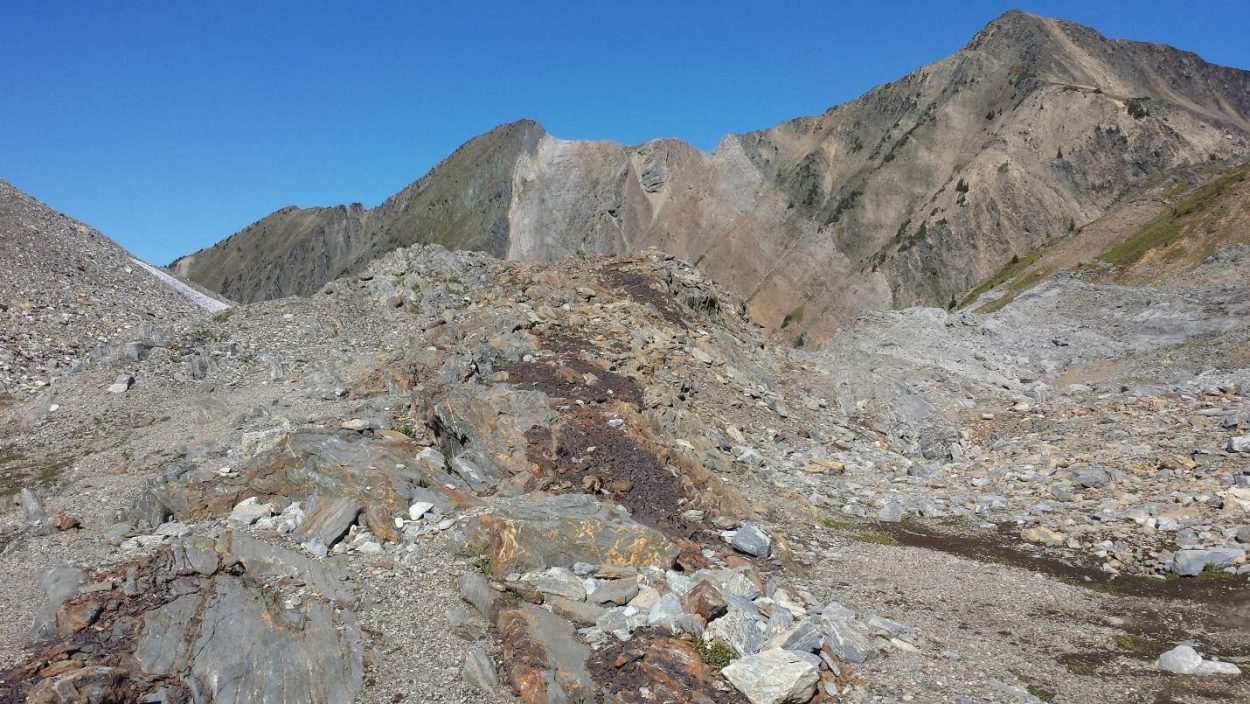
Western Star Resources (CSE:WSR) has identified two tungsten-in-soil anomalies at its Rowland Tungsten Property in Elko County, Nevada, US, following a 315-sample survey.
The highest result, from sample R079, returned 4,240 parts per million (ppm) tungsten, equivalent to a calculated 0.53% tungsten trioxide (WO₃). It also recorded 66.9ppm tin, the survey’s highest tin value.
Soil results reflect surface dispersion and should not be interpreted as mineral resource grades.
The Rowland Main anomaly comprises 18 anomalous samples across approximately 190m by 630m, surrounding historical workings. Six samples exceeded 100ppm tungsten.
R079 lies 250m from the nearest historical working on ground with no recorded past activity, according to the company.
President and CEO Blake Morgan says the results extend the recognised footprint beyond the workings.
“Rowland Main is the larger footprint, and its best sample — 0.53% WO₃ — lies 250m from the nearest historical working on ground with no recorded past activity. That is the part that interests us most: the strongest result came from ground nobody has tested,” Morgan says.
Northern Zone B comprises 13 anomalous samples, peaking at 228ppm tungsten. It lies within a modelled intrusive body identified through three-dimensional magnetic inversion, near rock-chip samples that previously returned 0.35–1.22% WO₃.
Western Star says it plans to integrate the results with magnetic surveys and previous rock-chip and channel assays to refine drill targets. Results from 253 soil samples at the nearby White Star Tungsten Project remain pending.
Separately, the company recently agreed to acquire 14 claims and surface-use rights at Eagle Point in New Mexico.
Western Star Resources is a mineral explorer advancing tungsten assets in Nevada and New Mexico, in the US, alongside its Western Star Property in British Columbia, Canada.
Write to France Pinzon at Mining.com.au
Images: Western Star Resources