
MDF Global MDF Global
Apple’s iPhone boom highlights critical minerals powering smartphones•Presenting a united front for Queensland’s copper sector•Thailand seeks Myanmar mine access amid arsenic pollution•Egypt to set up state-backed company to license artisanal gold miners, free detainees•Brixton closes $7.4 million raise for Thorn, Langis projects•Heliostar banks record $78.7 million for Ana Paula push•Mining giants bet billions on 2030 supply crunch•Gunnison Copper reports Q3 output, revenue surge•Triumph Gold targets $15.46 million for Yukon push•African Rainbow Minerals faces a jobs dispute at Nkomati mine•Angola seeks 10% stake in De Beers under Anglo’s proposed exit•Gold price rebounds but heads for biggest weekly loss since June•Teck copper strike reaches BC port as operator sues union•Copper benchmark rocked by miner-smelter tug-of-war•Zimbabwe mining bill targets community, environmental safeguards•Mount Isa critical minerals hub secures Feasibility Study funding•Eramet initiates $814.5 million capital raise to reduce debt•Richemont backs natural gemstones, declines De Beers comment•‘Tis the season for administration as Comlek falls a second time•OceanaGold Philippines trials wireless blasting at Didipio mine Apple’s iPhone boom highlights critical minerals powering smartphones•Presenting a united front for Queensland’s copper sector•Thailand seeks Myanmar mine access amid arsenic pollution•Egypt to set up state-backed company to license artisanal gold miners, free detainees•Brixton closes $7.4 million raise for Thorn, Langis projects•Heliostar banks record $78.7 million for Ana Paula push•Mining giants bet billions on 2030 supply crunch•Gunnison Copper reports Q3 output, revenue surge•Triumph Gold targets $15.46 million for Yukon push•African Rainbow Minerals faces a jobs dispute at Nkomati mine•Angola seeks 10% stake in De Beers under Anglo’s proposed exit•Gold price rebounds but heads for biggest weekly loss since June•Teck copper strike reaches BC port as operator sues union•Copper benchmark rocked by miner-smelter tug-of-war•Zimbabwe mining bill targets community, environmental safeguards•Mount Isa critical minerals hub secures Feasibility Study funding•Eramet initiates $814.5 million capital raise to reduce debt•Richemont backs natural gemstones, declines De Beers comment•‘Tis the season for administration as Comlek falls a second time•OceanaGold Philippines trials wireless blasting at Didipio mine

WA progresses towards more circular economy

Western Australia has achieved an overall recycling rate of 65% for FY2023-24, representing a 23% increase since 2014-15 in annual waste, according to the latest report from the Western Australia Government. 

The Perth and Peel regions are also on track to meet targets of sending no more than 15% of waste to landfill by 2030, with a current diversion rate of 28%. 

The Western Australian Government says this latest milestone reflects a collective effort of households, businesses, local governments and industry to reduce waste and recover valuable materials. 

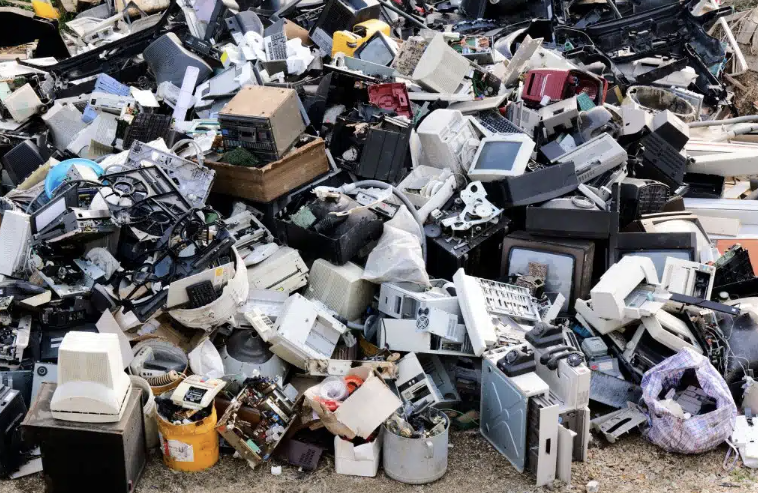
In 2022, the world had generated a record 62 million tonnes of electronic waste, which is equivalent to 30 Titanic cruise ships overflowing with discarded electronics, as previously reported. 

According to the United Nation’s Global E-waste Monitor, electronic waste volumes currently surge five times faster than documented e-waste recycling. 

Some of the common types of e-waste include computers, mobile phones, CDs and DVDs, washing machines, microwaves, old and new batteries, printer cartridges, and circuit boards. 

All of these electronics contain minerals that are essential to the global energy transition, such as cobalt, copper, lithium, and rare earths. 

Cobalt is used in lithium-ion batteries that power electric vehicles and energy storage systems, whale copper is widely used for the energy transition due to its electrical conductivity. Copper is used in wind turbines, solar panels, EV components, batteries, and more. 

E-waste often contains hazardous materials such as lead, cadmium, and beryllium. However, when properly collected and processed, this waste can be transformed into a source of raw materials critical for the clean energy transition.  

Environment Minister Matthew Swinbourn says Western Australia is making progress in cutting waste and boosting recycling, with a 65% recycling rate now within reach. 

“We know there is still more to do — particularly in the municipal and commercial sectors,” Swinbourn says. 

The Western Australian Government says the continued roll out of the three-bin food organics and garden organics (FOGO) system across local governments throughout Perth and Peel aims to boost municipal solid waste recovery in future reporting years. 

In 2023-24, local governments in Perth and Peel, which had the FOGO system, recovered up to 69% of their domestic waste during the reporting period.

Write to Aaliyah Rogan at Mining.com.au   

Images: Earth Org

Add to Watch List:
Author Image
Written By Aaliyah Rogan
Originally from New Zealand, Aaliyah brings several years of experience covering the resources sector, with a focus on companies, commodities and global mining markets. Her reporting has spanned European markets and the evolving global mining landscape, with a focus on the stories and market forces driving change across the sector.