



If Victoria’s mining sector had a dating profile, it might read something like this:
“Historically successful. Rich family background. Good values. Occasionally misunderstood.”
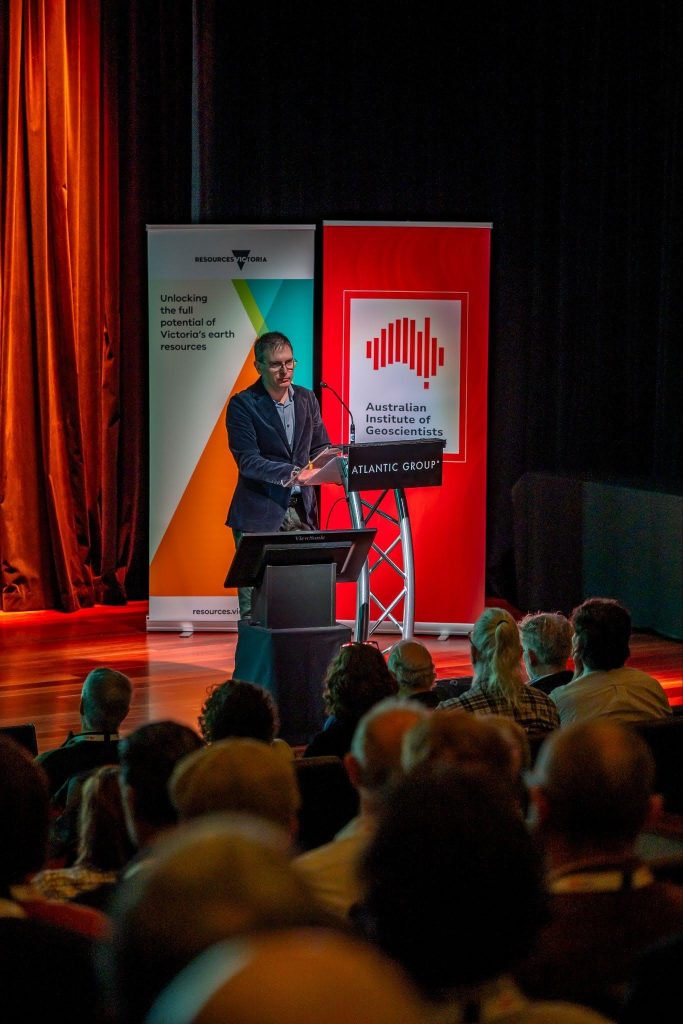
That wasn’t exactly how Resources Victoria CEO Matt Vincent opened the Australian Institute of Geoscientists’ Victorian Minerals Round-up 2026 in Ballarat — but it wasn’t far off.
Standing before a room full of geologists, explorers, and mining professionals, Vincent spent much of his address tackling an issue that has followed Victoria’s resources sector around for years: the perception that Victoria is simply in the ‘too-hard basket’.
It’s too hard to permit. It’s too hard to develop. It’s too hard to do business.
Vincent’s response?
“Not so fast.”
The state that started it all
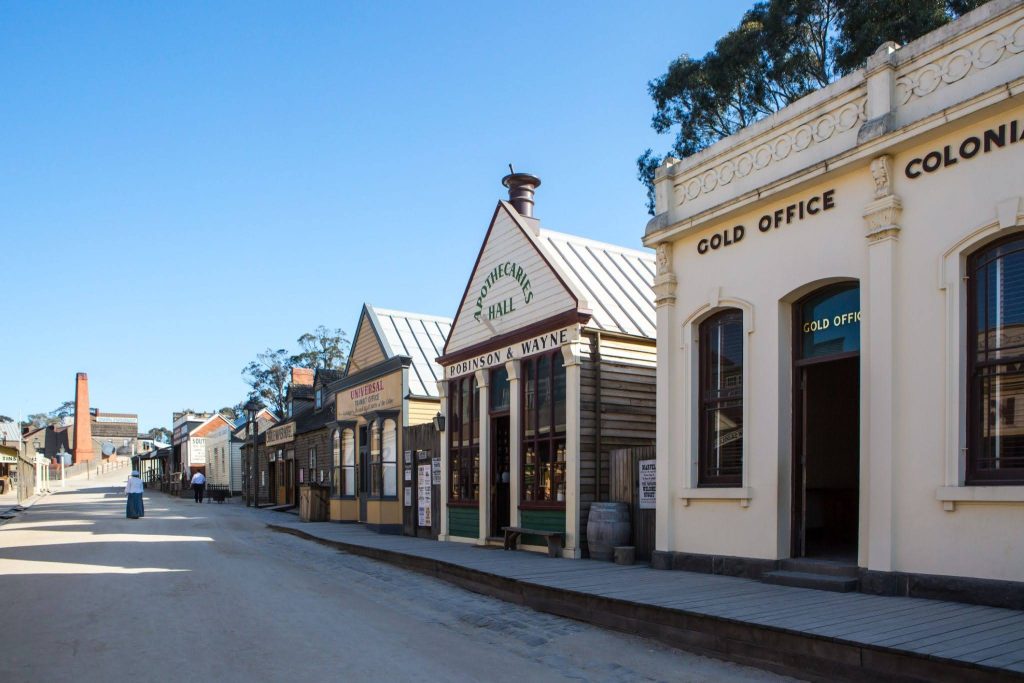
Victorians do not need reminding about mining’s role in the state’s history. The gold rush transformed Ballarat from a paddock into one of the richest places on Earth almost overnight.
According to Vincent, more than $340 billion worth of gold has been extracted from Victoria since those heady days of the 1850s. That’s a lot of gold, enough to make even the most seasoned exploration geologist glance wistfully at the nearest creek bed.
Vincent wasn’t dwelling on the past. His focus was firmly on what remains and, according to figures presented during the address, Victoria still hosts more than $800 billion worth of resources in the ground.
Suddenly those old goldfields don’t sound quite so old.
More than just a gold story
One of the more interesting themes from the presentation is that Victoria isn’t simply a gold story.
The state hosts some of the world’s largest reserves of ilmenite and rutile. It also contains roughly a quarter of global zircon reserves, hosts rare earth potential, and is home to Australia’s only operating antimony mine.
That last point attracts particular interest. Antimony has quietly become one of the hottest critical minerals on the planet thanks largely to its importance in defence technologies and industrial applications.
For a room full of geologists, it serves as a reminder that Victoria’s future may look very different from its past.
Geologists love new data — Victoria has plenty coming
Let’s be honest. Nothing gets a room full of geologists more excited than fresh data, and Vincent had plenty to share. He highlighted a significant body of work underway through the Geological Survey of Victoria, including new collaborations with Geoscience Australia and the Commonwealth Scientific and Industrial Research Organisation.
More than 100 new rock ages have already been established across the state, helping refine geological understanding of key regions.
The Geological Survey is also preparing to launch a major airborne electromagnetic survey across central Victoria this winter. The survey will cover more than 11,000 line kilometres and focus on areas prospective for gold and antimony.
For explorers, that’s the equivalent of getting a higher-definition treasure map.
Faster approvals, new rules
Mining conferences rarely erupt into cheers over approval processes, but Vincent delivered a statistic likely to attract attention from explorers.
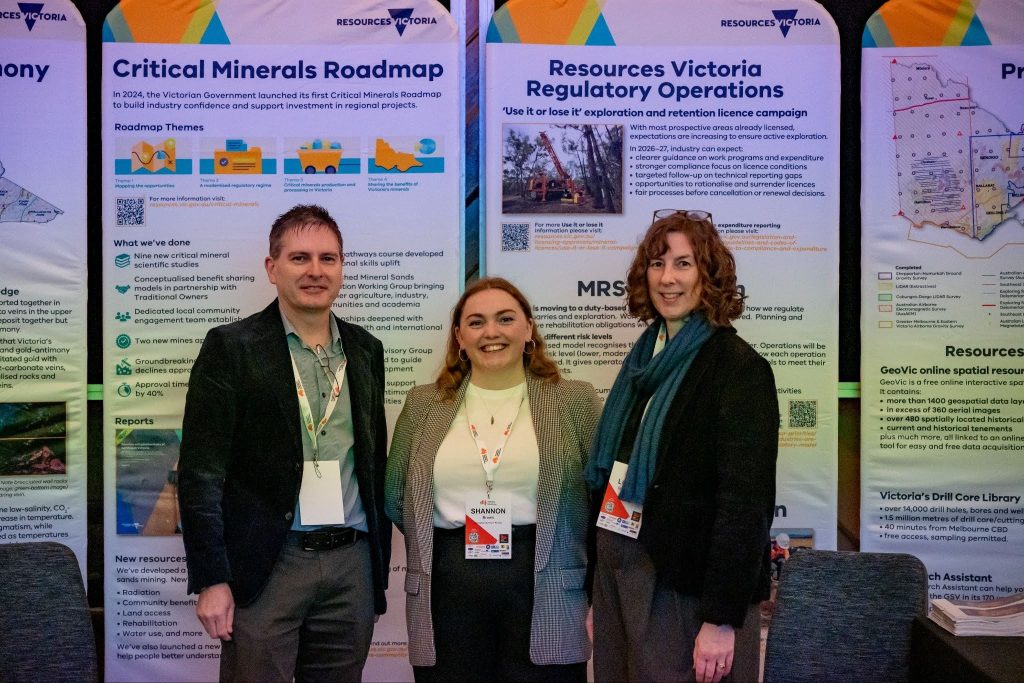
According to Resources Victoria, approval assessment times have improved by around 40%. New mining licences have already been approved for mineral sands projects, while approvals are underway for another three operations.
The state is simultaneously preparing for the introduction of a new Duty Model in 2027, replacing the existing Work Plan system. While Vincent acknowledged some industry nervousness around the change, he stressed Resources Victoria would work closely with operators as the transition unfolds.
Put simply, nobody likes changing the rulebook halfway through the game, but the department wants industry involved in shaping the next one.
Looking beyond the stereotypes
The strongest takeaway from the address isn’t really about gold, zircon, antimony, or approvals, but about perception.
Victoria has long lived in the shadow of larger mining jurisdictions. Western Australia gets the headlines. Queensland gets the scale. South Australia gets all the giant discoveries. Victoria often gets labelled as complicated.
Vincent argues the industry should take another look because beneath the stereotypes sits a state with world-class geology, strong research institutions, growing critical minerals potential and a renewed push to attract investment.
Whether that changes perceptions remains to be seen, but the challenge to the industry is clear. Look beyond the stereotypes.
If Victoria’s geology is as prospective as the state’s scientists believe, the next big discovery may not come from somewhere new.
It may come from a place the industry thought it already knew.
Write to Kate Ryan at Mining.com.au
Images: iStock and Resources Victoria


