



The US is tightening its grip on the battery materials supply chain, with new restrictions on exports of lithium-ion battery black mass, highlighting the nation’s growing focus on keeping critical mineral feedstock with domestic markets.
According to Shanghai Metals Market’s (SMM) analysis, the temporary export controls are designed to strengthen the US’ domestic battery recycling and refining chain by limiting the flow of black mass. Black mass is an intermediate product of lithium battery recycling.
SMM says this move does not constitute a blanket cutoff of all lithium battery material exports. Instead, it targets recycled-stage intermediates rich in lithium, cobalt, and nickel, with the aim of intercepting at the source the rapidly growing domestic pool of end-of-life battery resources.
Currently, global black mass production capacity in 2026 stands at 3.42 million tonnes per year — of which, China accounts for 70%, with a widely distributed base of lithium battery recycling enterprises and substantial capacity.
By contrast, North America accounts for 7% of global black mass pre-processing capacity. Meanwhile, on the hydrometallurgical recycling side, China’s share of capacity reaches 80%.
China holds a leading position globally in terms of capacity and recovery rates in the back-end hydrometallurgical refining of lithium battery recycling. Although Europe and North America possess some hydrometallurgical refining capacity, most of it remains at the pilot of the trial-production stage.
Venari defines lithium resources
However, securing the back end of the supply chain is only part of the equation. As the US seeks to establish a more self-sufficient lithium industry, the nation will also need a reliable pipeline of new domestic resources.
For junior lithium explorers, particularly those operating in North America, this shift could strengthen the strategic value of projects capable of feeding a domestic supply chain.
This turns the spotlight towards the junior end of the sector, where explorers are working to define the lithium resources that could underpin a more secure and geographically diversified North American battery supply chain.
Venari Minerals (ASX:VMS) is one example working to upgrade the resource estimate of the Red Mountain Lithium Project in Nevada. The company recently began a diamond drilling campaign to upgrade the Northern resource to the indicated category, as well as support a maiden Scoping Study scheduled for Q1 2027.
Red Mountain’s resource currently contains 500 million tonnes (Mt) @ 1,139 parts per million (ppm) lithium for 3.03Mt of contained lithium carbonate equivalent in the inferred category. The resource includes the Northern zone which totals 47.9Mt @ 2,193ppm lithium for 560,000 tonnes.
Previously speaking to Mining.com.au, Venari Minerals Executive Director Matt Healy says the northern part of Red Mountain is “extremely high-grade”.
“On its own, it would rank among the top four highest grade lithium projects in the United States,” Healy says.
Due to the nature of the project’s resource, Red Mountain will be able to produce battery-grade lithium directly at the mine site and will not require off-site processing.
“I think this is significant, because unlike many projects, you don’t have to dig through 20m of gravel to get to payday,” Healy says.
Québec’s pipeline
Q2 Metals (TSX-V:QTWO) is also looking to develop a pipeline of new domestic resources in North America through its Cisco Lithium Project in Québec, Canada.
Cisco hosts an inferred resource of 295Mt @ 1.36% lithium oxide, positioning it as among the largest hard-rock lithium deposits in the western hemisphere.
As previously reported, Q2 Metals lead corporate development Chris Ackerman says that there was a surprise that the inferred resource was close to 300Mt.
“In comparison to other lithium deposits, it’s much bigger than others in North America. And to rank as fourth overall globally was amazing,” Ackerman says.
Québec holds nearly half of Canada’s lithium mining projects, producing 5,983 tonnes in 2024. Across the country, several companies are advancing lithium projects, exploring traditional hard-rock mining and unconventional sources.
Collectively, Canada’s total lithium resources are estimated at 14Mt of lithium oxide, equivalent to 6.5Mt of lithium.
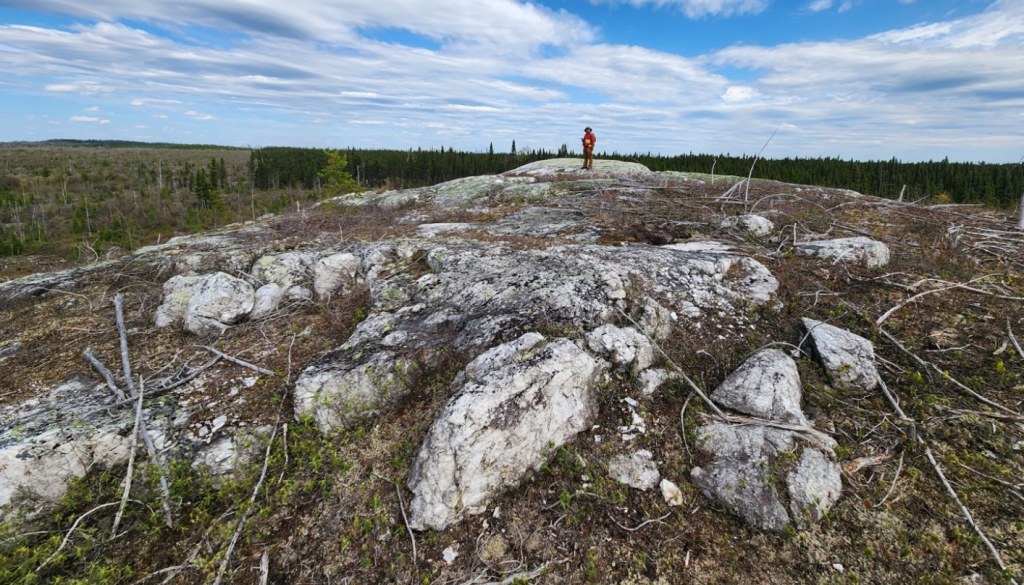
This year, Q2 Metals is planning to tighten the drill spacing within the Cisco deposit’s area to 60–70m spacing, as well as upgrade the resource to an indicated category.
In late June 2026, the company began its Canadian summer drilling program at Cisco, with two diamond core rigs initially deployed. Around 20,000m of infill and exploratory drilling is planned, focusing on converting the resource from inferred to indicated.
CEO Alicia Milne says, with drilling, the company is focused on advancing through the next stages of development.
“With the completion of our inferred mineral resource estimate in April, we have established a globally significant lithium deposit and are now turning our attention to the next major milestone, our initial preliminary economic assessment,” Milne says.
“This study will provide the first comprehensive evaluation of Cisco’s development potential and economics, representing another important step toward unlocking the project’s long-term value.”
Libra Energy’s opportunities
Libra Energy Materials (CSE:LIBR) is also another company focused on lithium discoveries and development, with a portfolio of 30 projects including a C$33 million ($33.55 million) earn-in agreement with KoBold Metals. Both companies are jointly exploring the Flanders South, Flanders North, and SBC lithium projects located in Ontario, Canada.
“Lithium has amazing fundamentals right now. It’s volatile, but that presents new opportunities for acquisitions,” CEO Koby Kushner previously told this news service.
The Flanders North and South projects span 40,000 hectares and have limited historical exploration, with zero historical work assessments prior to Libra Energy acquiring the projects. First-pass exploration programs in 2023 include light detection and ranging (LiDAR) surveys and prospecting, which resulted in new discoveries.
At the projects, hundreds of lithium carbonate tantalum pegmatites were uncovered, with new surface exposures up to 200m wide. In particular, the Homer spodumene-bearing pegmatite is up to 35m wide and 160m long, with grab sample assays up to 2.86% lithium oxide.
The SBC Project covers a newly discovered lithium district abundant with spodumene pegmatite outcrops.
In 2024, a LiDAR survey was conducted, alongside a helicopter-supported prospecting program, which uncovered 18 spodumene-bearing pegmatite outcrops over a 12km trend. To date, only 2% of SBC has been explored.
Ultimately, the US’ efforts to secure its lithium supply chain extends beyond recycling and processing to the need for new domestic resources.
As policy favours supply chain resilience, lithium explorers have an opportunity to play a key role in discovering the lithium deposits needed to build a more secure and diversified North American battery industry.
Write to Aaliyah Rogan at Mining.com.au
Images: Q2 Metals & Mining.com.au


