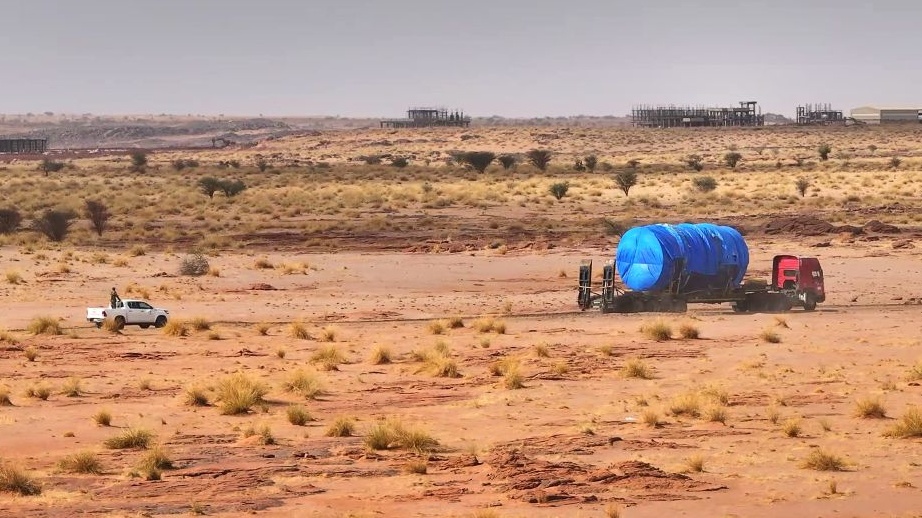
The US Government is preparing to financially back a major uranium project in Niger as part of its broader push to secure critical mineral and energy supply chains in Africa.
The US International Development Finance Corporation (DFC) this week approved up to US$414 million ($582 million) in financing for the Dasa Uranium Project being developed by Canada’s Global Atomic (TSX:GLO).
The approval forms part of more than US$8 billion in investments approved by the DFC board this week.
Global Atomic CEO Stephen Roman describes the financing as a “significant milestone” as the company advances what it calls Africa’s ‘highest-grade’ uranium development project.
The Dasa underground mine is expected to produce 68.1 million pounds of triuranium oxide (U₃O₈) over a 23-year mine plan. Global Atomic has already reached the ore zone through underground development and continues construction of its processing facilities.
The company is targeting first uranium production in the second half of 2028.
US looks to rebuild Niger ties
The backing provides the US with another potential source of uranium as global nuclear fuel requirements are expected to rise over the coming decades.
It could also mark a significant shift in relations between Washington and Niger following the 2023 military coup and the subsequent withdrawal of US forces in 2024.
Niger’s military-led government subsequently strengthened security ties with Russia.
According to Reuters, the US ambassador to Niger urged Washington to rebuild relations with the country and support the Dasa Project after the Trump administration took office with a renewed emphasis on commercial engagement in Africa.
Niger is one of the world’s major uranium-producing countries, while uranium was added to the US critical minerals list in 2025.
Reuters reports that the breakthrough in the DFC financing came after Roman travelled to Washington to resolve outstanding issues that had delayed approval.
The financing could also strengthen commercial ties between the US and Canada at a time of broader trade tensions between the neighbouring countries.
Uranium supply in focus
Global Atomic has already secured offtake agreements covering 8.8 million pounds of U₃O₈ over the first seven years of operations, representing about 11.5% of planned production over Dasa’s current mine life.
Around 90% of that contracted uranium is destined for US utilities, according to the company.
Niger, meanwhile, remains locked in a dispute with French state-backed uranium producer Orano, which historically played a dominant role in the country’s uranium industry.
The DFC investment could increase US involvement in the sector as that dispute continues.
Security risks remain
Despite the financing commitment, Dasa continues to face political, security, and logistical risks.
Niger has experienced repeated attacks by militant groups, while recent unrest has also targeted government and military sites.
Global Atomic says Dasa maintains strong support from Niger’s military-led government, which holds a 20% interest in the project through local operating company SOMIDA.
The company has also been examining alternative routes for transporting uranium to international markets as security concerns complicate access to traditional corridors, according to Reuters.
Global Atomic is a Toronto-based resources company focused on uranium mine development in Africa and zinc concentrate production in Türkiye.
Write to Jackson Chen at Mining.com.au
Image: Global Atomic