For this week’s Transition Thursday, a range of resources companies shared transitional announcements with a heavy focus on battery storage projects.
The Victorian Government is welcoming its “largest-ever battery storage project” at Pacific Green’s Portland Energy Park to aid the country’s shift towards the clean energy revolution.
The government’s Development Facilitation Program has fast tracked the approval stages of the one-gigawatt facility to deliver cleaner, cheaper, and more renewable energy to 345,000 homes in peak demand.
The facility will comprise four 250-megawatt battery parks, accompanied by an on-site terminal station connecting the project to the grid.
“This battery will soak up cheap renewable power during the day and deliver it when demand peaks – powering 345,000 homes and slashing energy bills across the state,” Minister for Energy and Resources Lily D’Ambrosio says.
Since engaging with renewable energy projects as of last year, the Development Facilitation Program has streamlined more than $6 billion worth across 20 projects in this category.
The projects involved have a combined potential to power around 574,000 households each year, while battery storage is capable of meeting a peak demand of 1.6 million households in the evening.
“Our fast-tracked pathway has unlocked more than $6 billion worth of investment into renewable energy projects – helping provide cheaper and cleaner energy to hundreds of thousands of Victorian households,” Minister for Planning Sonya Kilkenny says.
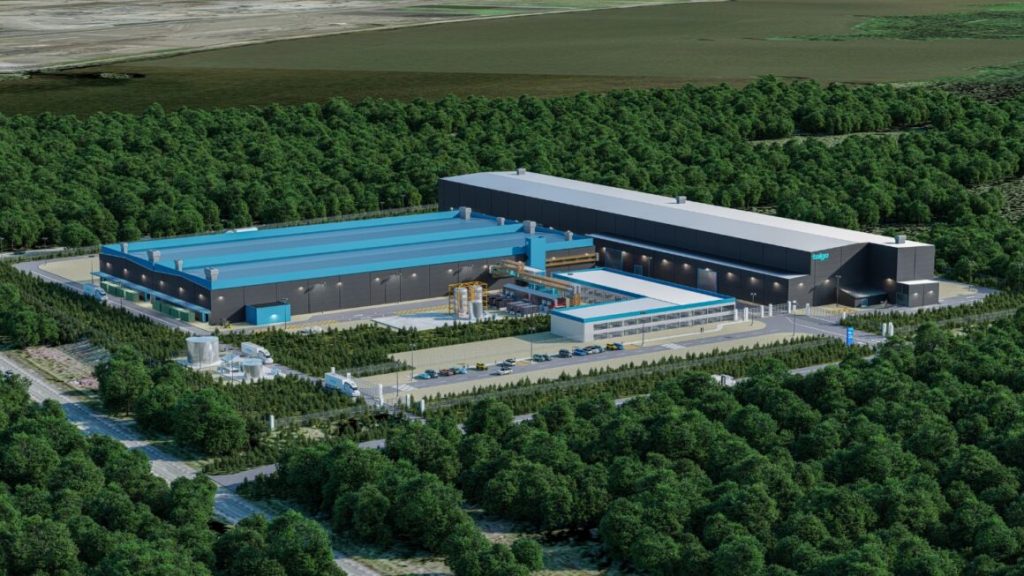
Graphite recovery from battery scraps
Talga Group (ASX:TLG) has entered a non-binding supply agreement with Aurubis (FRA:NDA) to obtain a secure stream of recycled graphite from lithium-ion battery production scrap.
Beginning in 2028, the company will receive recycled graphite from battery foils from Aurubis to scale up to a maximum of 10,000 tonnes yearly by 2030.
The agreement extends three years beyond 2030, with extensions able to be renegotiated or terminated by either party.
The two companies struck a development agreement in September of last year after Talga was successful in producing battery-grade anode material from recycled black mass returned in scrap.
CEO Martin Phillips says the partnership with Aurubis will allow Talga to continue to “close the loop” on battery supply chain waste.
“The sustainably produced graphite anode material is of high performance, and securing a reliable, eco-friendly feedstock source is not only an important step in commercialising Talnode-R but also amplifies Talga’s technological moat,” Phillips says.
Aurubis COO of Multimetal Recycling Inge Hofkens describes the partnership as key in developing a circular solution to recover both copper and graphite from battery foils.
“This collaboration underscoresAurubis’ efforts towards innovation and sustainability in the industry and adds graphite as an additional value stream to Aurubis’ portfolio,” Hofkens says.
Talga will be attending this year’s Noosa Mining Investor Conference, held between 12-14 November 2025, at the Peppers Noosa Resort. Mining.com.au is a media partner for this year’s event.

The electric vehicle push
In Western Australia, Horizon Power has finished up its trial testing technology to test the prospectiveness of two-way charging for electric vehicles, extending a 12-month period.
Using Horizon’s vehicle-to-grid (V2G) technology, the Exmouth trial has demonstrated a potential to manage the two-way flow of energy from electric vehicles both charging and discharging into the network, enabling the vehicles to act as mobile energy storage systems.
The trial indicates that customers will be able to use electric vehicles to power their homes and feed energy back into the grid to earn money back.
Energy and Decarbonisation Minister Amber-Jade Sanderson says the success of this trial marks an important milestone for Western Australia as it transitions to clean energy.
“The findings confirmed for Horizon Power that its technology can manage electric vehicle charging and discharging intelligently, helping it to keep the grid stable while paving the way for flexible, customer-led energy products,” Sanderson says.
“Electric vehicle batteries are powerful. As well as helping to stabilise the grid they have the capacity to power homes and reduce energy bills.
“The success of this trial sets a strong foundation for EVs to be integrated into our power systems.”
Electric vehicles require a range of commodities to run, predominantly relying on lithium, nickel, cobalt, manganese, and graphite in the lithium-ion batteries alone.
According to the International Energy Agency (IEA), 2024 saw the demand for electric vehicle batteries increased by more than 25% in the previous year, to over 950 gigawatt-hour according to the .
Mining giant strikes massive agreement
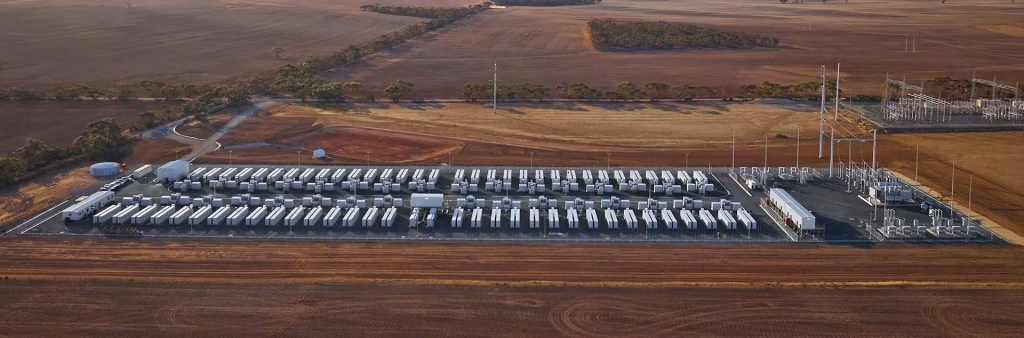
BHP (ASX:BHP) has struck its third and “largest” yet renewable energy supply agreement with Neoen to provide its copper province in South Australia with 100 megawatts of renewable electricity.
Areas covered include the Olympic Dam mine, smelter, and refinery, as well as operations at the Carrapateena and Prominent Hill tenures.
This marks BHP’s second agreement with Neoen, with the project to be supported with 300 megawatts from the Goyder North Wind Farm, firmed by its Goyder Battery that holds a maximum capacity of 200 megawatts of 800 megawatts.
The agreement aligns with BHP’s greater focus on reducing its operations greenhouse gas emission output by at least 30% by 2030, ahead of achieving net zero by 2050.
BHP Asset President Anna Wiley describes this agreement as the copper assets in South Australia taking its next step towards reaching decarbonisation.
“We are using the size and scale of our copper operations to underpin significant new investment in renewable electricity in South Australia,” Wiley says.
“The benefits will go beyond our Copper SA operations as the project will contribute to a more resilient energy future for South Australia through new infrastructure that supports regional communities and creates jobs.”
Across the 2024 to 2030 period, the global capacity for renewable energy is predicted to jump by more than 5,520 gigawatts, 2.6 times more than the previous six year period, as reported by the IEA.
The IEA forecasts the global share of renewable energy in power generation to meet 46% by 2030, marking a notable increase from the 2023 figure of 30%.
Solar photovoltaic and wind are predicted to lead the renewable capacity additions through until 2030, accounting for 95% of the capacity additions.

Write to Maddison Elliott at Mining.com.au
Images: Talga, Horizon Power, International Energy Agency, BHP