



This article is a sponsored feature from Mining.com.au partner Safety Management Professionals. It is not financial advice. Talk to a registered financial expert before making investment decisions.
Technology and innovation are playing a significant role in driving workplace safety, with this trend set to continue into 2025 and beyond.
Traditionally, workplace safety has been reactive and primarily focused on compliance with industry regulations while responding to incidents after they have already occurred.
However, in recent years, there has been a proactive and revolutionary shift towards new safety systems and learning management systems that can be easily customised for the adoption of emerging technologies such as digital applications for safety and training, artificial intelligence (AI), Internet of Things (IoT) and drones, to name a few.
Ever-evolving systems built into Microsoft SharePoint and mobile devices are now making workplaces safer, enabling real-time monitoring of worker health and psychosocial conditions. For example, since 2013, Australia’s workplace fatality rate has decreased 19%, however this has remained relatively steady in recent years.
Australia’s economy would be $28.6 billion better off and create 185,500 additional full-time equivalent jobs if, in an ideal world, there were no work-related injuries and illnesses. Workers across all occupations and skill levels would also benefit from an average wage rise of 1.3%.
The mining and mining equipment, technology, and services (METS) industries create more than 1.1 million Australian jobs, and support many regional and remote communities. Fortunately, while dangerous environments to work in, the resources sector fairs better than most industries when it comes to safety.
In 2023, there were 200 workplace fatalities in Australia compared to 195 in 2022, according to Safe Work Australia’s Key Work Health and Safety Statistics Australia 2024. Key findings from the 2023 data show more than two thirds of all work-related deaths occurred in just three of the 19 industries categorised by Safe Work Australia Mining is one of the highest risk industries which requires companies to invest a small percentage of its revenue to reduce and prevent workplace incidents and meet regulatory compliance.
Australia’s current work-related injury rate of 3.5% – the proportion of people who experienced a work-related injury or illness in the previous 12 months. While this is one-third the global rate of 12.1%, few could argue that there are still too many injuries and illnesses arising from work in this country.
Professional about safety
Privately held Safety Management Professionals (SMP) is one such company founded on a genuine desire to help reduce these numbers and prevent workplace injuries and fatalities and drive change through using technology to reduce costs, improve compliance and improve safety performance.
The Western Australia-based safety and training management company is on a mission to create safer and more efficient workplaces. It primarily serves high-risk industries such as mining, construction, logistics, exploration as well as oil and gas, where safety challenges are complex and require tailored solutions.
Speaking to Mining.com.au, cofounder and Director Craig Douglas says Safety Management Professionals is not just about meeting today’s safety standards, “we’re about preparing businesses for tomorrow and we do this by meeting the businesses needs and budgets”.
SMP specialises in providing tailored Safety Management and Training solutions that empower a range of different businesses to create safer, more productive workplaces. Its service offering spans the development and implementation of Safety Management Systems (SMS), Learning Management Systems (LMS), and innovative tools that streamline compliance and enhance workplace safety culture.
“Our solutions are adaptable and scalable, ensuring your organisation is always ahead of the curve in safety compliance. By combining innovation, customisation, and a people-centred approach, Safety Management Professionals is redefining how businesses manage safety, setting a new benchmark for the industry,” Douglas tells this news service.
“With the introduction of new technologies and evolving regulations, many companies are recognising the need for new Customisable Mine Safety Management Systems and Learning Management Systems that are mobile-friendly, secure, and future-focused.”
The cofounder notes that in 2024, safety in the mining industry in particular continued to improve, with a noticeable reduction in incidents thanks to technological advancements and targeted safety initiatives; however “we still see massive needs for our solutions from the audits we are conducting on sites around Australia”.
“Safety in the mining industry is undeniably critical due to its inherently high-risk environment,” the cofounder continues.
Psychosocial, not just physical
According to Douglas, SMP has an official partnership with Organisational Psychologist Dr Graham Edkins who is considered one of Australia’s leading Safety Management and Human Factors experts.
Tapping into such esteemed experts helps Safety Management Professionals play a vital role in supporting mining safety through the development and deployment of such systems with a focus on both physical and mental health and wellbeing.
“Additionally, SMP integrates psychosocial hazard tools into the Mine Safety Management System, featuring real-time psychosocial hazard reporting and monitoring dashboards and well designed LMS to promote a safer and more proactive workplace culture,” Douglas adds.
“Recognising the importance of holistic safety, the company incorporates tools for real-time psychosocial awareness, addressing risks related to workplace mental health and social factors alongside physical hazards.”
Claims for mental health conditions in Australian workplaces continued to increase in 2022-2023 and now account for 11% of all serious claims. The median time lost from work in these cases is more than five times that recorded across all injuries/diseases.

Innovation leading to change
Innovation has been a key driver of transformative change in the safety industry, with several groundbreaking advancements reshaping how organisations manage and prioritise safety.
As cofounder Craig Douglas tells Mining.com.au, some of the most significant innovations in recent years include Digital Safety Management Systems. These are cloud-based platforms and mobile applications that have revolutionised how organisations track, manage, and communicate safety protocols. Such systems provide real-time access to data, facilitate compliance monitoring, and ensure seamless integration with other workplace tools.
Psychosocial Hazard Monitoring Tools, which integrate into SMS and can now assess mental health risks in real time, “promoting a holistic approach to worker well-being and fostering proactive intervention for psychosocial hazards” are another.
AI-powered and machine learning tools that analyse large datasets to predict potential risks and recommend preventative measures is also a huge game-changer for the industry, Douglas notes. For example, predictive analytics help identify high-risk patterns in workplace incidents, enabling targeted safety interventions.
“At Safety Management Professionals, we see artificial intelligence as an extra tool to enhance workplace safety. We are currently testing AI capabilities within our Risk Assessment Applications, providing an additional layer of innovation and efficiency. This integration is designed to help our clients create more effective risk assessments, ensuring that risks are clearly understood and controls are highly effective,” the cofounder adds.
“These innovations have collectively shifted the industry toward a more proactive, technology-enabled approach to safety, ensuring that workplaces are not only compliant but also genuinely protective of their workforce.
“As technology continues to evolve, the safety industry is likely to see even more transformative advancements in the years ahead.”
Future of safety
Looking ahead for Safety Management Professionals there is significant potential to diversify into other sectors such as renewable energy, manufacturing, and logistics, which also face critical safety demands.
“For example, the renewable energy sector involves large-scale infrastructure projects and emerging technologies that require innovative safety systems. Similarly, manufacturing and logistics present opportunities to address risks associated with automation, supply chain complexities, and worker safety,” the cofounder explains.
“By leveraging our expertise and adaptable systems, Safety Management Professionals can effectively support these industries with scalable and practical safety solutions.”
SMP’s adaptable technology and applications means it could successfully enter such new market segments. This is due to the company’s systems designed to align with individual operations, “ensuring safety and productivity go hand in hand”.
“We leverage cutting-edge technologies, including digital risk assessment tools, mobile-friendly apps, and real-time dashboards for psychosocial hazard monitoring. These innovations not only simplify compliance but also enhance proactive safety management,” Douglas says.
“We leverage cutting-edge technologies, including digital risk assessment tools, mobile-friendly apps, and real-time dashboards for psychosocial hazard monitoring”
“Our systems are designed with both usability, cost cutting and compliance in mind, ensuring they are intuitive for users while being meticulously mapped to regulatory requirements. This approach guarantees alignment with industry standards and streamlines regulatory adherence.”
For example, SMP’s systems integrate with platforms like Microsoft SharePoint and other tools, ensuring accessibility, scalability, and effective data management. It provides comprehensive training programs and user-friendly systems to ensure that workers are confident and competent in applying safety protocols.
SMP platforms are designed to make learning and compliance intuitive and efficient. In mining, its systems are designed by subject matter experts in Safety and Training, with extensive experience in Australian Exploration, Underground, Open Pit Mining, and Processing.
Access to such platforms is needed considering from 2003 to 2023 there were 4,707 people killed in Australian workplaces. About 1,850 fatalities came during the past 10 years during which time more than 1.14 million serious workers’ compensation claims were made involving more than one week of working time lost – that’s about one in every 12 workers.
The latest findings from Safe Work Australia shows the safety of work has improved significantly over time. Yet, over the past 10 years there have been more than 1,880 traumatic injury fatalities in Australian workplaces, and over 1.165 million workers have made a serious workers’ compensation claim involving more than one week of working time lost.
While the toll of workplace injuries and fatalities costs victims and their families much more, ultimately the health and wellbeing of Australian workers affects the whole population. Work-related injuries and illnesses can occur in any industry or occupation, and the effects are felt by every worker, their families, and the community.
Let’s talk about safety!
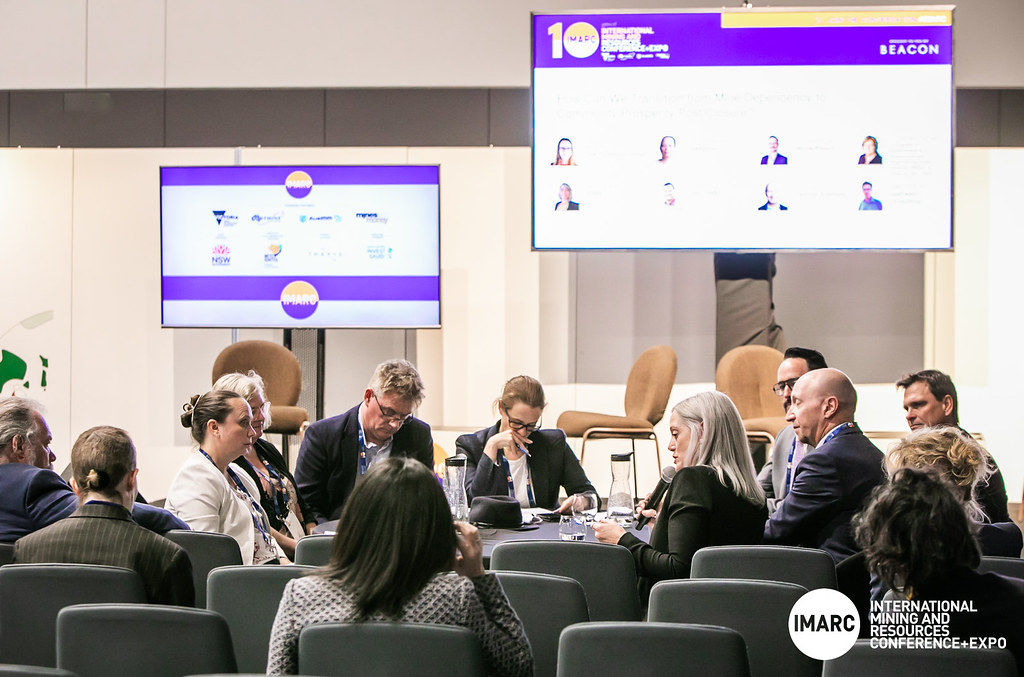
Safety Management Professionals is now launching its own podcast in 2025. The company will be featuring a range of guests who will share their expertise, insights, and perspectives on the challenges and opportunities in the industries they operate within.
Douglas says these engaging discussions aim to shine a spotlight on safety, innovation, and industry best practices.
“We believe in elevating the standard of safety and training in high-risk industries through cutting-edge technology and years of expertise.“
“This approach results in fewer injuries, improved compliance with legal frameworks, and cost savings through paperless, efficient safety management practices – delivering greater value to our customers,” cofounder and Director Craig Douglas adds.
Write to Adam Orlando at Mining.com.au
Images: Altech, SMP & Mining.com.au


