



In April 2013 at Rio Tinto’s (ASX:RIO) Bingham Canyon Mine in Utah, the single largest mine landslide in history occurred in two events, 1.5 hours apart.
Over 140 million tonnes of material “literally exploded out of the wall and travelled one and a half miles in 90 seconds”.
The scale of the slope failure was unprecedented; so large in fact, it caused 16 mini earthquakes.
Yet somehow, despite the fact that it’s the world’s largest and deepest open pit mine which employs some 2,000 workers, not a single person was injured or killed.
This is somewhat of an anomaly for the global mining industry, and in particular in Australia, where safety performance has stagnated.
While Australia’s mining sector made substantial improvements to reduce its fatality rate from 12.4 per 100,000 workers in 2003 to 4.4 in 2015, the past decade has seen the number of fatalities and serious injuries start to climb again.
Seven fatalities have been reported in the mining sector so far in 2024, equating to a rate of 2.4 fatalities per 100,000 workers. This is already an increase from the six fatalities in 2023, and a yearly average of four between 2018 and 2022.
In late August, a worker was fatally injured at the Byerwen Mine in Queensland, the second death at the mine in a month.
In March, one person was killed and two were injured at Victory Minerals’ Ballarat Gold Mine in Victoria following a rockfall in the underground mine.
Susan Fleming, Managing Director of Acting Consulting Training (ACT) Australia, tells Mining.com.au that there are many factors, and some of it comes down to finding new ways to engage and connect with workers.
“Everybody says ‘safety is our first priority’, yet we see incredible innovations in every facet of mining, and we see some great technical innovations in safety, but actually, safety delivery of training is not receiving the same attention,” she says.
“There are still too many really bad videos and death by PowerPoint, stand and deliver sessions.”
There are still too many really bad videos and death by PowerPoint, stand and deliver sessions.
Transforming safety culture through storytelling
This is what prompted Fleming to bring “industrial theatre” to the Australian scene.
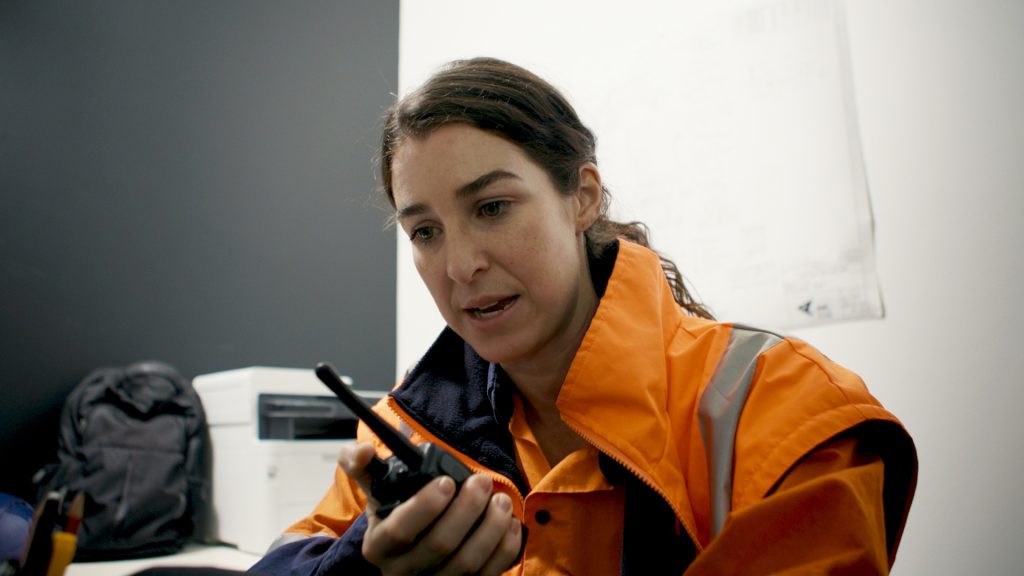
ACT Australia delivers this storytelling through theatre and film performances to inspire the creation of safer working environments. The company brings actual incidents and imagined scenarios to the stage, with actors portraying workers facing high-risk situations.
Fleming says it engages workers in a way that they recognise themselves in the characters and situations portrayed. The relatability and realism is increased with the creative delivery of the story and the skill of facilitation.
“Ultimately it resonates on a personal level. That’s really important for us, that journey that everyone goes on when they come to one of our workshops,” she says.
“And that’s where the science is. Once the cognitive and the emotional click, you actually can’t physically forget it.”
The company’s first production in Western Australia was Deepwater.
On 20 April 2010 the Deepwater Horizon drilling rig, operated by Transocean, exploded and 11 men lost their lives. This occurred just four months after a similar incident in the North Sea on another Transocean rig.
The production re-enacted the events onboard the Deepwater Horizon on the day of the disaster, and followed the investigations, which uncovered “negligence, poor regulation, inadequate maintenance, catastrophic decision making and what the US authorities described as ‘a reckless disregard for safety’”.
Over the past few years ACT Australia has been working more closely with the defence, construction and rail industries, but is now stepping back into mining with a production called ‘The Slip: What Good Looks Like’ being rolled out across Western Australia in October.
This coincides with National Safe Work Month 2024.
This time around, instead of focusing on the catastrophic outcome of a particular event, ACT Australia is delving into what enabled the successful outcome and the further lessons that can be learnt.
Among the actors taking part in ACT productions, five are from the cast of Australian television drama series The Twelve.
Unprecedented collapse
Dr Brad Ross, who worked at Bingham Canyon at the time of the landslide and is author of Rise to the Occasion – a book based on the event, had been in the mining industry a long time, but says the landslide, known as the Manefay, was different.
“First of all they knew that it was going to happen, which in itself is very different and they knew it was going to be large,” he tells Mining.com.au from the US.

Ross explains that Bingham Canyon, which has been around since 1907, is a huge mine that has had a lot of landslides over the years.
“All big mines have landslides. It’s the nature of our business and they’ve had some large ones, but nothing like the Manefay before, and so over time the geotechnical team had gotten very good in detecting and anticipating and predicting landslides,” Ross says.
“They saw signs of movement and the Manefay bed itself that had failed was notorious for landslides. So they were watching this area very closely.
“Their monitoring system was world class at the time, but it’s a lot better today, and so they had a couple of different radar systems that were monitoring it, they had people watching it, the geotechnical engineers were tracking it.”
This monitoring enabled the team to determine when the landslide would eventuate, within a day or two, which meant the mine had been fully evacuated by mid-afternoon on the day it actually happened. It occurred at around 9.30pm in the evening.
But Ross says the pit failed differently to what they expected.
“It literally exploded. It was a totally different failure mechanism than we’d ever seen, probably anybody in the mining industry had ever seen, and so instead of failing over hours or days or weeks, it literally exploded out of the wall and travelled one and a half miles in 90 seconds,” he says.
“It did it in two different events, but each event took about the same amount of time. The average travel speed was 60 miles an hour and it was literally airborne for almost three quarters of a mile.
“Now 144 million tonnes of material, if you do the math on that kinetic energy, that’s like six Hiroshima bombs.”
As a result, some equipment was destroyed and the haul road out of the pit was buried, but work was able to resume fairly quickly and the mine didn’t lose money that year, according to Ross.
One of the things he says they could have done differently though, is brought in an expert with knowledge of large natural landslides.
“Rio Tinto allowed me to write this book and share this information. They’ve been extremely open about the learnings of the Manefay and part of that is because it was a different failure mode and mechanism and such, and something new that companies should be aware of and be able to plan for,” he says.
Positive outcomes for high-risk industries
There is evidence to suggest that industrial theatre can have a positive impact on safety.
This month Science Monthly is publishing the latest research from the University of Western Australia on “Leader safety storytelling: A qualitative analysis of the attributes of effective safety storytelling and its outcomes“.
Authors of the research say the study examines leaders’ safety storytelling as a specific leader communication action that can positively contribute to workplace safety.
Following over 40 interviews with leaders and subordinates, the researchers examined the attributes of leader safety storytelling relevant to its effectiveness, as well as the outcomes perceived to be linked to effective leader safety storytelling.
In 2020, ACT Australia won the Australasian Rail Safety Award. Sue McCarrey, who was the CEO of the Office of the National Safety Regulator at the time, said “there is no doubt that ACT Australia and our collaboration with them has saved lives in the rail industry”.
ACT Australia has been working with infrastructure, building, rail, and transport business John Holland Group, which is now analysing the difference industrial theatre training makes to its safety performance.
Regional HSEQ & Rail Safety Manager Kim Drew says John Holland reached out to ACT Australia following an increase in injuries within its track and signalling team working for BHP (ASX:BHP) in the Pilbara region of Western Australia.
“They’re traditionally a very high performing team. For two or three years they had an impeccable safety record … and then all of a sudden we had an injury, a medical treatment injury, and then we had another one literally the month after,” he tells this news service.
The injuries occurred in June and July 2023. John Holland then held its first training session with ACT Australia in September the same year.
“Between September last year and June this year we were incident free with that team,” he explains.
However, after another incident occurred in July this year, John Holland questioned how it could keep the momentum going and determined it is all about follow-up.
Drew says John Holland did the training with all five of its teams.
“Out of the five teams, two teams have had incidents after between six and eight months. So we can see that this level of training and safety messaging and delivery around organisational culture and accountability is effective for six months,” Drew says.
“So you have to put something in place to keep the message alive and keep addressing the behaviour. If you were to do this properly you would probably do it at the beginning of the year and the middle of the year.”

‘The Slip: What Good Looks Like’ is a free event that will premiere at the Perth Convention & Exhibition Centre on 1 October 2024 before heading to Kalgoorlie, Geraldton, Bunbury, Karratha and Port Hedland. In Kalgoorlie, Ross will address Western Australian School of Mines students and alumni on 10 October.
The production is sponsored by the Western Australian Department of Energy, Mines, Industry Regulation and Safety’s Mental Awareness, Respect and Safety Program.
The final session will wrap up back in Perth at the State Library Theatre on 7 November.
Write to Angela East at Mining.com.au
Images: ACT Australia


