



Brisbane-based innovator Stralis Aircraft has secured a landmark agreement with two Japanese universities, following the Queensland Government’s trade mission to Japan.
The government says it’s a win for the state’s aerospace and manufacturing industries, and supports Queensland’s renewed international engagement under the Queensland–Japan Trade and Investment Strategy 2025–2028.
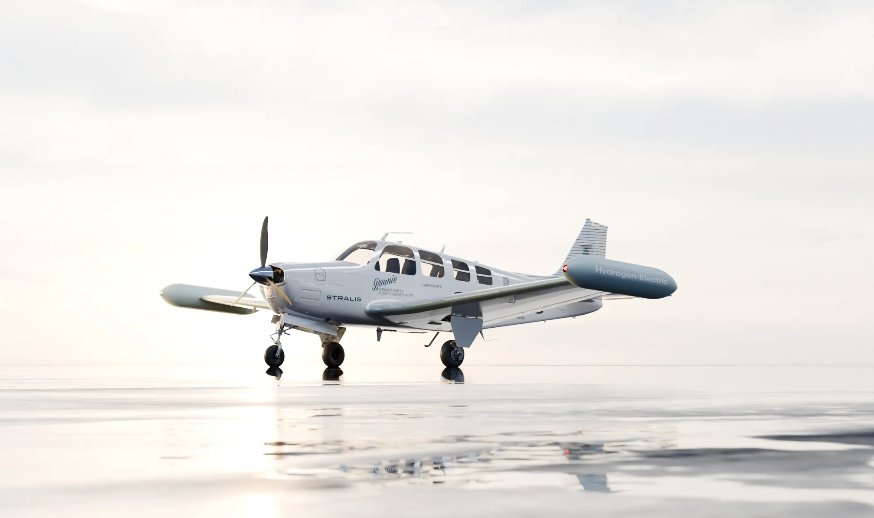
Stralis was founded on a singular idea – to be the world’s leading emission-free aircraft company producing high-performance, low-operating cost, hydrogen-electric aircraft at scale.
It sees green hydrogen as a fundamentally clean, carbon-free, lightweight, and economical solution and has worked on various electric aircraft programs worldwide.
Stralis Aircraft cofounder and CEO Bob Criner says Japan has been a global leader in aerospace and hydrogen innovation for decades.
“This partnership will accelerate our hydrogen aircraft technology development and facilitate skills and knowledge exchange between our organisations,” the CEO says.
“It will also allow Stralis to create cutting edge research and innovation jobs in Queensland, so our workforce is prepared to manufacture and export advanced aircraft technology in the future.”
As part of the agreement, Stralis will work with Akita University and Akita Prefectural University to advance aircraft propulsion systems, workforce training, and joint research.
Akita University / Akita Prefectural University Joint Research Center for Electric Architecture Director Junichi Sakaki says the collaboration in aircraft system electrification, using its testing facilities in Akita, represents a meaningful step in international technological cooperation.
“We look forward to contributing to both talent development and a more sustainable future,” Sakaki says.
The partnership was facilitated by Japanese industrial leader IHI and supported by Trade and Investment Queensland (TIQ) Japan.
Minister for Finance, Trade, Employment and Training Ros Bates says the deal opens new training pathways for aviation engineers and technicians – building the skilled workforce needed to support Queensland’s growing industrial base.
Bates adds that the agreement adds momentum to Queensland’s broader trade mission in Japan, which is strengthening partnerships in education, research, and manufacturing, core sectors in a plan to rebuild the economy and restore global credibility.
Critical minerals are integral for modern aerospace technologies, enabling the development of lighter, stronger, and more efficient systems essential for defence aviation.
Elements such as beryllium, cobalt, rare earth elements, titanium, and tungsten, play critical roles in propulsion systems.
Everything from advanced jet engines and satellite components to cutting-edge avionics rely on these high-performance minerals to deliver strength, heat resistance, electrical conductivity, and precision, among other applications.
Amid surging global demand for aerospace technology, the need to secure supply of critical minerals is increasingly vital.
Write to Adam Orlando at Mining.com.au
Images: Stralis


