


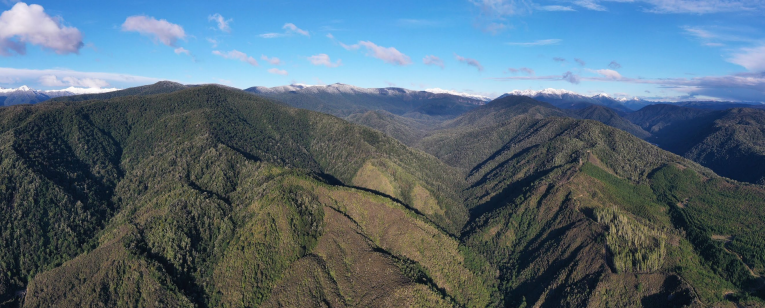
Rua Gold (TSX:RUA) has received drill and surface sampling results from a regional exploration program across the Reefton Project in New Zealand, which is demonstrating the project is a “district-scale opportunity”.
At the Supreme deposit, drill results confirm that the system remains open at depth and along strike. Soil geochemistry also indicates potential extensions to the north.
Hole SPDDH002 returned 3.1m @ 3.2 grams per tonne gold from 202m and 7m @ 1.2g/t gold from 230m.
Rua Gold says this result demonstrates the presence of ‘high-grade’ intervals and broader zones of sulphide-hosted mineralisation typical of large hydrothermal systems.
Meanwhile, hole SPDDH003 confirms that ‘high-grade’ gold at Supreme is not a one-off hit but is associated with a broader mineralised corridor that is open at depth. Results include 0.9m @ 26.9g/t gold from 178m – representing the second highest intercept recorded at the prospect.
A broader regional study is underway at Supreme to better understand the structural controls within the north-south trending mineralised corridor. This study will assist the technical team when planning more aggressive step-outs that target multi-million ounce deposits in the Reefton area.

At the Caledonian deposit, Rua Gold completed 1,579m of diamond drilling designed to test extensions beneath the historical mine.
Drilling consistently intersected the targeted quartz reef structure, with geological logging confirming the presence of shearing, quartz veining and arsenopyrite-bearing mineralisation.
Rua Gold says the results show the Caledonian is a coherent mineralised system with strong potential for further growth down-plunge and along strike.
Some of the results include 3m @ 2.66g/t gold; 1m @ 6.17g/t gold; 1m @ 6.96g/t gold; and 4m @ 6.9g/t gold.
CEO Robert Eckford says while Auld Creek remains the company’s primary development focus, highlights at Supreme and Caledonian highlight the strength of Rua Gold’s regional exploration strategy and the scale of opportunity.
“We continue to hit high-grade intercepts while step-out drilling has nearly doubled the strike extent of known mineralisation and extended the system at depth at Supreme,” Eckford says.
“With further robust geochemical results from Supreme, together with encouraging results from Caledonian, we believe the scale, grade and repeatability can support meaningful resource growth across the district.”
Historical mining in the Reefton Goldfield began in 1872, and by its close, had produced 2 million ounces of gold from underground operations in orogenic quartz vein systems. Rua Gold holds 95% of the tenements in the district.
Write to Aaliyah Rogan at Mining.com.au
Images: Rua Gold


