



As global uncertainties and economic shifts have unfolded, gold has danced through a symphony of highs and lows, reflecting investor sentiment and geopolitical tensions.
At the start of the new financial year on 1 July 2024, gold’s spot price stood at $3,487 per ounce. Since then — driven by a weakening US dollar and rising hopes of a significant rate cut from the Federal Reserve in mid-September — the yellow metal has surged to unprecedented heights in the third quarter of 2024.
Gavin Wendt, founder of MineLife, tells Mining.com.au that this cycle of gold experiencing only brief retreats is one he doesn’t see ending in the near future.
“I see this pattern of higher highs and higher lows continuing,” Wendt says.
Saxo Bank points out that over the last 10 years, there has only been one year where the price of gold has not declined in September, but reports that this year it has, instead, cautiously traded around US$2,500 ($3,626) per ounce, seemingly bucking that trend.
“Having suffered a setback to, but not through, support at US$2,470, the yellow metal has bounced back, supported by a global economic slowdown that has raised the downside risk for growth-dependent commodities and equities sectors,” the bank notes.
In fact, on 16 September 2024, gold shattered expectations as it reached US$2,580 per ounce, only to settle back to US$2,563 per ounce as investors processed the Federal Reserve’s first 50 basis points (bps) cut in over four years.
Whether the world edges towards a slowdown or a full-blown recession, Saxo’s head of commodity strategy, Ole Hansen, emphasises that the Federal Reserve’s monetary policies will significantly shape gold’s trajectory. A lower interest rate environment is actually likely to boost gold’s appeal, especially if the Federal Reserve ends up cutting rates further.
ANZ’s research report The Vault highlights how weak US macroeconomic data has fuelled bullish sentiment, intensifying expectations of an easing cycle from the Federal Reserve.
As the third quarter of this year came to a close, gold’s price set a new record, surpassing US$2,600 per ounce for the first time on 20 September 2024.

Speaking to Mining.com.au, Cameron Alexander, General Manager of Commercial Development at the Perth Mint, says Q3 2024 has delivered a “stellar performance” for the gold industry as the price climbs to new highs.
“The gold price in US dollars surged a further 10% in the third quarter to date and has now surged 26% since the start of the year,” Alexander says.
“The elevated price was great news for Australian gold miners with the local price surging 27% this year, recently breaching and holding above the AU$3,800/oz threshold.
“The record price has ensured cash margins continued to increase, boosting the coffers of many of the locally based miners.”
According to Trading Economics, gold’s new price record comes as expectations of interest rate cuts and increasing geopolitical tensions enhanced the appeal of the bright and dense metal.
Wendt says “lower US interest rates will provide further positive price momentum for gold, as will the impact that lower interest rates will have on the US dollar, which will see it decline and thus make gold more attractive in terms of other currencies.”
Kicking off the first day of the fourth quarter of 2024, gold’s price stands at US$2,630 per ounce at 7.30am AEST. However, caution lingers among gold explorers; as Hamelin Gold (ASX:HMG) Managing Director Peter Bewick says “risk capital is in short supply” in this volatile market.
A quarter of strength
During the third quarter, gold demonstrated resilience in price, supply, and demand, translating into a stronger sentiment for gold-focused producers and developers.
Northern Star Resources (ASX:NST) has seen its share price rise steadily since July, climbing from $12.70 to close out the quarter at $15.97.

Similarly, Toubani Resources (ASX:TRE) was trading at around $0.16 at the beginning of July, closing 30 September 2024 at $0.30.
Speaking to Mining.com.au, Toubani CEO Phil Russo says “higher gold prices are only increasing the inherent value in our project and overall interest in Kobada, which is a rare oxide asset of scale”.
Russo highlights that following a $10 million capital raise, the emerging developer intends to further explore multiple targets at its Kobada Main deposit, which hosts 2.2 million ounces of gold.
“We are preparing plans now following our successful capital raise with the goal of growing our resource as we believe the Definitive Feasibility Study that we are on course to deliver in October 2024 will be simply a new baseline for Kobada towards further optimisation down the track,” he says.
While producers and pre-development companies benefit from favourable gold prices, gold explorers are still facing ongoing challenges.
The explorer’s dilemma
Great Boulder Resources (ASX:GBR) Managing Director Andrew Paterson tells Mining.com.au that while gold miners are thriving as their business gains value with rising prices, “for explorers, it’s going to take a while longer before that effect kicks in”.
“We’re in an unusual situation where gold is at record highs and most other commodities are struggling, but the market is yet to attribute value to gold explorers.”
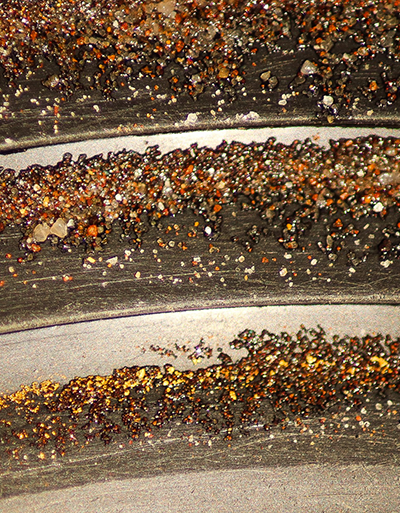
Great Boulder, which has a market capitalisation of $28.56 million, is focused on discoveries and development programs within its flagship Side Well Gold Project in Western Australia. Recent drilling at Mulga Bill has confirmed gold mineralisation, intersecting up to 27.94 grams per tonne gold.
“We’ve been progressing cautiously for the past couple of years, but now is the time to get cracking,” Paterson says.
Hamelin Gold’s Bewick notes that overall market pessimism is restricting risk capital, leaving junior explorers struggling for attention.
“While investors can see low-cost gold producers are very attractive investments at the moment, if there is any uncertainty then any valuation is heavily discounted and explorers (being the most uncertain) are almost ignored,” Bewick says.
Hamelin Gold’s share price has fluctuated this past quarter, peaking at $0.135 in mid-August before dipping to $0.068 to close 30 September 2024.
Bewick underscores the need for a significant new gold discovery to rekindle investor sentiment.
“We need a large-scale new gold discovery to remind investors of the sort of wealth that can be generated through mineral exploration — the market is more ‘half empty’ than ‘half full’ at the moment,” he says.
On the sidelines of the Resources Rising Stars Conference in early September, Lachlan Star (ASX:LSA) exploration manager Alan Hawkins told Mining.com.au it is harder for gold explorers due to the fact that they do not have products to sell.
“You’ve got the upside of the story, but you haven’t got the exposure,” Hawkins said.
“If someone comes across another Hemi, that is obviously going to get noticed. But there are a lot of people doing it hard with projects that might be proximal to some mills and they just aren’t getting the recognition from that.”
On that account, most junior mining executives share the same attitude that investor sentiment correlates with company successes.
Bewick notes “this all changes with success — being a greenfield gold discovery — as investors see value in discoveries in almost any market.”

Demand for discovery
While junior explorers face hurdles, demand for physical gold remains robust, according to ANZ. In the second half of 2024, India is projected to drive gold consumption, with imports of the yellow metal forecast to exceed 400 tonnes.
Jez Reid, director of PMT Refinery, notes that rising gold and silver prices, coupled with financial stress, have spurred activity from a refining perspective.
“I think the rise in the gold and silver price, combined with the financial stresses many people are experiencing right now has been a big contributing factor,” he says.
“PMT has definitely been in a buyback phase for the last two quarters with sales of precious metals domestically being very slow. That said, things are starting to turn.”
The Perth Mint’s sales figures also reflect this trend, as the mint sold 25,884 troy ounces of gold and 647,382 ounces of silver in minted product form in August. By comparison, for the same period last year, the mint sold 34,875 troy ounces of gold and 792,503 ounces of silver minted product form.
Alexander says on the demand side, the feedback is mixed with global demand for bullion boosted by the strength of central bank purchases — albeit at lower volumes than last year — and positive flows in global gold exchange-traded funds (ETFs).
“Jewellery demand meanwhile, which accounts for close to half of global demand each year, has been negatively impacted by the elevated price, sidelining consumers in price sensitive markets as the precious metal price surged,” he says.
Meanwhile, not only were gold sales and demand strong during the third quarter, but global physically backed gold ETFs added US$2.1 billion during August — extending their inflow streak to four months, as reported by the World Gold Council.
All regions, including Australia, reported positive inflows for August 2024, bolstered also by the 3.6% rise in the gold price during that month.
Alexander explains that the change in investment sentiment in recent months reflects the weakness in the US 10-year government bonds and the US dollar as inflation eases and US labour markets continue to cool.
“Moreover, the ongoing geopolitical tensions, especially the Russia-Ukraine conflict, remain a catalyst for additional defensive investments,” Alexander says.
“With the current geopolitical situation unlikely to be resolved in the near term, and the strength of the dollar expected to wane as interest rates ease, higher ETF inflows could well support a higher gold price environment.”
MineLife’s Wendt explains that gold ETF buying serves as an “important” indicator of gold market sentiment, with gold prices rising and falling in line with underlying ETF positioning by investment funds.
“With ETF buying on the rise, this provides even more upwards price momentum for gold,” he says.
All signs point to price increase
Gold’s ascent to record prices has come amid formidable challenges, such as strong inflation, rising interest rates, the strong US dollar, and high US bond yields. As these negative factors are expected to moderate, Wendt anticipates a bright outlook for gold where “all indications point to higher prices”.
Great Boulder’s Paterson believes that throughout the next few months, the market will see clarity on US interest rates and then domestic interest rates, and “we’ll get the US election out of the way”.
At the very least, Paterson anticipates the gold price will stay where it is, or continue its upwards trajectory.
“And with those other areas of uncertainty resolved, people should have confidence to come out and invest money again,” he says.
“When they do, gold is one of the only good areas to invest in. Pin your ears back.”
JP Morgan’s head of base and precious metals strategy Gregory Shearer says the direction of travel is still higher over the coming quarters.
“Forecasting an average price of US$2,500 per ounce in the fourth quarter of 2024 and US$2,600 per ounce in 2025, with risk still skewed toward an earlier overshoot,” Shearer says.
Shearer adds that across all metals, there is a high conviction on a bullish medium-term forecast for gold and silver over the course of this year and into the first half of 2025.
The Perth Mint’s Alexander says interest rate cut expectations, a potentially weaker US dollar, and the ongoing geopolitical tensions will likely continue supporting elevated gold prices in the near future.
“Throw the upcoming US election into the mix and you have another potential catalyst for volatility and a renewed run on the price of the yellow metal,” he says.
In a quarter marked by economic uncertainty and geopolitical tensions, the precious metal has not only weathered the storm but has thrived, continuing to break numerous records.
As market dynamics evolve and we move into the fourth quarter of 2024, all eyes remain on gold — and as the metal continues to dance, investors are keenly listening for the next crescendo.
Write to Aaliyah Rogan at Mining.com.au
Images: Toubani Resources, Great Boulder Resources, Aruma Resources


