

RareX (ASX:REE) has identified ‘significant’ extensions to the ‘high-grade’ zone of primary phosphate mineralisation immediately north of the Rare Dyke rare earths zone at its flagship Cummins Range Rare Earths Project.
Recent reverse circulation (RC) drilling was undertaken as part of the 2022 growth drilling program at Cummins Range to test for extensions of the previously reported Northern Phosphate Zone, now known as the Phos Dyke Phosphate Zone.
As part of the drill program, 20 RC holes were completed in the Phos Dyke Phosphate Zone designed to test for extensions to the ‘high-grade’ phosphate and rare earths in this area, in the Kimberley region of Western Australia.
20 RC holes were completed in the Phos Dyke Phosphate Zone designed to test for extensions to the ‘high-grade’ phosphate and rare earths
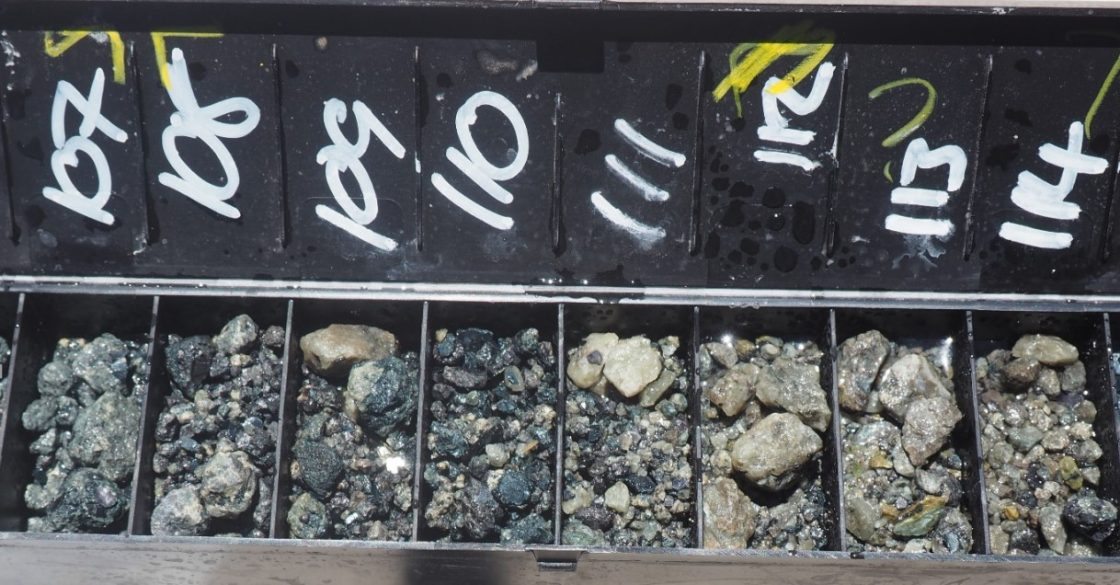
RareX reports ‘encouragingly’, recent drilling has intersected strong zones of primary phosphate mineralisation in the form of coarse apatite in ultramafic rocks. Strong monazite and bastnasite have also been intersected in multiple drillholes.
The 2022 RC drilling has been undertaken broadly on a 40m x 40m drill pattern to the north-east of Phos Dyke over 200 x 150m.
Apatite mineralisation has been intersected over down-hole widths up to 130m with an average width of 50m.
The historical drilling around the Phos Dyke has intersected over 100m of ‘high-grade’ phosphate in several holes.
The phosphate mineralisation extends from surface to beyond 150m depth with 85% of the historical drillholes around the Phos Dyke finishing in apatite mineralisation.
Only one diamond drillhole has been drilled in this area, CDX0015, which intersected 167m at 10% P2O5 and 0.3% TREO, including 26.2m at 19% P2O5 and 0.5% TREO.
Images: RareX Limited