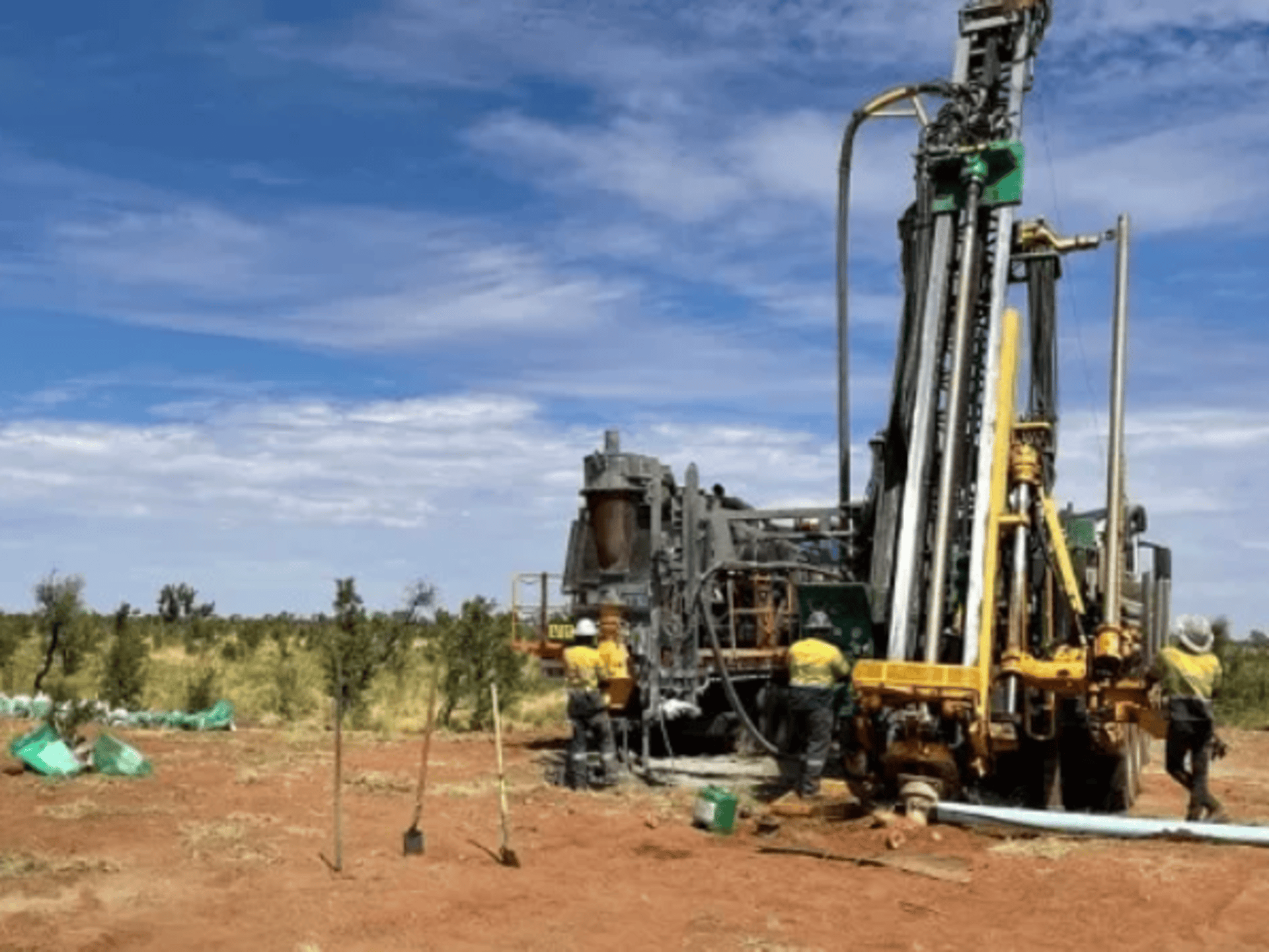
RareX (ASX:REE) reports ‘strong’ results from its metallurgical program for the Cummins Range Rare Earths and Phosphate Project in Western Australia.
Recent flotation test work achieved a 9.5x total rare earth oxide (TREO) upgrade to 25.15% grade, which CEO James Durrant says represents a step forward for the project.
“Achieving a 9.5x upgrade to over 25% TREO on high grade ore [exceeds] all prior Australian beneficiation results for this project,” Durrant says.
“This demonstrates that our ore responds well to modern reagent chemistry when applied with the right expertise.”
Flotation test work done by SGS Lakefield used a composite sample grading 2.85% TREO, which RareX says is typical of ‘high grade’ zones within the deposit.
Test F7 achieved the ‘breakthrough’ result, delivering 25.15% TREO at 29.2% recovery in the final concentrate.
Meanwhile, test F8, designed to improve rougher recovery, delivered 74.6% TREO at 6.41% grade.
One metallurgical program, three workstreams
RareX resumed test work for the project after securing a mining native title heritage agreement with Jaru Traditional Owners and the subsequent award of the mining lease for Cummins Range.
The latest metallurgical program aims to advance three parallel workstreams: conventional flotation beneficiation of rare earth and phosphate concentrates, the extraction and refining of gallium, and the evaluation of a biologically-driven nano-phosphate (nano-P) pathway.
RareX also commissioned SGS Lakefield to conduct advanced mineralogical characterisation using the TESCAN integrated mineral analyser (TIMA) and laser ablation.
TIMA identified monazite liberation grind size as the primary constraint on recovery, providing a technical roadmap to optimisation.
Meanwhile, laser ablation confirmed elevated gallium concentrations within the monazite phase at 5,538 parts per million, highlighting the value of the gallium by-product pathway.
“The TIMA and laser mineralogy has given us, for the first time, a clear mineral-scale understanding of exactly what is limiting recovery, and precisely what to do next to address it,” Durrant says.
Finally, Gega Elements, which was commissioned to evaluate the extractability of gallium from the Cummins Range ore, confirmed near-complete extraction of gallium using optimised acid bake and water leaching.
Gega Elements noted ‘high’ rare earth element (REE) extractions grading between 71–84%, as well as scandium at 89–93% grade and niobium, during leaching. RareX says this indicates potential for a multi-element recovery flowsheet from a single acid bake step.
The company is planning phase two flotation optimisation focusing on finer grind sizes, the evaluation of additional collector and depressant chemistries, and targeted depression trials for iron, calcium, phosphate, and silicate minerals.
Gega Elements will also advance the phase two flowsheet, which includes developing targeted gallium recovery procedures and flowsheet testing on select SGS concentrates.
The nano-P collaboration with Biological Inputs is currently under review, with laboratory results pending validation.
RareX is evaluating other potential collaborations with technology providers for flash joule heating, ionic separation, and advanced leaching.
Cummins Range hosts a mineral resource estimate of 524 million tonnes (Mt) @ 0.31% TREO and 4.6% phosphorus pentoxide (P2O5), containing 1.6Mt TREO and 24Mt P2O5.
RareX is a critical minerals company specialising in REEs, gallium, niobium, and scandium projects in hard rock carbonatites.
Write to Paula Fabe at Mining.com.au
Images: RareX