



This article is a sponsored feature from Mining.com.au partner Ragnar Metals. It is not financial advice. Talk to a registered financial expert before making investment decisions.
Sweden is best known as a highly progressive modern country blessed with picturesque landscapes, abundant forests and lakes, and for its eco-friendly technology.
While some might be surprised that well-known brands such as IKEA, Spotify, and Volvo are Swedish, perhaps its most famous export is ABBA – the Stockholm pop group that dominated the world in the 1970s.
What many people may not know is that Sweden has a vibrant mining sector dating back to the Middle Ages. According to the Sveriges geologiska undersökning – Geological Survey of Sweden (SGU), the oldest known mining laws date back to the 1300s.
In June, Sweden joined the Sustainable Critical Mineral Alliance (SCMA), comprising Canada, Australia, France, Germany, Japan, the UK, and the US.
Under Canada’s leadership, the SCMA was created in December 2022 to drive the global uptake of environmentally sustainable and socially inclusive and responsible mining, processing and recycling practices and responsible critical minerals supply chains.
Australian junior exploration company Ragnar Metals (ASX:RAG) is committed to exploration in Sweden since the country is consistently ranked in the top 10 of the Fraser Institute’s Annual Survey of Mining Investment Attractiveness.
Consultants specialising in rare earth deposits in Scandinavia have been engaged by Ragnar to visit the company’s Melsjon prospect (now called Melson) and other REE occurrences to advance its technical understanding of the mineralisation sites, with work starting in October.
Money, money, money
The Geological Survey of Sweden (SGU) is the expert agency tasked to provide geological information for society’s needs in the short and long term.
In September 2023, Helena Kjellson was appointed as new Chief Mining Inspector of the Mining Inspectorate of Sweden – the second woman to hold this post. Kjellson has been serving as deputy Chief Mining Inspector since the summer of 2022 until the government could appoint a permanent replacement for the previous Chief Mining Inspector.
SGU Director General Anneli Wirtén at the time said Kjellson’s appointment as permanent Chief Mining Inspector was a positive decision by the government. Despite the ongoing geopolitical and economic uncertainties, the SGU maintains the situation in the Swedish mining industry remains stable.
SGU annually collects detailed data on Swedish ore production. SGU statistics reveal that while the number of mines has fallen from around 240 in 1900 (mines and mining fields) to 12 in 2024, production has gone in the opposite direction. In 2021, ore production was the highest ever with 88.6 million tonnes but that decreased last year to 84 million tonnes
The number of exploration permits increased to 649 in 2022, compared to 587 at the end of 2021. The total number of exploitation concessions in force at the end of 2022 was 165.
However, the turnover from mining activities has stayed relatively unchanged at about (Swedish Krona) kr69 billion ($9.84 billion).
Sweden’s mineral resources and mineral reserves are located mainly in the three ore districts of Norrbotten, Skelleftefältet and Bergslagen. There are also assets in the rest of Norrland, Småland, and Dalsland.
The name of the game
The country is a major producer of iron ore in the European Union, as well as lead and zinc. However, Ragnar has scored prospective lithium and rare earths ground.
Ragnar Metals’ rare earths projects are located in Sweden in the Southwest Fennoscandian Shield, an area renowned for the formation of REE deposits.
The Olserum North HREE (heavy rare earth element) Project tenure covers an area of 21 km² in an area has a “high potential” for rare earths deposits, as indicated by rock assays from Hylleled’s prospect, where rocks containing up to 4,044ppm REE have been reported. These rocks also include 63% HREE metals, including 365ppm dysprosium and 54 ppm terbium.
Last month, Ragnar released results from the second field program at Olserum. Rock chip samples taken produced assay results indicating possible scale potential for HREE within a syenite intrusive at the Melsjon prospect (now called Melson).
Commenting at the time, Executive Director Eddie King said the company was “thrilled that our summer fieldwork campaigns unveiled a possible new target style for high value heavy rare earth metal deposits”.
“Discovering syenite intrusive hosted heavy rare earth mineralisation for the first time in the area is incredibly exciting given the scale of this deposit style already known in Sweden,” King said.
“Discovering syenite intrusive hosted heavy rare earth mineralisation for the first time in the area is incredibly exciting given the scale of this deposit style already known in Sweden”
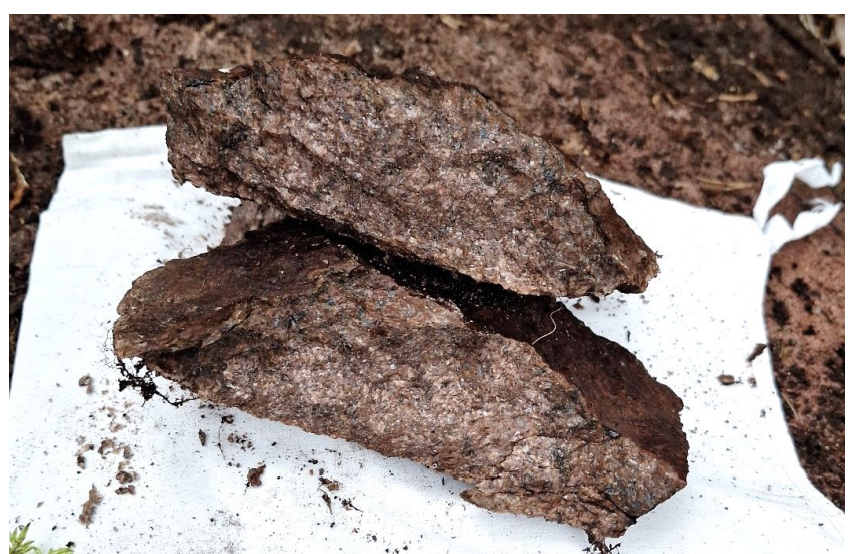
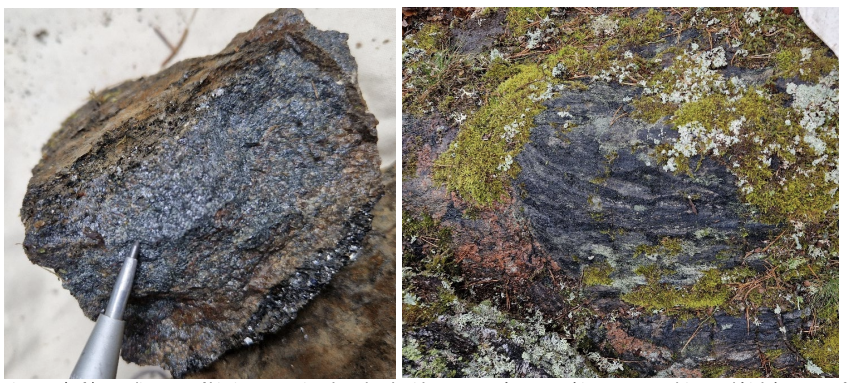
Biotite-magnetite-altered shear zone with assays up to 1.75% TREO with up to 71% HREO were returned. Another highlight was several outcrops of magnetite-poor HREE-bearing syenite intrusive rock with up to 0.6% and 0.5% TREO with 35% to 38% HREO.
Ragnar notes further field work is warranted across the prospect area, which would initially focus on further field sampling and mapping work to try to trace out the extent of the HREE-bearing syenite intrusive in the field.
Consultants specialising in rare earth deposits in Scandinavia have been engaged by Ragnar to visit the Melson and other REE occurrences to advance technical understanding of these mineralisation sites, with work starting in early October.
A ground or drone-based magnetic and radiometric survey across the area is also proposed to define the extent of the mineralised syenite at the prospect and try to find further mineralised syenites along strike in the area that could be concealed beneath vegetation and forest).
Take a chance on me
Meanwhile, Ragnar’s Gruvhagen (NdPr) Project tenure comprises 16.5km² located 20km north of Ragnar Metals’ Granmuren nickel-copper discovery. This district is a well-known locality for REE-bearing carbonate minerals, bastnasite being the most critical REE ore mineral at the Mountain Pass mine in the US.
Ragnar also has several lithium projects in Sweden – Orrvik, Halleberget and Bergom. The latter two are located in an area that is interpreted to occur in the same geological terrain that contains the largest lithium deposits in Scandinavia – the Kaustinen Lithium province in Finland.
In August, exploration updates at Orrvik included a geochemistry review and observations from a recent field trip identifying three drill-ready targets.
Executive Director Eddie King commented at the time the geochemical review and field trip with independent consultants strengthened Ragnar’s confidence in the potential presence of multiple lithium discoveries within a fertile, resource-rich province.
“Our strategic position in relation to the expanding European lithium markets is highly advantageous and work done to date positions the Company well when we drill our targets,” King said.
At Orrvik, a comprehensive review of rock chip geochemistry was conducted alongside Stuart Kerr from OMNI GeoX, a geological services group. Kerr has a track record in exploration and discovery, including the Sinclair Caesium Mine and the Dome North Lithium deposits now held by Develop (ASX:DVP).
The geochemistry analysis revealed clear regional trends, showing the progression from primitive pegmatites to more evolved and mineralised pegmatites at the Orrvik and Stenback prospects. Spodumene-bearing pegmatites have been observed previously at both Orrvik and Stenback, returning rock chip samples of 1.2% Li2O and 1.7% Li2O.
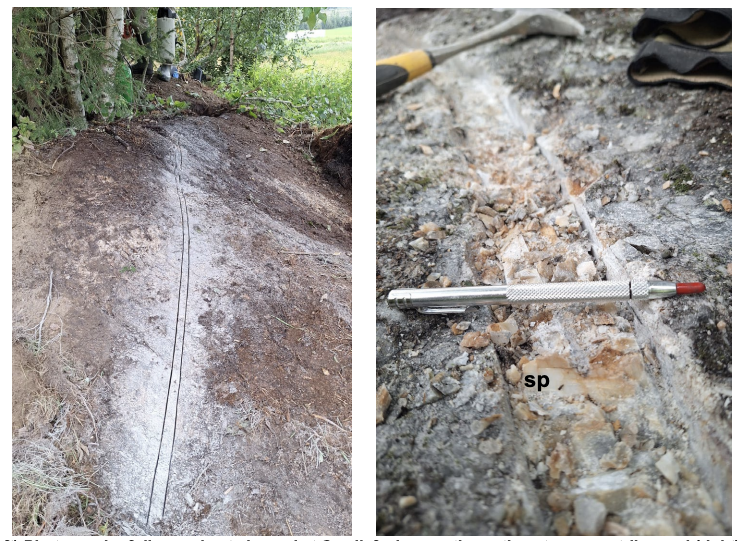
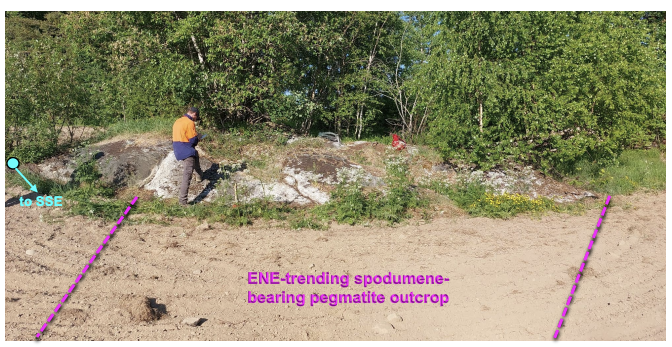
The Orrvik prospect features an 8m wide exposure of a zoned and mineralised pegmatite containing albite, quartz, albite variant cleavelandite, muscovite, and very coarse spodumene crystals 10-30cm in diameter, with previously reported rocks up to 1.2% Li2O, 0.18% Sn and 262 ppm Ta2O5.
The outcrop is surface exposed on a knoll, with the remaining pegmatite likely concealed at depth. Field pXRF readings on K-feldspars confirmed a “highly fertile signature”, with spot readings from 2,700ppm up to 7,862ppm Rb.
Meanwhile, Ragnar’s Halleberget Project is located 10km north of Sweden’s new lithium pegmatite resource at Jarkvissle. Previous exploration work found several LCT pegmatites. Bergom is located 100km east-north-east of Halleberget, known for LCT pegmatites. The Orrvik lithium occurrence yielded assays of 2.8% Li₂O and 7,820ppm tantalum.
Ragnar’s Tullsta nickel project in Sweden was sold to BHP (ASX:BHP) for $9.8 million in September 2023.
The winner takes it all
Ragnar Executive Director Eddie King says the company is strategically leveraged to benefit from Kaiser’s potential success at Nova in a period of record gold prices.
Sweden has had legislation about the right to undertake exploration and exploitation since the Middle Ages. According to the Geological Survey of Sweden, the oldest known mining laws are from the 1300s.
The Minerals Act (1991:45) came into force in July 1992 and has subsequent amendments and applies to specially designated natural resources – so-called concessionary minerals.
At the end of the 1910s, there were almost 500 mines in Sweden that produced almost 8 million tonnes of ore. Only 50 years ago, there were about 100 mines in Sweden that produced some 20Mt tonnes of ore.
The Mining Inspectorate of Sweden is located in Luleå in northern Sweden. It is the government authority which grants permits and concessions for the investigation and mining of minerals in accordance with the Swedish Minerals Act.
The inspectorate is also responsible for supervision and inspections to ensure compliance with the Act, and for providing information about mineral legislation and about ongoing prospecting and mining works to companies, stakeholders, other government authorities, media and the general public.
While Sweden remains the focus, the company also has exposure to other commodities. Ragnar is the largest shareholder of Kaiser Reef (ASX:KAU) owning 16.3% of the company following a strategic
investment as announced on 17 July 2024.
On 21 October, Kaiser Reef announced an $8 million capital raising to complete the last stage of the A1 Mine production plan. Ragnar will receive a 1.5% NSR on gold produced from the A1 Gold Mine for five years starting from 1 July 2025.
Write to Adam Orlando at Mining.com.au
Images: Ragnar


