



Peru is, by no small number of metrics, a mining nation not to be sneezed at. According to the value of its exports, the country ranks second in the world for zinc, third for copper, silver and molybdenum, fourth for tin and mercury, and fifth for lead.
Naturally, this means mining is a major cog in the economy: it accounts for 9.5% of the country’s GDP, around 64% of its total exports, and some 10% of government revenue.
Those figures could rise, too. With mineral reserves measuring 12% of the world’s copper, 15.3% of its silver, 9.5% of its zinc, 5.3% of its lead, 3.9% of its gold, and 2.8% of its tin, there’s plenty of room to grow.
It’s partly for Peru’s resources industry that it has, in recent years, made strong advances in social and development indicators, as well as macroeconomic performance, including reduced external debt, a stable exchange rate, and low inflation.
Such success helped drop the national poverty rate from 58.7% in 2004 to 29% in 2023. Meanwhile, extreme poverty dropped from 17.1% to 5.7%. For these and other reasons, the World Bank considers Peru an ‘upper middle-income economy’, although its GDP per capita remains below the Latin American average.
Much like the rest of the world, COVID brought about a GDP contraction of 10.9% in 2020. But with more or less continuous economic stability since the early 1990s, economic activity has rebounded at a good pace, expanding 13.4% in 2021 and 2.7% in 2022, thanks to higher exports and favourable economic policies. Peru’s economy contracted again in 2023 by 0.6%, but is nevertheless expected to grow 3.1% in 2024.
So, with that all said, there’s perhaps an obvious question: Can Peru keep up the pace?
The infrastructure imperative
A country’s exports mean very little without the necessary infrastructure. Given more than 90% of Peru’s commercial transactions are carried out by sea, it stands to reason that ports have played a major role in the nation’s economic development.
“Peruvian ports have experienced significant growth in cargo movement over the past two decades,” Cristian Calderon, an expert in international logistics and an attorney at Pontificia Universidad Católica del Perú, said earlier this year.
“This increase reflects the development and expansion of maritime logistics in the country, as well as the improvement of port infrastructure and foreign trade promotion policies.”
According to Peru’s National Port Authority (APN), the country’s public port terminals exported more than 55.7 million tonnes in 2023 — a 3% increase over the 54 million tonnes exported in 2022. Out of last year’s shipments, 28 million tonnes was in the form of containerised cargo, while solid bulk and liquid bulk cargo accounted for 20.9 million tonnes and 2.6 million tonnes, respectively.
“For the transformation of Peru into a port hub on the South American Pacific coast, the APN has undertaken extensive work over the past 21 years, actively promoting the development of the port sector and supporting the progress of various port projects, not only along the Pacific coast but also at the Amazonian river terminals,” APN President Juan Carlos Paz Cárdenas said in July.
“It has been crucial for the APN to have a legally mandated mission to guide these processes, as well as to possess a key instrument — the National Port Development Plan, for which the APN is responsible for its formulation and execution.”
A new logistics hub
In service of Peru’s upward trajectory, the country intends to ‘soft launch’ its massive deepwater Chancay port next month. The facility, which authorities hope will become a major shipping hub for South American-Asia trade, will deploy two container ships a week, initially covering a route to Shanghai before expanding to other ports in Asia.
Located north of Peru’s capital Lima, the US$3.5 billion megaport is 60% owned by Hong Kong-based Cosco Shipping Ports (HKG:1199), which will operate the facility. The remaining 40% is owned by Volcan, a subsidiary of Glencore (LSE:GLEN).
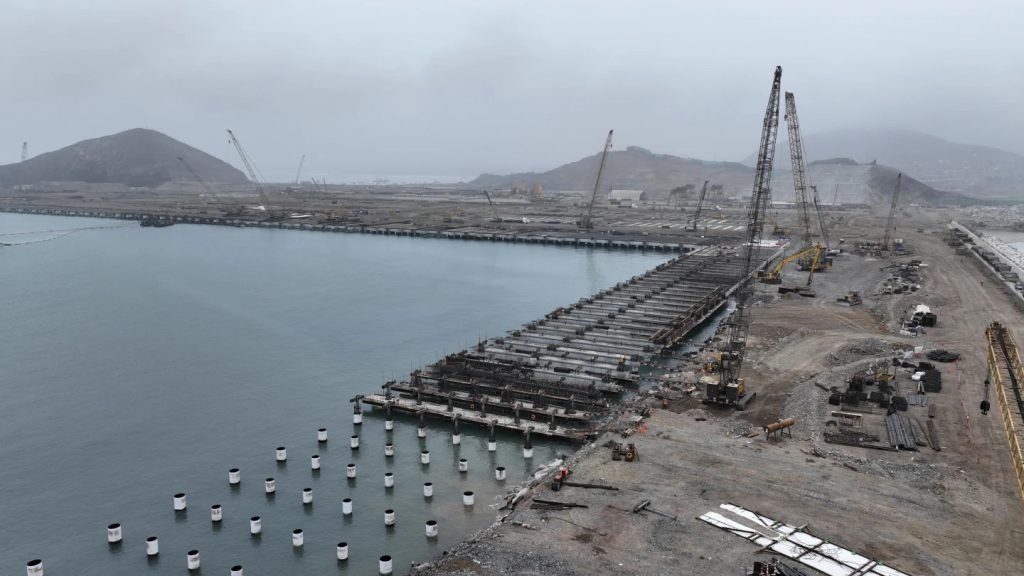
But as part of China’s decade-old ‘Belt and Road’ initiative, the Chancay port embodies the challenge faced by the US and Europe as they look to counter Beijing’s influence in South America.
Indeed, the port is the first China-controlled one in the region, representing a direct gateway to the resource-rich geography. Beijing has already spent the last 10 years unseating the US as South America’s largest trading partner, devouring its soy, corn, and copper.
According to research by the New York-based Council on Foreign Relations, Chinese businesses have invested in 125 ports outside China, including in Hamburg, Rotterdam, and Australia. Of those, 17 ports have majority-Chinese ownership, while 14 have been identified as having “physical potential for naval use”.
“I think the port will change the life of a lot of people in Peru and will promote development and will increase trade,” Gonzálo Ríos Polastri, deputy general manager of Cosco Shipping Ports in Chancay, said earlier this year.
Ríos, formerly a commander in the Peruvian Navy, dismissed the concerns over national security, including that the Chancay port could potentially be used by Chinese naval ships.
“In Peru, there are very strict laws about coming with armed forces to ports or to any part of Peru, even for a single soldier with a rifle,” he noted, adding that there are no provisions in the Cosco contract ruling out military use, simply because it’s not what the port is for.
“If you’re renting a car, you’re not told, ‘Please don’t use it to attack a building,’” he said.
But momentum begets momentum, and some Peruvian officials have used Chancay port as a launchpad to pitch the development of a separate megaport, this time to US investors.
In June, Peru’s ambassador to the US, Alfredo Ferrero, proposed the development of a US$7 billion megaport in Corio, roughly 650km south of Chancay.
“It would be a port that could be a counterweight to China’s Chancay project,” Ferrero said following a presentation to executives in New York.
“100% of Lima’s electricity is owned by China, many of the copper mining projects are owned by China. China will have the largest port in South America. Objectively, that is the situation and the United States has noticed this. But it’s not enough to notice it, action is needed.”
Keeping the momentum going
It would not be an exaggeration to suggest Peru is going through some sort of boom — and it’s not been lost on the country’s leadership.
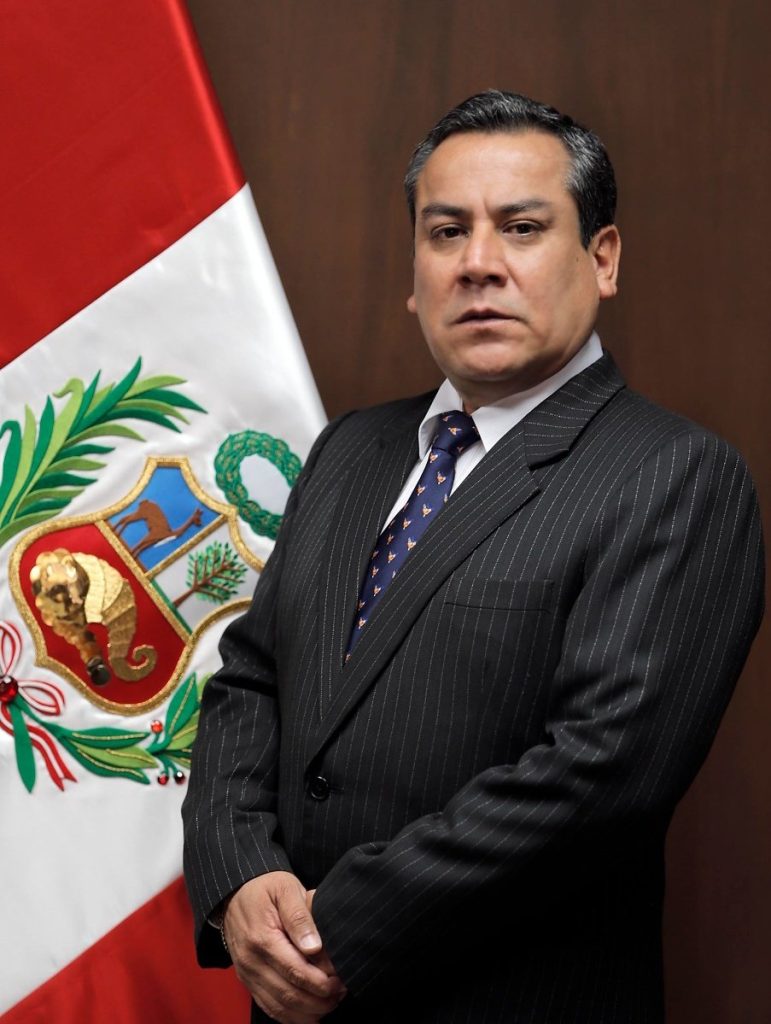
Prime Minister Gustavo Adrianzén Olaya is expected to lead a group, including Peru’s mining, energy, and economics ministers, to attend the International Mining and Resources Conference (IMARC) this week. The delegation’s visit has been promoted by PROMPERÚ, a government agency that promotes investment in Peru, which has been steadily extolling the country’s US$55 billion pipeline of projects.
“The Peruvian government has implemented policies aimed at attracting foreign direct investment,” Soledad Campos de Parry, Senior Trade Commissioner in Australia for PROMPERÚ, tells Mining.com.au.
“These policies include tax incentives, as well as the promotion of public-private partnerships that facilitate the development of mining projects. The country’s political and economic stability also contributes to its attractiveness as a destination for mining investment.”
Campos de Parry also noted the need for continued dialogue, not just with the local communities that surround mining projects, but also internationally.
“This is where we also see opportunities for collaboration between Peru and Australia, keeping mining as an engine of economic and social development,” she adds.
“Constant collaboration with a long-term vision will drive the continuous growth of the mining sector in the country, making it a key engine for attracting foreign direct investment.”
Write to Oliver Gray at Mining.com.au
Images: Pexels, AP/Cesar Barreto, Twitter/@VirgiDArbulu


