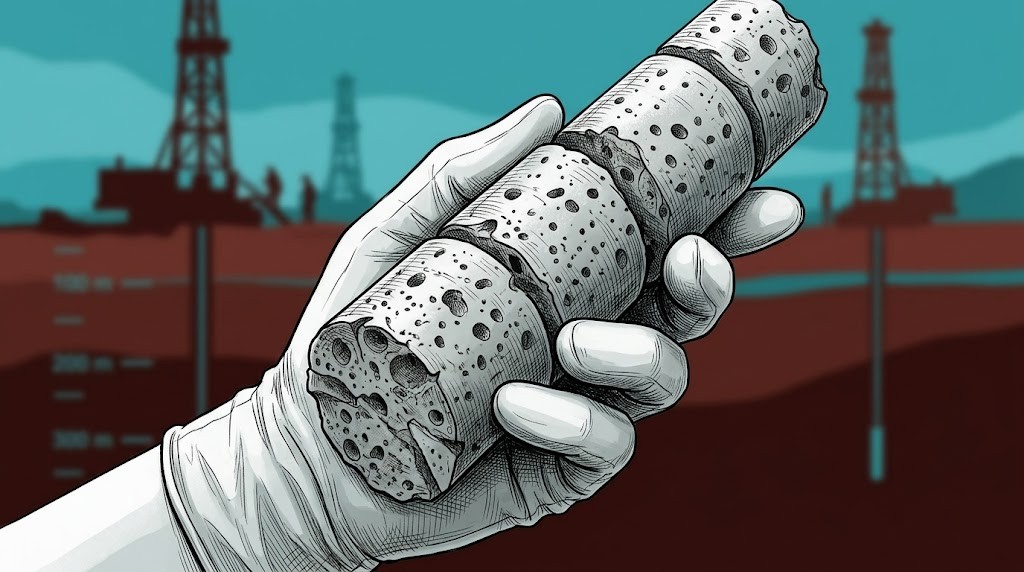
Patagonia Lithium (ASX:PL3) has completed drilling at well eight on its Cilon Project in Argentina, reaching end of hole at 485m depth.
The company also recorded its highest lithium assay of 232 parts per million (ppm) from packer test 10 at 303m depth. 10 of 20 packer tests were successful, with flow rates reaching 705 litres per hour from the 126–137m interval.
Executive Chairman Phillip Thomas considers the well a ‘success’, having reached ‘good’ visual porosity.
Patagonia is now opening the well to 17cm diameter to enable installation of slotted PVC lining to allow the borehole magnetic resonance (BMR) gamma tool to measure porosity across the drilled interval.
“The team is looking forward to the BMR gamma results and core tests which will explain why the lower core didn’t allow packer tests, but with a different pump arrangement could be fertile with lithium brines,” Thomas says.
He adds that the aquifer interval spans 186m to 303m depth, representing 117m of thickness, which is “well above average” for the project area.
One core sample has been sent to Inlab in Buenos Aires and four samples to DBS&A in New Mexico, US, for porosity pressure testing.
Packer test results show increasing lithium concentrations with depth, ranging from 104 ppm lithium (Li) at 66–74m to 232 ppm Li at 303–320m.
Patagonia notes well eight shows consistent geology with well seven, both intercepting the same basement unit and demonstrating an architecture of tuff, ignimbrite, porous sand-clay, ignimbrite, basal breccia, and basement.
The company intends to conduct a 72-hour pump test once the slotted PVC pipe liner is installed, ahead of planned discussions with Atacama Water consultants regarding a pending mineral resource estimate update.
Patagonia Lithium is focused on its major lithium brine projects in Argentina, while exploring for ionic rare earth element clays, niobium, antimony, and lithium in its assets in Brazil.
Write to Paula Fabe at Mining.com.au
Images: Mining.com.au