
MDF Global MDF Global
Apple’s iPhone boom highlights critical minerals powering smartphones•Presenting a united front for Queensland’s copper sector•Thailand seeks Myanmar mine access amid arsenic pollution•Egypt to set up state-backed company to license artisanal gold miners, free detainees•Brixton closes $7.4 million raise for Thorn, Langis projects•Heliostar banks record $78.7 million for Ana Paula push•Mining giants bet billions on 2030 supply crunch•Gunnison Copper reports Q3 output, revenue surge•Triumph Gold targets $15.46 million for Yukon push•African Rainbow Minerals faces a jobs dispute at Nkomati mine•Angola seeks 10% stake in De Beers under Anglo’s proposed exit•Gold price rebounds but heads for biggest weekly loss since June•Teck copper strike reaches BC port as operator sues union•Copper benchmark rocked by miner-smelter tug-of-war•Zimbabwe mining bill targets community, environmental safeguards•Mount Isa critical minerals hub secures Feasibility Study funding•Eramet initiates $814.5 million capital raise to reduce debt•Richemont backs natural gemstones, declines De Beers comment•‘Tis the season for administration as Comlek falls a second time•OceanaGold Philippines trials wireless blasting at Didipio mine Apple’s iPhone boom highlights critical minerals powering smartphones•Presenting a united front for Queensland’s copper sector•Thailand seeks Myanmar mine access amid arsenic pollution•Egypt to set up state-backed company to license artisanal gold miners, free detainees•Brixton closes $7.4 million raise for Thorn, Langis projects•Heliostar banks record $78.7 million for Ana Paula push•Mining giants bet billions on 2030 supply crunch•Gunnison Copper reports Q3 output, revenue surge•Triumph Gold targets $15.46 million for Yukon push•African Rainbow Minerals faces a jobs dispute at Nkomati mine•Angola seeks 10% stake in De Beers under Anglo’s proposed exit•Gold price rebounds but heads for biggest weekly loss since June•Teck copper strike reaches BC port as operator sues union•Copper benchmark rocked by miner-smelter tug-of-war•Zimbabwe mining bill targets community, environmental safeguards•Mount Isa critical minerals hub secures Feasibility Study funding•Eramet initiates $814.5 million capital raise to reduce debt•Richemont backs natural gemstones, declines De Beers comment•‘Tis the season for administration as Comlek falls a second time•OceanaGold Philippines trials wireless blasting at Didipio mine
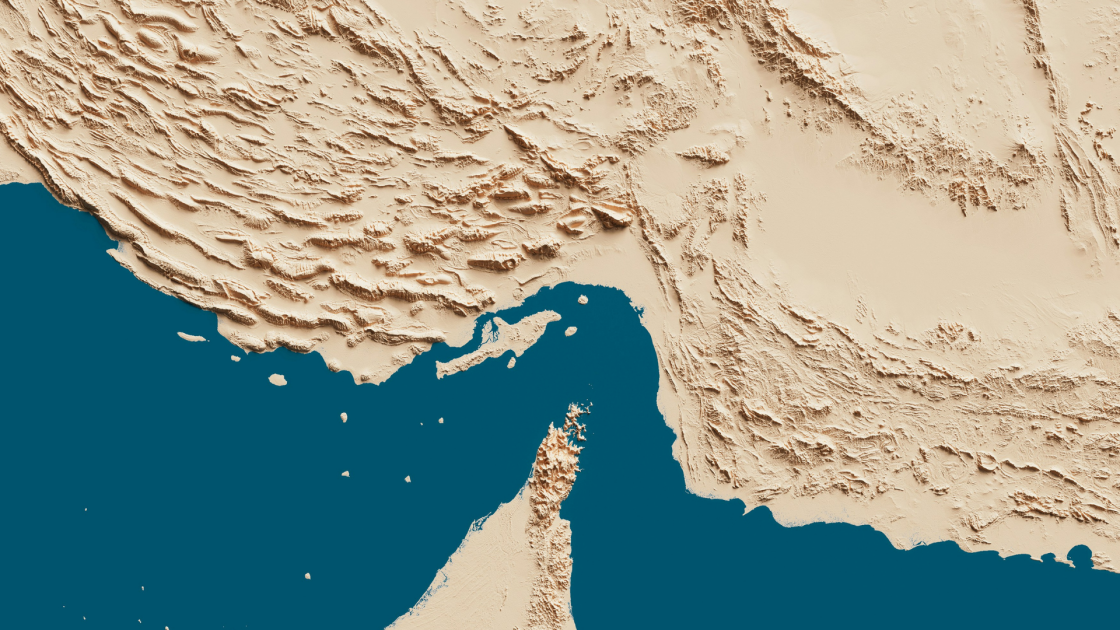
Hormuz, unmarked

Oil refiners and China ‘win’ from the Iran conflict

Oil is again in the headlines as Iran and the US escalate hostilities … again.

Those headlines will focus on the price of crude oil. That’s not the whole story. It may not even be the most important angle, either. 

The ‘real’ problem is not in crude, but oil products, according to veteran energy analyst PK Verleger.

As reported last week, Russia banned diesel exports, giving the price its largest increase in four years. Russia is the second-largest exporter globally after the US.

The Middle East is also a substantial exporter of refined products and therefore the state of the Strait is also important for the global diesel balance.

The diesel ‘crack spread’ — a measure of profitability for the refining industry — is around US$75 ($108) per barrel. For point of comparison, it got to US$100 during the initial stages of the Ukraine war back in 2022.

It means costs will rise for motorists and industry that need it. 

It also means the US and other refiners have every incentive to source crude and sell diesel into the stretched ‘Atlantic’ market. China is helping keep the Asia-Pacific region supplied thanks to abundant inventory.

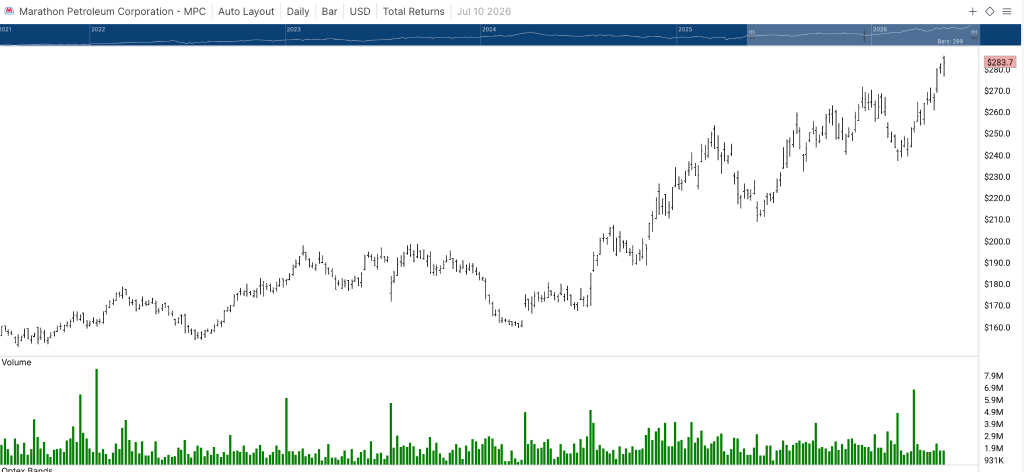
US refiners should remain very profitable while this continues. Marathon Petroleum (NYSE:MPC) is one of them. The stock’s move to all-time highs reflects the market’s expectation of increased profitability. As can be seen in the graph below. 
The world has multiple problems now. The news today is that US President Donald Trump is attacking Iran heavily and Iran is responding aggressively, too. That’s putting oil tankers at risk in the Strait of Hormuz. 

Plus, we have Ukraine actively destroying Russian refining capability while Middle Eastern refiners are still in working order, although strained by the intermittent shipping through the Strait of Hormuz.

There’s a kicker to this situation.

Arguably, China likes to see high petrol and diesel prices because it incentivises global consumers to switch to one of its core industries: electric vehicles.

Ironically, Trump is helping China capture the global car market with his foreign policy, despite his attempt to promote American manufacturing, including US cars.

Write to Callum Newman at Mining.com.au

Images: Market Index & Unsplash 

Author Image
Written By Callum Newman
Callum’s covered the ASX, including resource stocks and the broader mining cycle, for the last 15 years. That included almost a decade as a small cap security analyst. His work has previously featured at Fat Tail Investment Research, LiveWire, Marcus Today and Money magazine.