

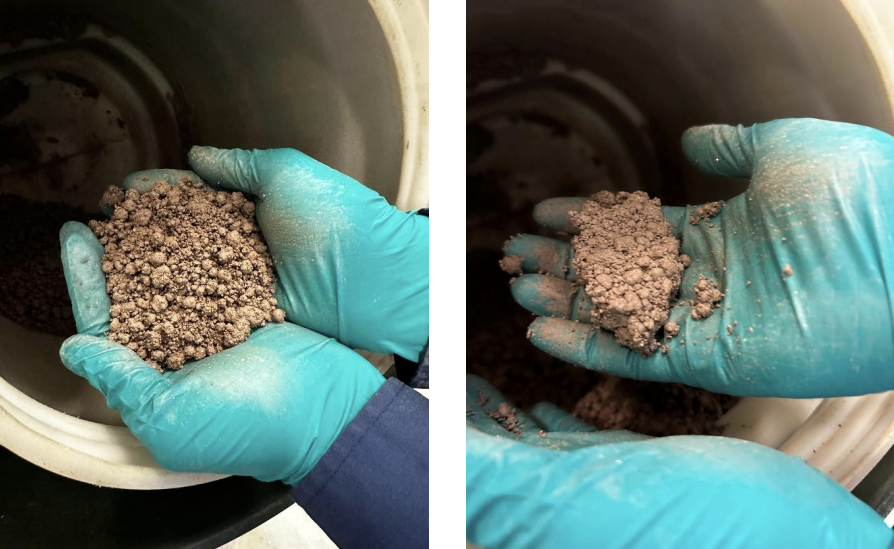
Initial heap leach results are a “potential game-changer” for the economics of OD6 Metals’ (ASX:OD6) Splinter Rock Project in Western Australia, says Managing Director Brett Hazelden.
The “encouraging” results from column leach metallurgical testing conducted by the Australian Nuclear Science and Technology Organisation (ANSTO) have achieved “significant” and higher leach recoveries compared to conventional tank leaching.
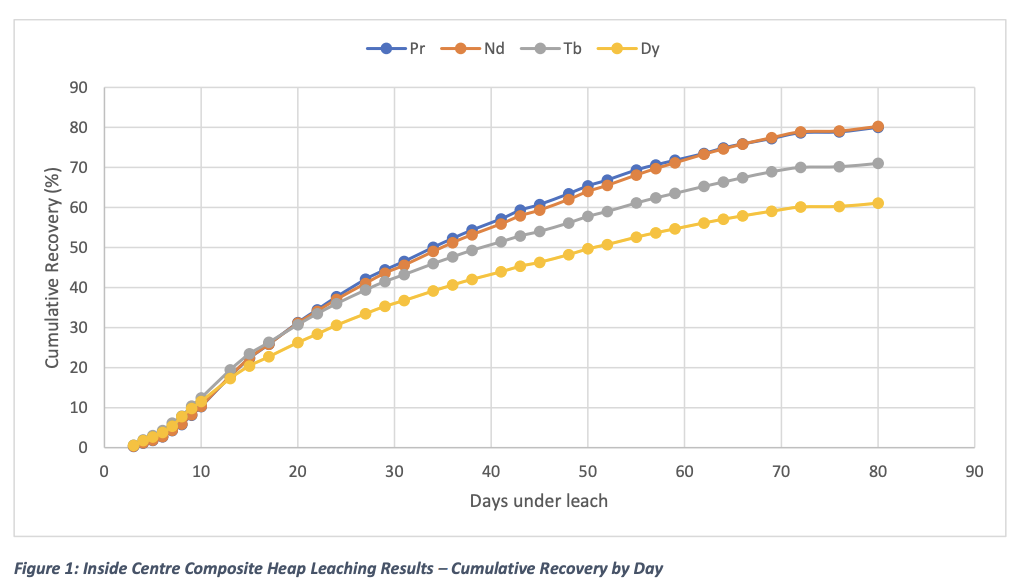
ANSTO achieved 79% magnet rare earth elements (MagREE) from the Inside Centre prospect column leach recoveries, compared to the diagnostic stirred tank leach of 56%. Meanwhile, OD6 Prop prospect column leach recoveries of 65% MagREE were achieved, compared to the diagnostic stirred tank leach of 50%.
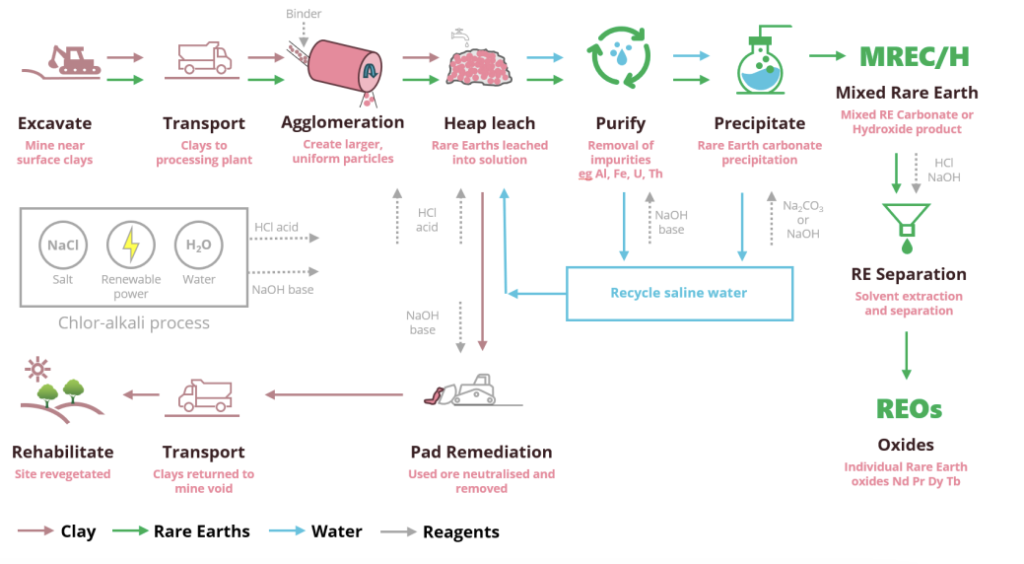
“These initial heap leach results are a potential game-changer for the economics of the Splinter Rock Project, achieving superior recoveries to a conventional tank leach. OD6 now has the potential to remove several processing steps simplifying the flowsheet and materially reducing capital and operating costs,” Hazelden says.
Recoveries for all MagREEs inclusive of neodymium (Nd), praseodymium (Pr), dysprosium (Dy), and terbium (Tb) are high – “this is the key to optimising project economics for any clay hosted rare earth project”, the company says.
Low acid consumption shows potential for high-tonnage, low cost heap-leaching operations. OD6 says the simpler heap leach process has the potential to remove several capital intensive processing steps, which would simplify the flowsheet and reduce capital and operating costs.
“It is clear that the current rare earth pricing environment requires us to come up with smarter and more cost effective solutions to ensure optimal project economics throughout the rare earths market cycle,” Hazelden adds.
“Given these excellent results we have put the Scoping Study on hold until further works around heap leach testing can be completed. These results continue to affirm that Splinter Rock is Australia’s premier clay-hosted rare earth deposit and that when the REE market recovers, Splinter Rock will be amongst the earliest development opportunities.”
The Inside Centre prospect is a “significant” feeder channel running northeast into the main Centre Basin located within an elevated tableland, featuring multiple feeder channels and Booanya granite to the north.
Based on the recovery results for both the stirred diagnostic leaching and small-scale column tests, OD6 says it has observed that column leach recoveries continue to increase over the 80 days and are still leaching, meaning recoveries can be further optimised with a longer duration heap leach time frame.
The Inside Centre prospect is a main focus for the company given its metallurgical recoveries, high grade, low strip ratio and considerable thickness.
The Prop prospect is located at the lowest elevation at Splinter Rock and is surrounded by Booanya granite to the north and south, is interpreted to be a paleo-valley filled with clay, featuring multiple feeder channels.
Based on the recovery results for both the stirred diagnostic leaching and small-scale column tests, the company has also observed, like with Inside Centre, column leach recoveries continue to increase over the 80 days and are still leaching.
OD6 says the key difference between column leach and tank leach that is driving the recovery difference, is that the column leach process is continuously applying an impurity free liquor over 80 days, whereas a tank leach is stirred constantly for 24 hours in the same solution.
The company has created two separate composite samples for the Inside Centre and Prop prospects that represent an area of consistent geology, prior metallurgical outcomes, low striping ratios and significant grades.
The composite samples have been combined by weight to reflect the intercept length to maintain representativity and minimise any bias.
OD6 Metals has identified clay-hosted rare earths at its 100% owned Splinter Rock and Grass Patch projects, which are located in the Esperance-Goldfields region of Western Australia.
REEs are becoming increasingly important in the global economy, with uses including advanced electronics and permanent magnet electric motors in electric vehicles, wind turbines, and robotics.
An updated mineral resource estimate for Splinter Rock was released in May 2024 and confirms that it hosts the “largest and highest grade clay-hosted rare earths deposit in Australia” with a resource of 682Mt @ 1,338 parts per million total rare earth oxides, according to the company.
Write to Adam Orlando at Mining.com.au
Images: OD6