



This is the first in a two-part feature series.
This article is a sponsored feature from Mining.com.au partner NT Minerals Ltd. It is not financial advice. Talk to a registered financial expert before making investment decisions.
What drives the value of a business is as complex as it is varied.
For a junior exploration company, the main value drivers are often considered the prospectivity of the landholding on which it explores, along with the commodities it focuses on.
Oftentimes the strength of the internal structure of the business is overlooked.
For NT Minerals (ASX:NTM), in terms of its value proposition, it is starting from the inside while also working aggressively to take advantage of its position as the largest tenement holder in the McArthur Basin. It is a large intracratonic sedimentary basin in northern Australia, with an exposed area of about 180,000km, in which most of it lies within the northeastern Northern Territory but also extends over to Queensland.
Following a restructuring and name change from Redbank Copper in June 2022, in essence NT Minerals is being ‘driven by the value within’.

Managing Director Hugh Thomas explains that when a mining company has secured a group of skilled and passionate people around a powerful idea, this creates a culture of self-belief and pride, where it can face many challenges to achieve success.
Put simply, when a company seeks the best from itself, it gets the best from the land.
The land that has NT Minerals’ attention is the vast and prospective McArthur Basin, which the company believes potentially hosts a large copper deposit hidden between the McArthur and Century Mines.
Large landholding in world-class basin
Thomas explains that the principal reasons the company finds this area attractive from a mining and investment proposition includes Australia being a low sovereign risk country with a steeped history of mining. In addition, the Northern Territory Government is ‘pro mining’ with a stated agenda to accelerate activity.
“The McArthur Basin itself is an area known for ‘world-class’ base metal deposits, and we have more than 13,000km-square of granted and in-application, highly prospective, tenements.
“The McArthur Basin itself is an area known for ‘world-class’ base metal deposits, and we have more than 13,000km-square of granted and in-application, highly prospective, tenements”
In addition, NTM has accumulated foundation data sets and seasonal drilling that has highlighted mineralisation in a significantly under explored part of the country. Yet, NTM is undervalued on any market metric or comparison.”
Despite having to endure a raft of internal changes over the past year, NT Minerals is steadfast and homed in on its priority focus in the lucrative NT region. As the MD notes, while not as explored as other mining regions such Western Australia, the NT holds its own regarding its mining credentials.
While there are some challenges, for the most part the NT is the place to be for emerging base metal and battery metals miners. 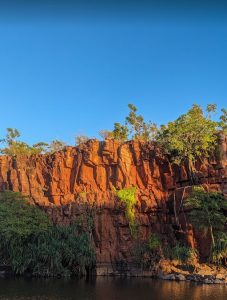
Last year, the Northern Territory Government partnered with the Future Battery Industries Cooperative Research Centre (FBICRC) to advance its exposure to the battery supply chain. Part of its focus includes establishing new mining projects.
The investment is poised deliver a 4-year collaboration between the NT Government and FBIRC and involves industry research to showcase to investors the NT’s capabilities in the battery value chain.
It also forms part of the government’s commitment to achieving a $40 billion economy by 2030.
Thomas explains: “The political side of government seem very proactive and supportive with a well-defined mantra of wanting $40bn by 2030. Whilst on the bureaucratic side the policies and procedures are in many ways still being perfected however the level of access and cooperation we have with, for example, the Department of Infrastructure, Tourism and Trade is excellent and conducive to achieving mutual outcomes.”
There are some procedural challenges in the Northern Territory which do lead to exploration costs being greater than other jurisdictions in Australia. Depending on where an explorer or miner’s tenements are located will determine whether the land is Crown, pastoral, Native Title or ALRA (Aboriginal Land Rights Act), which in turn will determine what statutory and regulatory framework you may need to work within.
In the case of NTM because our tenement package is so large, we have to run different processes simultaneously. In several areas we have tenements that adjoin where one falls under Native Title and the abutting tenement is under ALRA meaning duplication of permitting efforts where the processes have significant differences both procedurally and financially.
“I don’t think it would be unreasonable to say with the rapid increase in interest in the NT as a resource destination that all constituents … are still feeling their way”
I don’t think it would be unreasonable to say with the rapid increase in interest in the NT as a resource destination that all constituents, whether the explorers/miners, the Government, the First Nation people (in our case the Garawa people) and the statutory bodies themselves (Northern Land Council and Central Land Council) are still feeling their way but many of the required process are not well understood and there doesn’t appear to have accessible precedents.
Building a new legacy
Having already overcome a raft of internal challenges from legacy issues of its previous incarnation, NT Minerals is more than prepared and extremely confident of success in the NT. It is also positioned to overcome these aforementioned hurdles, which are not unique to NT Minerals, but affect all explorers in the region.
And why not be confident? A year prior, the company applied for additional tenements which if granted will extend the size of the project area to 13,184km-square.
“The most prospective stratigraphy is situated in areas of the southeast McArthur Basin, thus the ‘land grab’ for the 13,000km-square was both planned and opportunistic to give the company the best chance of finding a tier one sediment hosted deposit.
Historical workers at Redbank have never explained the origins of localised, high-grade copper mineralisation in the breccia pipes. NTM are concentrating on the bigger prize, a sediment-hosted source of mineralisation emplaced in the subsurface by metal brines and precipitated in reductant horizons like the Wollogorang Formation shales.”
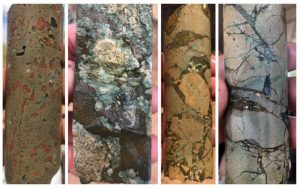
As the MD explains, work completed to date indicates the presence of sediment hosted mineralisation to explain regional copper anomalism. With this in mind, NT Minerals is now executing its strategy to further explore the historic region and validate mineral system models.
Part 2 of this series outlines that NT Minerals’ strategy is more than just validating historic assays. The company will continue to drive value from within, by seeking to get the best from itself in order to get the best from the land, which in this case is the Northern Territory.
As the MD explains in part 2: “I am a very strong believer in the ‘human element’ of business where the right people and culture do make a significant difference.
So, here’s the manifesto – we are sitting on one of the most potentially valuable mining tenements in the country.
A tenement with the potential to deliver incredible benefits for decades to come.
But we realise that we will only realise that potential if we get the best from ourselves.”
Write to Adam Orlando at Mining.com.au
Images: NT Minerals Ltd


