
MDF Global MDF Global
Boliden grows global zinc footprint with $1.8 billion Nexa dealNevGold pushes beyond Limo Butte resourceHeritage drills six-metre gold zone at MelbaSalazar discovers ‘high-grade’ tungsten at Pijili ProjectAguia aligned with newly approved government-backed fertiliser incentiveUS Department of Energy injects $13.9 million into critical mineralsQueensland legislation backs critical minerals explorationDevEx follows Nabarlek-style clues at KPAlurion drills towards Amargosa Prefeasibility StudyMoonlight hits broad copper zones at Peak DownsLegal battle heats up for major iron ore miner FortescueLithium Universe recovers gallium and platinum from e-wasteRokeby reports maiden tailings resource at OmeoCritical Resources links up with CSIRO for battery technologyBarkly advances 10,000m drilling at flagship projectAntilles Gold signs binding deal for Cuban sanction reliefRenegade expands loan facility to $2 millionUS Army’s Janus Program puts spotlight on uranium supplyMithril extends Copalquin silver-gold corridor to 550mFelix Gold produces antimony metal from pilot plant Boliden grows global zinc footprint with $1.8 billion Nexa dealNevGold pushes beyond Limo Butte resourceHeritage drills six-metre gold zone at MelbaSalazar discovers ‘high-grade’ tungsten at Pijili ProjectAguia aligned with newly approved government-backed fertiliser incentiveUS Department of Energy injects $13.9 million into critical mineralsQueensland legislation backs critical minerals explorationDevEx follows Nabarlek-style clues at KPAlurion drills towards Amargosa Prefeasibility StudyMoonlight hits broad copper zones at Peak DownsLegal battle heats up for major iron ore miner FortescueLithium Universe recovers gallium and platinum from e-wasteRokeby reports maiden tailings resource at OmeoCritical Resources links up with CSIRO for battery technologyBarkly advances 10,000m drilling at flagship projectAntilles Gold signs binding deal for Cuban sanction reliefRenegade expands loan facility to $2 millionUS Army’s Janus Program puts spotlight on uranium supplyMithril extends Copalquin silver-gold corridor to 550mFelix Gold produces antimony metal from pilot plant

NSW Government unveils largest open survey data for critical minerals exploration

The New South Wales Government has posted the largest open survey data ever released in the state in a bid to unlock the state’s critical minerals potential.

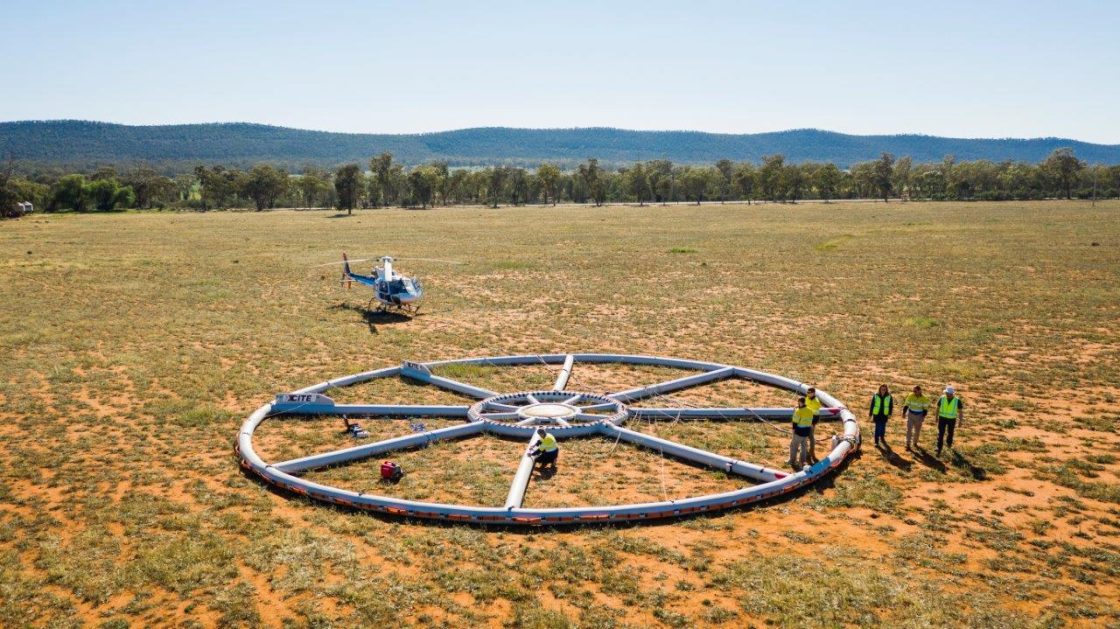
The data was gathered via various geophysical surveys that covered over one-sixth of the state — over 148,000km2 — using eight aircraft over 18 months, and will play a key role in unlocking new mining projects for decades into the future. 

Various methods were used to collect the data, including airborne electromagnetic, airborne magnetic and radiometric, gravity, and deep crustal reflection seismic surveys, with sound waves to delving up to 50km beneath the surface.  

The NSW Government hopes the data will also help deliver a better understanding of the geology of the state, and potentially uncover groundwater aquifers for farmers and regional communities. 

The surveys were undertaken in collaboration with Geoscience Australia. To date, the state government has invested $7.7 million in the geophysical acquisition campaign.    

“Critical minerals are crucial to the future of the global pathway to net-zero and growing employment in regional NSW,” NSW Minister for Natural Resources Courtney Houssos says.

“The release of this data will help stimulate investment and make sure NSW continues to lead the exploration and development of critical minerals in Australia. 

“These surveys are an important piece of the puzzle in developing our understanding of the state’s geological properties, and groundwater supplies. This is crucial information for farmers and regional communities.” 

NSW is home to deposits of 21 of the 31 nationally identified critical minerals. It is also home to all five minerals on the Commonwealth Government’s Strategic Minerals List, including aluminium, copper, phosphorus, tin, and zinc. 

There are currently 2,600 people directly employed in critical minerals mines in the central west of NSW, and another 1,260 in the far west. The NSW Government believes a further 1,600 people are projected to be employed if currently proposed projects begin mining.  

Critical minerals, such as copper and nickel, are key components on solar panels, electric vehicle batteries, and wind turbines, all used as part of the global energy transition. 

The NSW Government is currently reviewing its Critical Minerals and High-Tech Metals Strategy to best position the state to take advantage of the opportunities these resources provide to the future of employment, industry, and the net-zero transition. 

Write to Adam Drought at Mining.com.au

Images: NSW Government

Add to Watch List:
Author Image
Written By Adam Drought
Born and raised in the UK, Adam is a sports fanatic with an interest in Rugby League and UFC/MMA. When not training in Muay Thai and Brazilian Jiu Jitsu, Adam attends Griffith University where he is completing his final year of a Communication & Journalism degree.