



This article is a sponsored feature from Mining.com.au partner Nevada Sunrise Metals. It is not financial advice. Talk to a registered financial expert before making investment decisions.
Nevada Sunrise Metals (TSX-V:NEV) has weathered nearly two decades of shifting commodity cycles, from its early gold prospects at Kinsley Mountain to lithium discoveries at Gemini and copper ambitions at Coronado.
Founded in 2007 and taken public in 2008 during the turbulence of the Lehman Brothers collapse, Nevada Sunrise built its portfolio by acquiring undervalued Nevada projects.
Despite setbacks, the renewed momentum in the gold market has validated the company’s persistence; and today, Nevada Sunrise is positioning itself at the forefront of Nevada’s next exploration era, targeting deeper, higher-grade deposits that echo Barrick’s (NYSE:B) transformative Fourmile discovery.
With the company’s recent acquisition of the Fivemile Gold Project in May 2026, the Griffon Gold Project, and the Coronado Copper Project, Nevada Sunrise is leveraging both traditional geology and artificial intelligence (AI)-driven predictive tools to unlock new potential.
Gold market shift: Rising prices fuel deeper exploration
President, CEO, and Director Warren Stanyer can remember saying in 2016 that the gold price would hit US$1,200 ($1,703) by the end of that year, and how people didn’t believe him back then.
“The rise in the gold price has been very gratifying,” Stanyer says.
“My whole career I [have known] people who believed that gold was being held down, and then all of a sudden, it really started moving and everything that this company was founded upon suddenly had more interest.
“It was really validating, but it just took so long for that to happen.
“I feel like now we can actually do that exploration work we’ve been wanting to do.”
In the current market, Stanyer notes that the new school of thought is to look for deeper, high-grade deposits like Barrick’s Fourmile, largely considered one of the most significant gold finds of the century.
Fourmile stands at 4.6 million tonnes @ 17.59 grams per tonne for 2.6 million ounces in indicated resources and 25 million tonnes @ 16.9 g/t for 13 million ounces in inferred resources, with additional exploration upside, according to Barrick.
“Barrick found this on the 11th hole when they suddenly hit sulphides at depth — we’re talking over 1,000ft and up to 2,000ft, so this is totally different from what people looked for in the past,” Stanyer says.
“Barrick is totally invested in Fourmile, and I speculate that they think it could be way more than what it currently is quoted as. Once you find these plates of rock that contain these grades of gold, the sky’s the limit.”
With Fourmile’s acceleration, Stanyer sees the beginning of a new era of gold exploration in Nevada — and Nevada Sunrise wants to be a part of it.
Nevada: Streamlined permitting in a top-ranked region
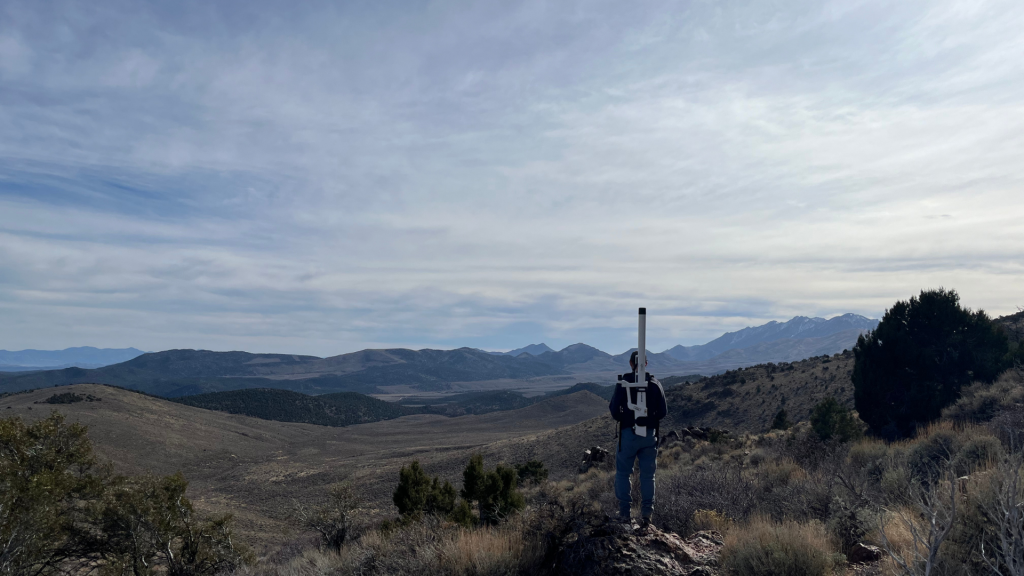
In the Fraser Institute’s Annual Survey of Mining Companies for 2025, Nevada is ranked first globally in most attractive mining jurisdictions in terms of investment attractiveness and policy perception.
It has also ranked consistently in the top 10 over the last 11 surveys.
Stanyer notes that over the past decade, changes in government have meant that permitting is becoming more streamlined and fast-tracked.
“For example, the onus is on the company to report if there’s anything found that should be looked at by archaeologists.”
The Bureau of Land Management (BLM) manages permitting and regulations in Nevada. Stanyer notes that the bureau is a bit different to work with than the US Forest Service, which is methodical in its approach.
Fivemile trend: New claims on Fourmile’s structural corridor
Nevada Sunrise entered into an earn-in option agreement for the Fivemile Gold Project in late May 2026, after being approached about it in the fall of 2025.
The project is located on the same interpreted structural trend that hosts Fourmile and the Gold Rush deposit — Gold Rush being part of a joint venture between Barrick and Newmont (NYSE:NEM) — and is part of that trend on a northeast-southwest basis.
The project consists of 266 unpatented mineral claims on land administrated by the BLM. It covers around 5,496 acres, and is located just five miles southwest of Fourmile, thus the name “Fivemile”.
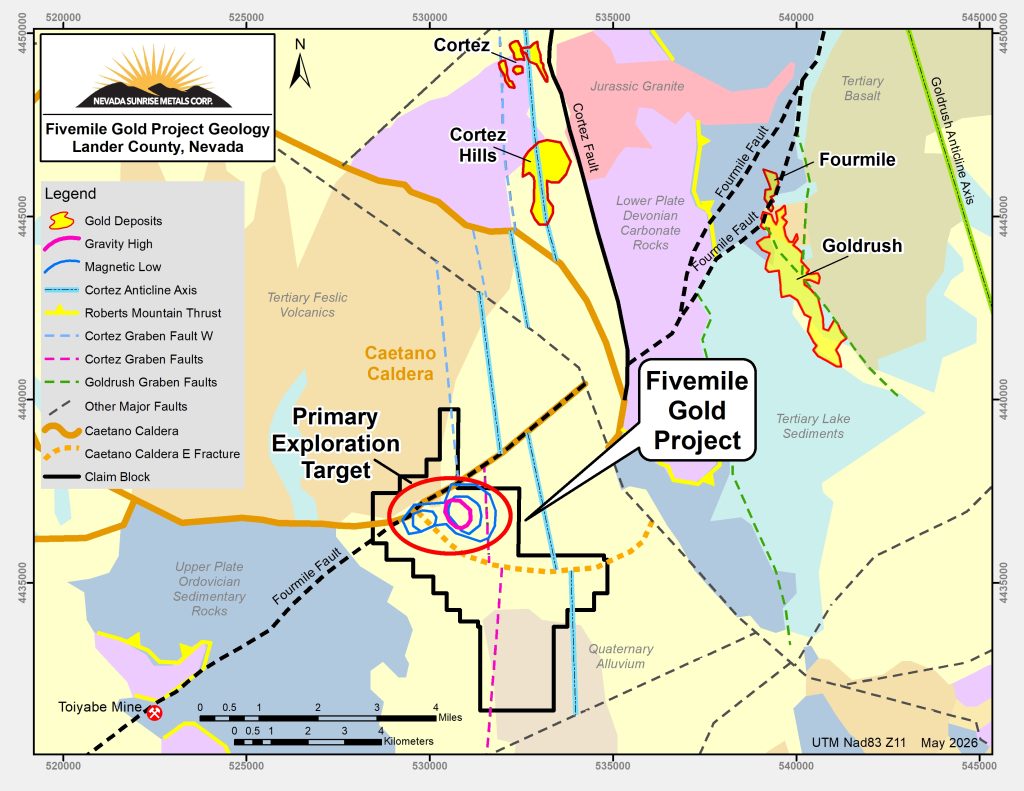
Stanyer believes it’s important to educate people more about Fourmile so that they can also understand what Fivemile is all about.
“As we say in mining, the trend is your friend,” Stanyer says.
“All of these structures that provide the setting for Fourmile and the Gold Rush deposits, they’re all linked together. We just happen to be further to the southwest in a buried environment.”
The Fivemile claims are within a flat area of alluvium-covered shallow pediment, which Nevada Sunrise refers to as the “Fivemile Flats”.
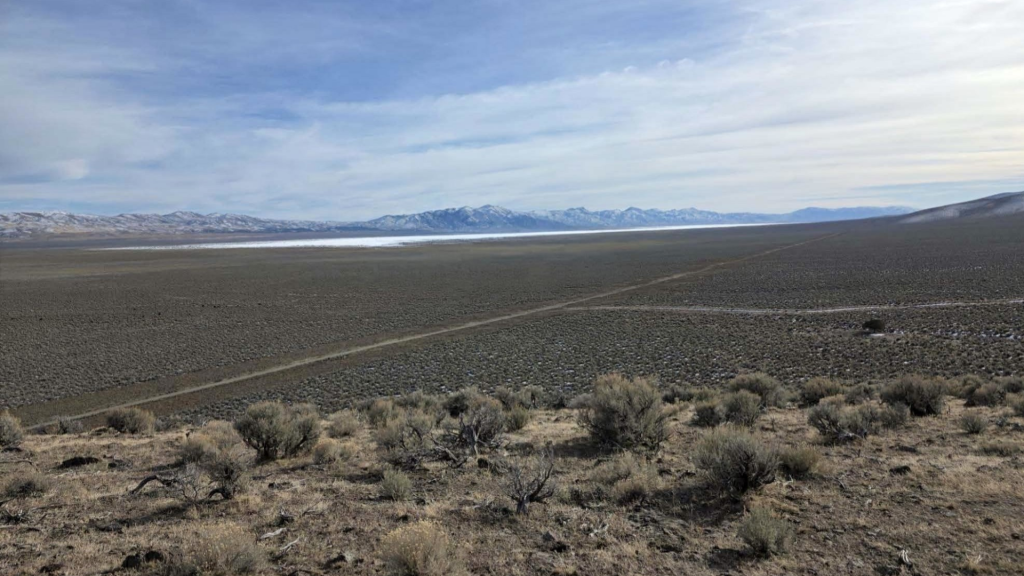
Consulting geologist Clay Newton has taken the publicly-available data from the United States Geological Survey (USGS).
Through integration with a proprietary geological interpretation, he has identified a primary target area with both a gravity high anomaly and a magnetic low anomaly.
According to Stanyer, the presence of the gravity high suggests a shallow dense rock, which is often the main host for Carlin-style gold deposits, while a magnetic low typically indicates hydrothermal destruction of magnetite in igneous rocks.
“We’re now planning to go out on the ground and get high-resolution magnetics, high-resolution gravity, to understand the USGS data a bit better,” Stanyer says.
“We’re also planning some Ionic Leach soil surveys, which can be helpful in detecting buried mineralisation located 500m and deeper.”
Griffon: Predictive tools revive historic pits
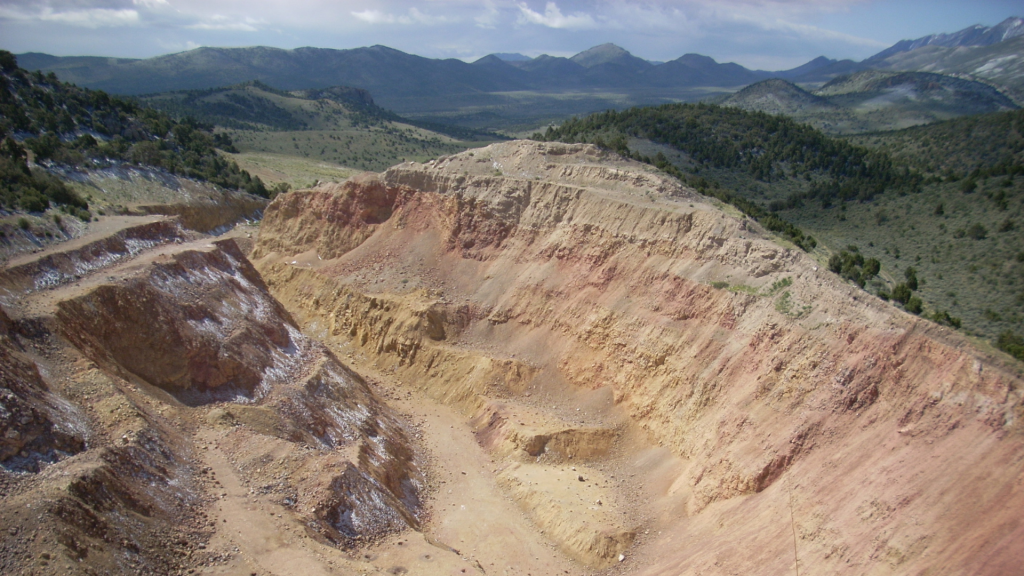
Alongside this recent acquisition, Nevada Sunrise is also focused on the Griffon Gold Mine Project, which came into its possession in 2025.
Alta Gold mined 62,000 ounces of gold across two open pits at Griffon in the late 1990s before shutting down prematurely in 1999.
Nevada Sunrise has received a digital database with the results of 214 drill holes over 19,137m of historical exploration, as well as the results of the nine exploration holes drilled in 2020 by Fremont Gold.
The company has engaged VRIFY Technology, a mining exploration intelligence software company, to help identify key target areas for gold mineralisation outside of the two historic pits using AI.
Stanyer confirms the many benefits of integrating AI in mineral exploration and discovery.
“I’ve worked with a lot of geologists, and if a geologist doesn’t like a property, chances are they’re not going to change their minds,” Stanyer says.
“But AI has no bias. It’s simply going to stack all the things that it has to work with — gravity, IP/resistivity, magnetics, geochemistry, structural geology — and map it out.
“AI is a good tool to point at where you should go on a property, especially one that’s been stalled for a long time.”
Stanyer notes that most of the drill holes at Griffon were drilled within the historic pits, so there’s not been many exploratory holes outside of those pits.
VRIFY already has a good idea of where to drill next based on data provided, which means Nevada Sunrise is on track with next steps for drilling at the project.
“It’s not just about plunking down a drill and drilling a 90-degree hole. We’ve got some insights on the right angles to drill at,” Stanyer says.
“Plus, we can go into the unmined part of the Hammer Ridge pit, which I like to call ‘the Anvil’. This part of Hammer Ridge was never mined because they ran out of time in 1999, so there’s gold that’s been left behind here.”
Stanyer is hopeful that this drilling will take place in the fall of 2026.
Portfolio diversity across shifting cycles
Nevada Sunrise has built a diverse portfolio across gold, copper, and lithium, reflecting persistence and adaptability through shifting commodity cycles.
The Coronado Copper Project, formerly known as the Coronado VMS Project, sits on ground that lies adjacent to the historic Big Mike mine.
Big Mike was of such ‘high grade’ that its ore was shipped directly to a smelter in Germany in the 1970s, bypassing local facilities.
While the high-grade core was mined out at Big Mike decades ago, Nevada Sunrise believes additional volcanogenic massive sulphide (VMS) deposits remain along the trend.
The company has held the property for around eight years, conducting aerial surveys and surface mapping that suggest further potential, though drilling attempts were stymied by technical challenges.
With an award-winning VMS geologist potentially joining the team, Stanyer reveals that the company is interested in putting some fresh holes in the ground in 2026 and advancing exploration.
Nevada Sunrise sold the Gemini lithium deposit following the most recent lithium crash, but still has a royalty on what was once held.
The company has also retained an additional 26 claims at Gemini West that it predicts could have similar mineralisation as that of Gemini.
Permits secured, surveys underway, and drilling on the horizon
Nevada Sunrise is entering a pivotal phase, with permits applied for or secured and surveys planned across its newly expanded Nevada portfolio.
At Griffon, the company is preparing to drill later in 2026, with Stanyer declaring: “We want to find more — we want to find a million ounces at Griffon.”
The Hammer Ridge pit, or “the Anvil”, remains unmined, offering immediate upside alongside the VRIFY-generated targets outside of the historic pits.
At Fivemile, initial ground surveys will be critical. Ionic Leach soil sampling and high-resolution geophysics have been planned to validate anomalies already identified.
“We want to see gold in the soil samples and other pathfinder elements that tell us we’re on the right track,” Stanyer says.
Finally, at Coronado, permits are in place, with drilling planned in 2026. The historic Big Mike mine proved the district’s potential, and Nevada Sunrise is determined to test for additional VMS deposits along the trend.
Ultimately, the milestones reflect a broader ambition: to contribute to Nevada’s new era of deeper, high-grade exploration.
“If people believe in Fourmile, which they should, then Fivemile should also have a chance,” Stanyer says.
“We know there’s more gold at Griffon; and at Coronado, we want to find more copper. We’re willing to take a crack at it, it’s going to be expensive, but with the right backers, we can do it.”
Write to Amy Rotman at Mining.com.au
Images: Mining.com.au and Nevada Sunrise


