



Long known for shaping crude oil supply and pricing, Saudi Arabia’s state-owned energy behemoth Aramco dominates global energy markets.
But as the Kingdom accelerates its Vision 2030 economic transformation, Aramco is increasingly stepping into adjacent sectors that support an industrial resurgence — notably the growing mining and critical minerals landscape — a shift that could redefine both the company and the nation’s resource economy by 2026.
For decades, Aramco has led Saudi Arabia’s rise as a hydrocarbon powerhouse. Today it signals a broader role in industrial ecosystems, particularly where energy and mining intersect with global supply-chain transitions and electrification. This evolution is visible in partnerships, technological pursuits, and strategic joint ventures emerging at the heart of Saudi industrial policy.
New resource paradigm
Vision 2030 frames Saudi Arabia’s economic shift away from oil-dependence and toward diversified industrial growth. Mining is elevated as a ‘third economic pillar’ alongside energy and petrochemicals, with the Kingdom estimating vast mineral wealth worth trillions of dollars beneath its soil.
Regulatory reform, competitive licensing, and foreign investment incentives are designed to unlock this potential and attract capital through the remainder of the decade.
In this context, Aramco’s relevance expands beyond oil. Its deep expertise in subsurface data, logistics, capital-intensive project execution and global markets positions it to play a central enabling role in Saudi Arabia’s industrial ecosystem — particularly as mining and energy convergence grows.
The company’s move toward minerals is not incidental; it reflects the strategic priority of integrating energy, metals and industrial supply chains in a world pivoting.
One of the most definitive signals of Aramco’s industrial pivot — and a core part of its 2026 mining outlook — is a proposed joint venture with Saudi Arabian Mining Company Ma’aden focused on energy transition minerals, especially lithium. The heads of terms signed by the parties envisage combining Aramco’s technological capabilities and decades of subsurface data with Ma’aden’s mining expertise to explore and develop minerals critical for global electrification.
This partnership aims to identify and develop high-value transition minerals — with Aramco reporting zones of lithium concentration of up to 400 parts per million on its existing operational lands. Early studies suggest that commercial lithium production could begin as soon as 2027, an aggressive timeline for a country building its mining framework from the ground up.
For Aramco, the venture represents more than diversification. It leverages existing capabilities, such as advanced drilling expertise, geological databases spanning 90-plus years and an integrated supply chain to accelerate Saudi mining ambitions. For Ma’aden, it brings a partner with unmatched operational scale and industrial execution experience.
Aramco betting on lithium
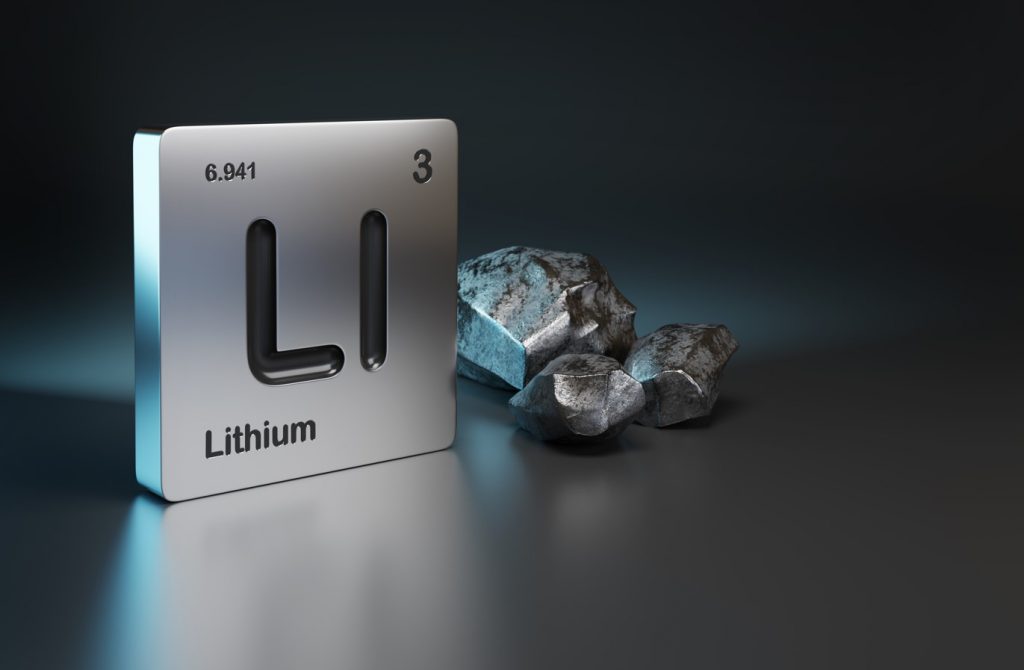
Lithium is central to the energy transition. It is a cornerstone input for electric vehicle (EV) batteries, grid-scale storage and a range of renewable energy applications. Global demand for lithium has tripled over the past five years and is projected to continue rising sharply through the 2030s as electrification accelerates.
Saudi Arabia’s domestically growing energy and renewables markets — combined with burgeoning EV assembly activities — create a compelling local demand case. Aramco’s decision to anchor a JV in lithium reflects both a commercial and strategic calculus: it positions the Kingdom to supply a material that is essential in the global transition, while capturing value adjacent to, but outside of, hydrocarbons.
Importantly, the JV also signals Aramco’s willingness to extend its brand and capacity into mineral extraction and value creation across integrated supply chains, an echo of how it historically expanded into refining, petrochemicals and downstream markets.
Aramco’s expanding role in mining sits at the intersection of energy and industrial transformation. The company’s deep engineering and project management arm — honed through decades of building upstream and downstream assets — provides a unique competitive advantage in integrating new resource sectors into broad logistics and infrastructure networks.
This synergy is visible beyond lithium. There is consensus among many industry analysts that Aramco’s expertise in large-scale infrastructure could support Saudi efforts to build processing facilities, transportation corridors and mineral export platforms, all critical pieces of an industrialised supply chain. The Kingdom’s ambitious downstream plans, which include battery chemical hubs and value-added mineral processing, align well with Aramco’s existing strengths in managing complex, energy-intensive projects.
Moreover, the growth of modern mining operations increasingly depends on power stability, renewables integration and digital optimisation — domains where Aramco has invested heavily in recent years, notably in low-carbon technologies and advanced materials. By extending these capabilities into mining, the company can help de-risk projects and improve economic outcomes for both public and private stakeholders.

The road from 2026 to 2030
Aramco’s move into transitioning minerals and broader mining support comes with material challenges. First, the company’s historical strength remains in hydrocarbons. Mastering mineral extraction and processing at scale will require building new competencies, partnerships and often collaborating with global mining specialists.
The alliance with Ma’aden showcases one effective model; more such partnerships will likely be required to develop robust supply ecosystems.
Second, despite the Kingdom’s favourable regulatory reforms, the mining sector — globally and in Saudi Arabia — is capital-intensive and requires patient investment. Commercialisation timelines for minerals like lithium are measured in years, not quarters, and depend on discovery, permitting, infrastructure rollout and market conditions.
Third, integrating mining into broader industrial ramps will require workforce development and technology transfer. While Aramco and Saudi policymakers push aggressively on industrialisation, the pace of skills development, supply chain localisation and regulatory navigation will influence how quickly ventures mature.
These dynamics mean that by 2026, Aramco’s mining footprint may still be nascent in volume terms, but it is strategically significant. In 2026, several trends are poised to be visible in Saudi Arabia’s industrial landscape.
Lithium and transition mineral projects that are moving from exploration to defined development pipelines, largely propelled by the Aramco–Ma’aden JV and similar collaborations.
Greater integration between energy and mining workflows, with Aramco’s technical services and data assets applied to both upstream energy and mineral exploration.
Emerging processing hubs for battery and critical minerals that reduce export-only models and build upstream-to-downstream value chains within the Kingdom.
Increased participation of foreign capital and technology partners, attracted by Saudi regulatory reform and the strategic positioning of mining within Vision 2030.
Aramco does not need to become a pure mining company to shape the sector’s trajectory. Its role as a scientific, engineering and industrial anchor — supporting projects, sharing data, and providing logistical heft — can catalyse sector growth without diluting its core energy focus.
That strategic posture sets Aramco apart from miners entering new commodities because it can leverage scale, infrastructure and cross-sector experience in ways few pure mining companies can match.

Strategic legacy in the making
Aramco’s engagement with mining is not a departure from its past, but a logical translation of its legacy into future industrial relevance.
From its early days harnessing oil to fuel global growth, to its expanded role in refining and chemicals, Aramco has repeatedly shown adaptability and long-term vision. Its 2026 role in mining — anchored in partnerships, technological leverage and strategic alignment with Vision 2030 — signals another pivot that could amplify Saudi Arabia’s industrial diversification and global resource footprint.
The next few years will determine how effectively Aramco can help transform Saudi mining from policy ambition into industrial reality — a challenge that sits at the intersection of capital discipline, technological innovation and global supply-chain evolution.
If early signals hold, Aramco’s imprint on Saudi mining in 2026 could be just the beginning of a broader integration of energy, minerals and industrial capability — defining a new chapter in the Kingdom’s resource story.
Saudi Arabia is hosting the Future Minerals Forum (FMF) at the King Abdulaziz International Conference Centre in Riyadh on 13–15 January. Mining.com.au is an official media partner and will have a team on the floor at this year’s event.
Write to Adam Orlando at Mining.com.au
Images: Aramco, FMF26, iStock & Unsplash


