This article is a sponsored feature from Mining.com.au partner Locksley Resources. It is not financial advice. Talk to a registered financial expert before making investment decisions.
It’s not the kind of headline you expect to see in 2025, a Perth junior helping America make metal again.
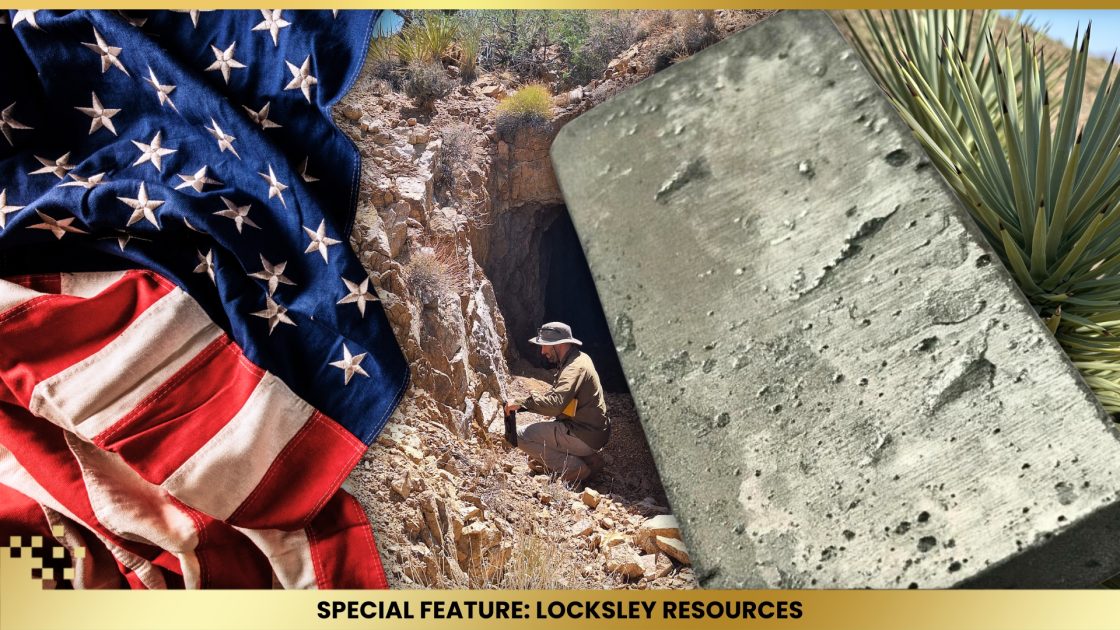
Locksley Resources (ASX: LKY) has poured the first US made antimony ingot in decades. Ore from California then smelted in Colorado which then produced one dull, heavy bar that quietly says more about industrial sovereignty than most things that have come out of the US recently.
For years, officials have spoken about rebuilding supply chains. Locksley just picked up some pegged ground, built a team and made it happen.
Ask most people outside of our resource bubble about antimony and you’ll get a blank look. Yet it hides inside bullets, batteries, flame retardants & semiconductors
For half a century, the US produced none. Every pound came from China, Russia, or Tajikistan. The Geological Survey lists it as critical to national security, but the country had zero domestic production until this year. That’s why this tiny pour matters. It proves the whole chain mine, process, refine can exist again inside American borders.
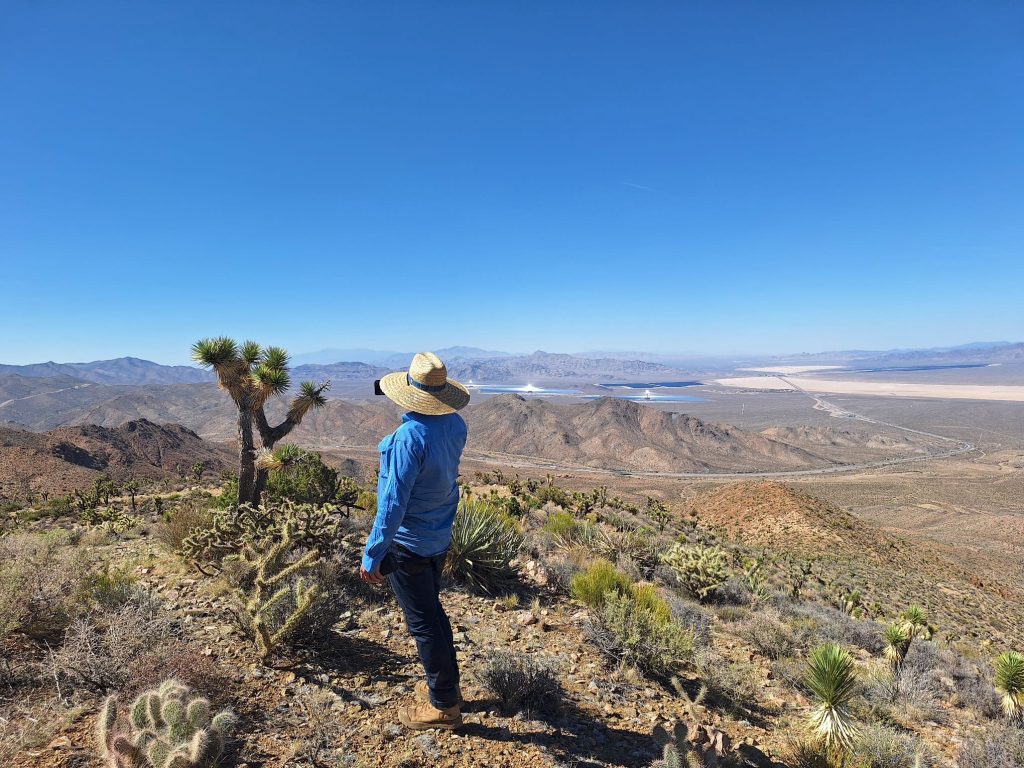
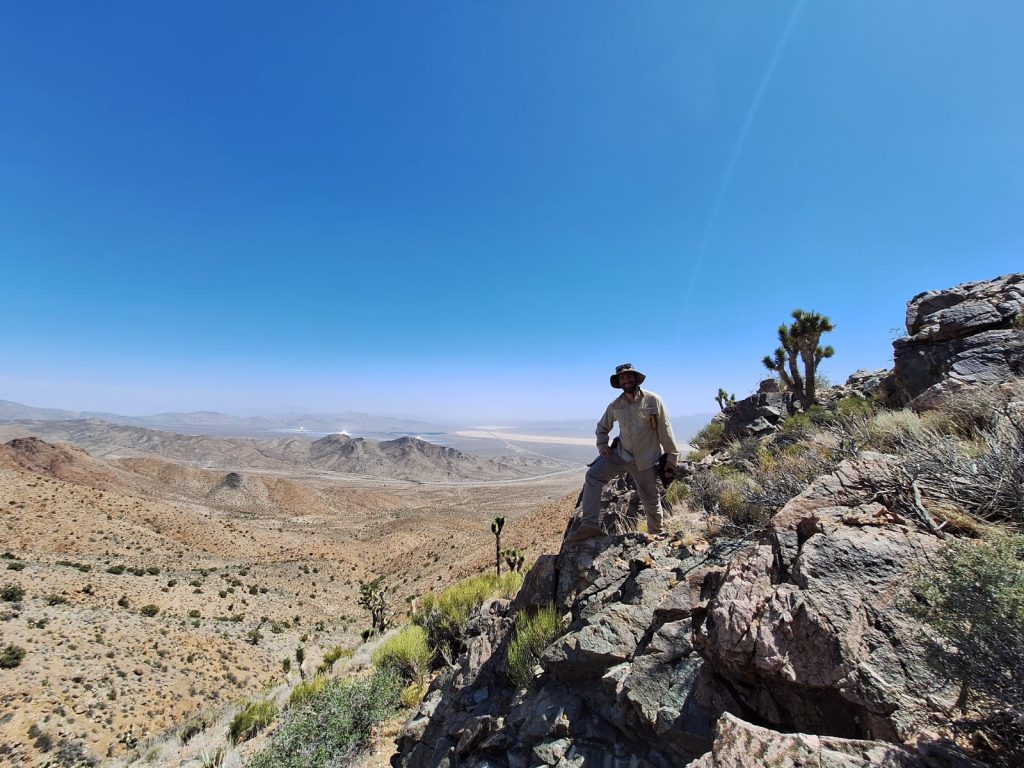
Locksley’s Mojave Project sits out in California’s desert hills, where the Desert Antimony Mine last operated in 1937. The workings were shallow, the ore coarse-grained stibnite. Then the world moved on, chasing cheaper feed overseas and most western countries have.
Now, almost ninety years later, the same ground has become the centre of a quiet industrial experiment. The ore was hauled east to Hazen Research in Colorado, a lab better known for pilot work on tungsten and tellurium where metallurgists roasted, leached, and cast the first American-sourced, American-refined metal since Roosevelt’s era.
Locksley has partnered with GreenMet, a Washington-based group advising on critical minerals strategy. Hazen supplied the chemistry. The recipe isn’t sexy, smelting with elemental iron as a sulphur fixing flux at 1,000 degree celsius. What matters is from the ore, through to every hand involved, it was entirely American.
“We’ve proved it can be done,” says CEO Kerrie Matthews. “Now we have to make it economic.”
That’s the harder part.
The company plans a pilot plant inside the US to test continuous flow, recoveries, and purity against Department of Defense specs. Defence programs such as the IBAS initiative and Title III of the Defense Production Act now fund exactly this sort of work.
So the stars have aligned. Or maybe the timing’s just finally caught up with common sense.
After decades of outsourcing, Washington wants metals it can trace. And Canberra wants its miners embedded in the solution. Albo’s visit to the White House recently highlighted that alliance, with antimony near the top of the agenda. Even if it did take Albo a few failed attempts
Strip out the geopolitics and you’re left with a simple supply-demand imbalance. Antimony prices have risen steadily on tightening feedstock and defence demand. Only a handful of projects worldwide can add meaningful tonnage.
Locksley controls more than 490 contiguous claims across Mojave, abutting tenements owned by MP Materials the Mountain Pass rare-earth operator. Infrastructure overlap helps.
Surface work has already delivered assays north of 10% Sb in places. That’s not something you ignore in a country still importing 100 per cent of its supply.
And unlike many juniors still selling “potential,” Locksley can hold up a physical sample.

What makes it different
The metallurgical pathway is established, the reagents proven and the product clean enough to cast. Hazen’s team will now push throughput to tonne-scale, tweaking residence times and flux composition to chase purity.
If those runs meet spec, the company can move toward qualification with US defence and industrial buyers who are the real gatekeepers of any domestic critical-minerals revival.
There’s a risk of over-romanticising a single ingot. Still, symbolism matters.
It’s the first tangible evidence that private capital, not policy alone, can restart American metallurgy.
The story also captures a shift in how junior explorers think about relevance. Locksley’s small success checks both boxes, a good rock story, and a national-interest narrative that Washington can get behind.
Why this matters for Australia
It’s hard not to smile at the irony, an Australian company helping the US reclaim its own production capability. But it’s also a blueprint for what the Australia-U.S. critical-minerals partnership can look like in practice + capital, technology, and trust moving in both directions.
Australian explorers bring risk appetite and geological depth. The US brings financing scale and policy weight. Put the two together, and you get projects like Mojave modest in size (for now), meaningful in precedent.
Looking ahead
Pilot-plant construction should start to begin next year. Locksley’s focus will be on refining process efficiency and validating product specs for downstream users. The company is already in early discussions with defence-related groups about potential offtake once purity thresholds are proven.
America once mined, milled, and refined nearly everything it used. Then it forgot how.
Locksley’s small bar of antimony doesn’t fix that, but it reminds policymakers that industrial capability isn’t theoretical, it’s molten, heavy, and has to be poured.
You could frame that ingot as symbolism. Or you could just call it what it is: proof.
The views expressed in this article are those of the author and do not necessarily reflect the views of Mining.com.au, its affiliates or the companies Scott North is associated with.
Subscribe to Scott North at LinkedIn
Images: Locksley Resources & Mining.com.au