Livium’s (ASX:LIT) wholly owned subsidiary Envirostream has extended its agreement with LG Energy Solution (KRX:373220) for the provision of lithium-ion battery recycling and disposal services for a further three years.
Envirostream will receive guaranteed volumes of end-of-life batteries, which LG retains the right to purchase black mass generated from the batteries.
Speaking with Mining.com.au, CEO Simon Linge says that a large contribution to the agreement extension was Livium’s performance in its duties, which has bolstered the contractual relationship.
“I think we’ve been able to prove that we have been able to support them through the last 18 months and we’re confident that this new agreement, we think, shows that they’re confident in our ability to do that for another three years,” Linge tells Mining.com.au.
According to Linge, LG plays an effective role in sourcing recalled batteries from the market, for Livium to recycle.
“They are at the back half of that or the back third of that recall program, but as you can imagine, you get an initial surge, and then it’s harder to get the last bit of the tail,” Linge adds.
“Wanting to extend the agreement just for that tail may go longer than they’d originally expected, but then the broadening of the agreement into non-recall batteries was really just a reflection of the relationship that we built.”
“The fact that we’ve extended the contract both in time and breadth halfway through the previous agreement is, I think, a positive from our perspective.”
LG Managing Director Philip Crotty says the company was pleased to “reaffirm and strengthen” its growing relationship with Envirostream.
“Over the course of our collaboration, we have achieved significant milestones in delivering safe, sustainable, and responsible battery management solutions,” Crotty says.
“This renewed agreement not only reflects the trust and shared commitment between our organisations, but also paves the way for even greater cooperation in the years ahead.”
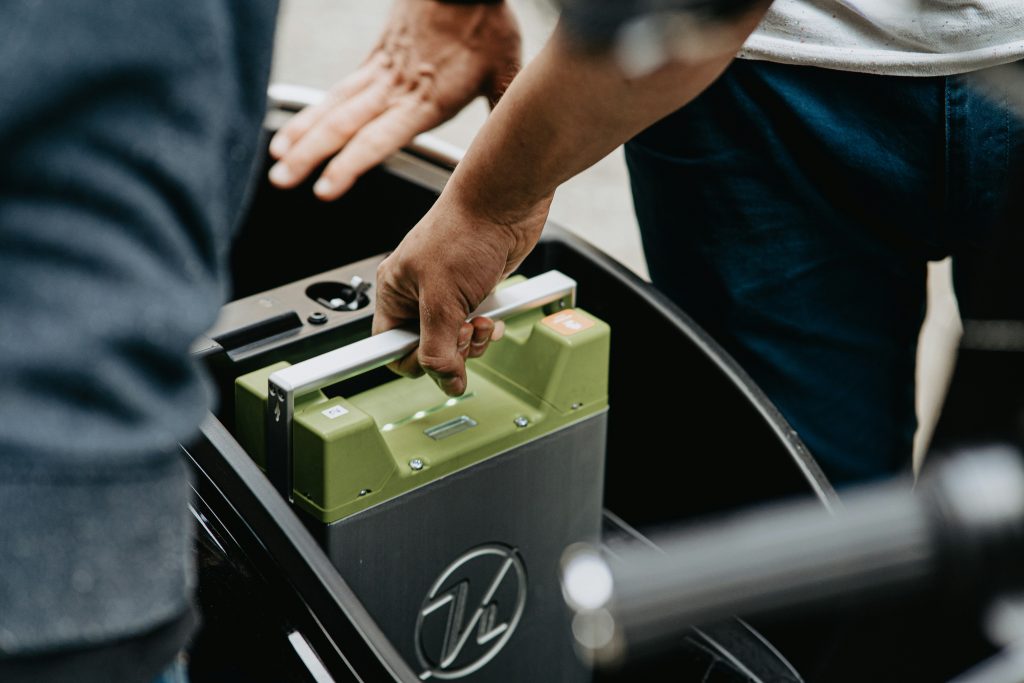
Lithium-ion batteries are a rechargeable energy source that are used to power a wide range of devices from smaller electronics such as phones and smartwatches, all the way through to electric vehicles and home energy storage systems such as solar batteries.
Commodities such as nickel, cobalt, manganese, aluminium, and graphite go into the batteries, which are currently facing a growth surge as the globe shifts to prioritise a cleaner energy output.
The International Energy Agency (IEA) reported annual battery demand to reach a new milestone last year, surpassing 1 terawatt-hour in 2024.
The lithium-ion battery chain alone is projected to grow by over 30% each year from 2022 all the way through until 2030, to host a market size of 4.7 terawatt-hour and valuing at $400 billion, according to McKinsey & Company.
Write to Maddison Elliott at Mining.com.au
Images: Livium & Unsplash