



Livium (ASX:LIT) has signed an expanded recycling deal with Chinese multinational manufacturing conglomerate BYD’s (SHE:002594) Australian subsidiary which supersedes the original agreement between Envirostream Australia and BYD.
Under the new agreement, Livium is appointed as the preferred supplier for recycling services for BYD Australia.
As such, Livium will expand the range of BYD’s end-of-life products from the previous deal to include new energy vehicle batteries, commercial vehicle battery ranges, and BYD battery energy storage systems.
The agreement, starting from 1 May 2025, has an initial three-year term and an optional term of one-year.
Livium, which has a market capitalisation of $13.52 million, says this agreement aligns with its focus to secure long-term battery recycling contracts and diversify its end-of-life battery sources.
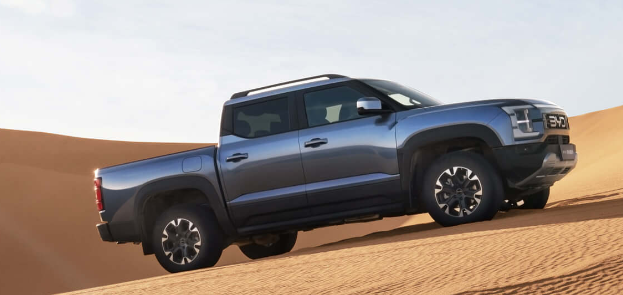
CEO Simon Linge says expanding the recycling scope shows the quality of Envirostream’s services.
“In the short time working together our volume expectations have been exceeded, and we are excited to expand our partnership through this new agreement,” Linge says.
While minimum volumes have been committed by BYD Australia, due to the commercially sensitive nature of the terms, Livium says it is not in a position to quantify the economic impact of the deal.
BYD Australia is a subsidiary of BYD Company which produces new energy vehicles, delivering a record 4.27 million vehicles globally in 2024 and holds 14% of Australia’s electric vehicle market share after breaking into the market in 2022.
Livium is focused on enabling the global transition to sustainable lithium production. The company is a battery recycler, produces critical battery material lithium ferro phosphate, and has developed a patented lithium extraction technology.
In 2024, global EV sales grew some 26%, according to the Department of Industry, Science and Resources (DISR) March 2025 Resources and Energy Quarterly. Rising adoption rates in China has driven this trend, with EV penetration rising 10 percentage points in 2024.
Comparatively, the US and EU markets experienced low or flat growth in 2024. The regional divergence reflects lower EV prices in China, with both the US and the EU lifting tariffs on EVs from China in 2024. DISR reports that market analysis suggests that Chinese EV maker BYD can stay competitive in EU markets even with a 30% import duty.
“Current projections for medium-term (to 2030) EV sales growth outside of China have moderated when compared with a year ago, following weaker EV adoption in the US and EU in 2024,” DISR reports.
“As of September 2024, the combined expectations of 14 major automakers are for targeted 2030 EV sales to be 10% less than their expectations in 2023. EV adoption in the EU is still expected to rise rapidly, as automakers must comply with emissions performance standards requiring fleet-average emissions to fall to 55% of 2021 levels by 2030.”
Write to Aaliyah Rogan at Mining.com.au
Images: BYD


