The views expressed in this article are those of the author and do not necessarily reflect the views of Mining.com.au, its affiliates or the companies Scott North is associated with.
China’s vertically integrated grip on lithium is breaking global price signals. Can Western producers respond before the market resets permanently?
I’ve been tracking lithium markets for years, but for over 12 months at least, the signs of a structural shift are unmistakable. For example, in early 2024 the owners of Greenbushes, the world’s largest hard-rock lithium mine, quietly trimmed output guidance. And half a world away, Zimbabwe’s government boasted that lithium exports brought in US$209 million ($318.4 million) in the first nine months of 2023, nearly triple the prior year’s receipts, even as a raw ore export ban was in place.
Yet much of that material is believed to be quietly shipped to China, bypassing public markets and obscuring true supply. These are not isolated blips. Meanwhile, at many western operations tonnes of spodumene are quietly stockpiling, while in Harare big piles of lithium rock in Goromonzi hint at hidden exports. The combined effect is a new lithium landscape, one that demands urgent attention.
China’s vertically integrated supply web
Behind this trend lies China’s ever deeper control of the lithium value chain. Basically, Beijing-linked firms now dominate from mine to battery. Chinese companies today control roughly 25% of the world’s lithium mining capacity and two-thirds of its battery grade lithium chemical refining capacity.
Major battery makers like CATL and BYD own or have stakes in overseas mines, often shipping ore to their own Chinese refineries. In effect, a massive “vertical integration” has emerged. China simply sources ore from abroad, refines it at home and locks it into domestic EV supply chains, largely ignoring world price signals.
As a US official warned in late 2024, China is now producing “much more lithium than the world needs” and using that overcapacity to drive prices down until rivals “disappear”. Indeed, Chinese producers already make about two-thirds of global battery grade lithium chemicals.
The result – lithium price charts are down and to the right. After peaking at record levels in 2022, prices have collapsed and stayed low. By mid-2025, battery grade lithium carbonate in China was around US$8,500 to US$8,700 per tonne, while lithium hydroxide had slid to roughly US$7,000 per tonne. These levels reflect both weak EV demand and the flood of low-cost supply. (For context, lithium carbonate was above US$14,000 per tonne in 2022.)
Meanwhile, major producers’ revenues have plunged. Pilbara Minerals (ASX:PLS), owner of the Pilgangoora mine, still shipped a record 725,000 tonnes of spodumene in FY2024, but at an average price of only ~US$1,176 per tonne (CIF China), making just $1.25 billion in revenue (down 69% from the year before).
Greenbushes, meanwhile, quietly produced in the order of 1.3 million to 1.4 million tonnes in 2024 (implying roughly US$1.5 billion to US$2 billion in sales at current prices), even after cutting back, to protect its strategic asset through the downturn.
Hidden and artisanal supply from Africa
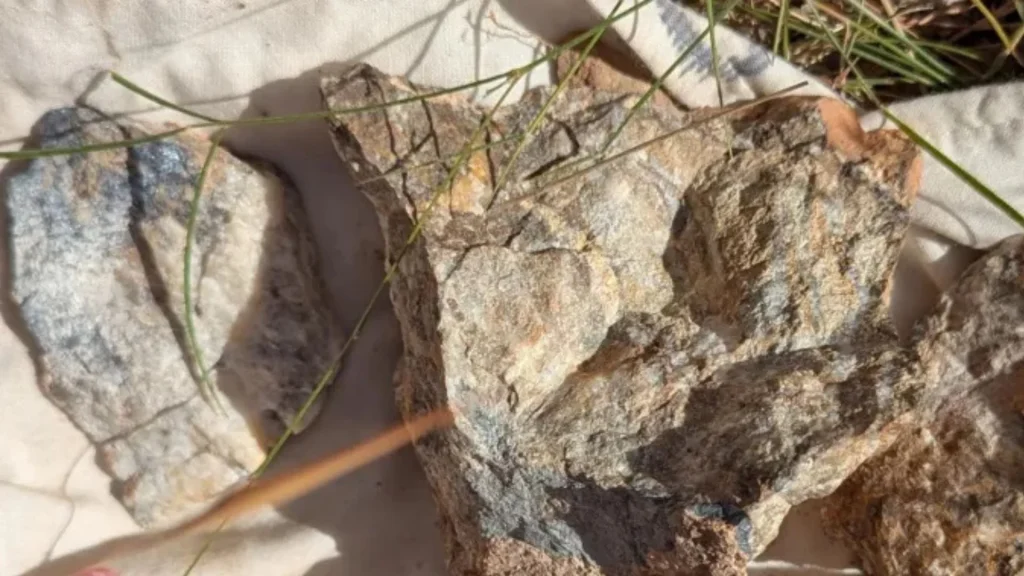
If China’s formal supply chain is running ahead, another surge is coming under the radar – Africa’s artisanal output. Lithium is increasingly being mined informally across Zimbabwe, Namibia, Nigeria and other countries.
A recent CRU Group analysis finds that in 2023 small-scale miners supplied almost two-thirds of all African lithium, an amount roughly equal to the global market surplus of that year. This means African exports of low-grade ore and concentrate have exploded. CRU notes a five-fold rise in 2023 as prices started the year above US$6,000 per tonne.
Much of that flows through informal channels the trader in Lagos, the military-linked firm in Harare ultimately ending up in Chinese portside factories. For example, Zimbabwe’s reported export revenue was US$209 million in the first nine months of 2023, nearly trebling year-on-year, even as a raw-ore ban was meant to prevent such exports. Global Witness and others document that tens of thousands of tonnes still move out of Zimbabwe via loopholes and special permits.
In Nigeria, artisanal miners around old tin and coltan mines have likewise shipped spodumene concentrates northward. It’s very clear, hidden African supply is today a significant swing factor and it is not captured in mainstream forecasts or price models.
Western policy responses and projects
Faced with these market signals and supply security issues, Western governments have begun to act, though often in small parts and behind schedule. In Australia, the federal government has rolled out its Critical Minerals Strategy (2023-30) with grants and incentives to build a domestic battery supply chain.
For example, AusIndustry has awarded nearly $50 million in pilot-project grants under its Critical Minerals Development Program, funding everything from a Kwinana cathode precursor plant to a Dubbo refining pilot. The 2024-25 Budget even established a new 10% production tax credit for critical minerals processing (costed at $7 billion over a decade). These measures send a strong signal, but by themselves cannot remake long supply chains overnight.
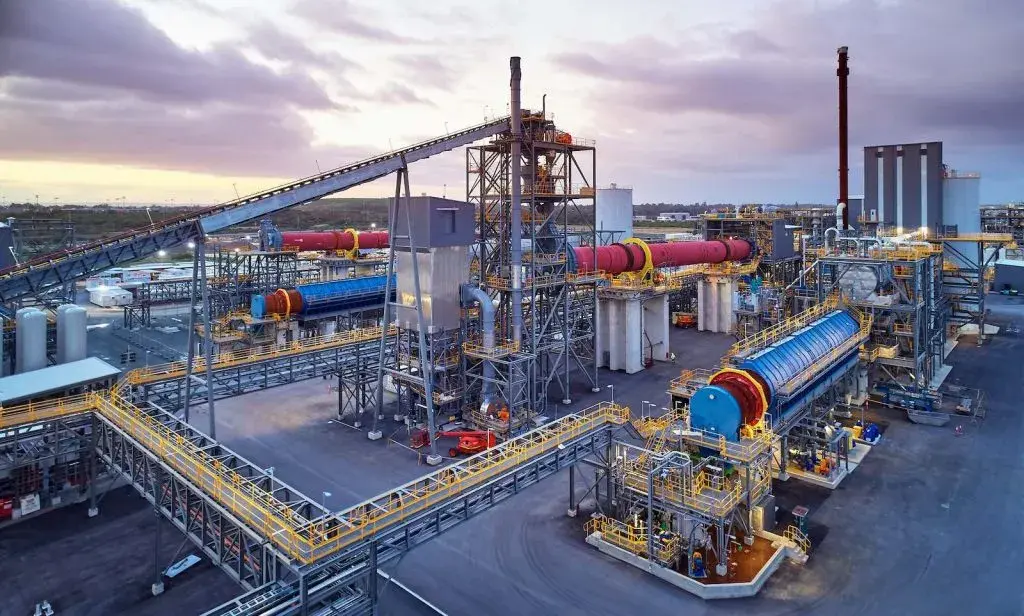
In the US, the Inflation Reduction Act also targets minerals with incentives. Its 45X tax credit offers a 10% production credit for made-in-America battery materials (though, notably, not actual mining). Companies are already lining up plans to qualify. Take Piedmont Lithium’s (ASX:PLL) proposed Tennessee project, a 30,000-tonne-per-year lithium hydroxide plant (US$809 million capex) that will use US spodumene and employ an innovative Metso-Outotec flowsheet.
Piedmont’s Feasibility Study explicitly assumes a $141.7 million windfall from 45X credits on capital costs. Similarly, US recycling firms like Li-Cycle (OTC Pink:LICYQ) and battery-cell makers are now factoring in 45X bonuses into their economics. These policies have clearly encouraged new projects, though actual refineries are still in early development (and rely on high future lithium prices).
The European Union has taken yet another approach. The new Critical Raw Materials Act (effective 2024) sets hard targets: by 2030 at least 10% of each strategic material must be mined in the EU, 40% must be processed there, and 15% recycled. This has encouraged flag waving proposals across Europe.
For example, AMG Lithium – Germany’s lithium arm of AMG Critical Materials (AMS:AMG) is building a €500 million ($888.4 million) to €1 billion ($1.8 billion) lithium hydroxide refinery in Bitterfeld-Wolfen. The French-German-EU governments have jointly pledged €2.5 billion to support these types of projects. The point is that Europe’s strategy is to onshore process as part of its industrial policy but success depends on long, capital-intensive timelines, and having the skillset in the workforce.
Australia, the US and EU are scrambling to shore up their raw-material pipelines, but their tools differ. Australia’s grants and tax breaks, the IRA’s 45X credits, and the EU’s domestic-capacity quotas all aim to lure investment. What’s being done where and how effectively?
Australia’s tax credit is broad but new, its grants so far favour precursor and refining pilots (e.g. battery precursors at Kwinana) rather than mine development. In the US, IRA is catalysing projects like Tennessee Lithium (Piedmont) and Albemarle (NYSE:ALB)/Sayona Mining’s (ASX:SYA) planned Quebec-to-North Carolina supply chains, but actual output is still a few years away.
In Europe, the CRMA ensures projects like AMG Lithium’s are backed by policy goals, yet critics note the EU has very little existing lithium mining to even feed those plants. In all cases, there’s still a race against time. New refineries and mines typically take five to 10 years, while Chinese-backed supply is already here.
Strategic imperative: Treat lithium as infrastructure
The lithium market reset should be viewed as a national strategic issue, not just another commodity boom. Lithium underpins everything from EV factories to renewable grids. In that sense it is as much infrastructure as iron ore or electricity.
We must act accordingly. Our national power grid isn’t planned around one fuel supplier, similarly our battery industry can’t rely indefinitely on a single country’s vertically integrated supply chain. Western governments should treat critical minerals as foundational infrastructure, funding everything from exploration to mines and refineries with the same urgency as ports or roads.
Australia, especially, faces a clear choice. We have some of the world’s largest lithium reserves (Greenbushes, Pilgangoora, etc), yet by value a large share of output today still leaves the country unprocessed. If domestic firms or governments do not invest now, decades of Chinese-dominated processing capacity could lock Western markets out.
As the US noted, current prices “constrain our ability to diversify supply chains on a broad, global scale”. In other words, flat prices risk freezing investment, even as hidden volumes flow from Africa.
The “dip” in lithium prices is looking less like a short-term glitch and more like a new baseline shaped by geopolitical strategy. Western producers and policymakers must respond with clarity and speed. That means accelerating projects (like onshore refineries and arc-furnace cathode plants), deploying incentives that actually get projects built, and collaborating on shared supply corridors (for example, shipping Greenbushes concentrate to a local refinery under long-term contracts).
Much as we invest in roads to drive economic growth, investment in our lithium processing chain will drive future industry. The first steps are being taken, but the urgency to act and to win back a measure of market relevance could not be higher.
Subscribe to Scott North at LinkedIn
Images: Mining.com.au