


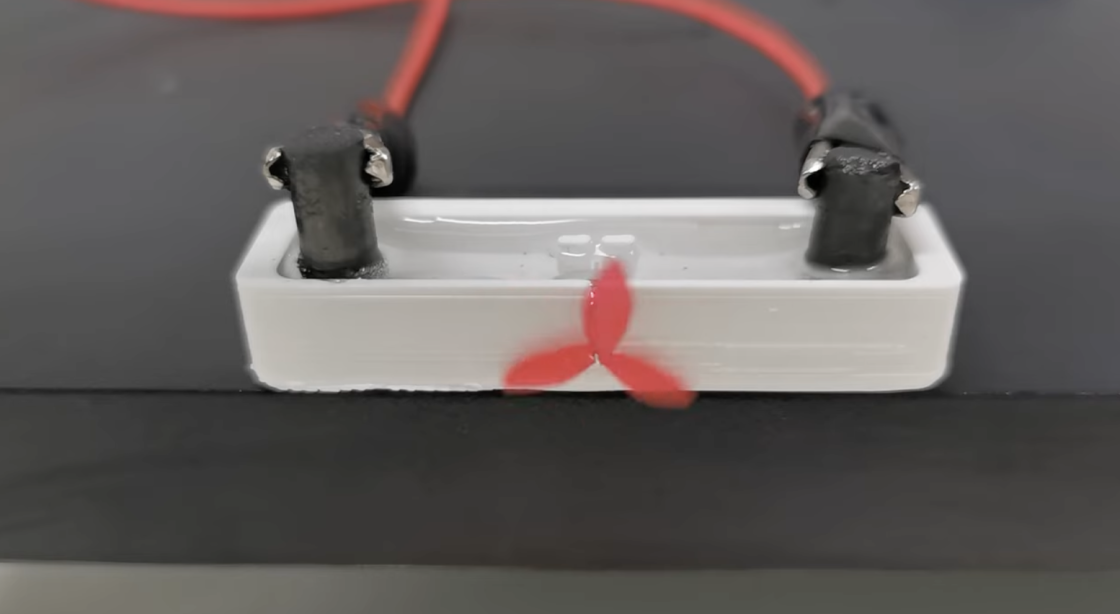
Researchers from the University of New South Wales (UNSW) Sydney have created the world’s first motor that spins using a droplet of liquid metal, which could transform soft robotics, flexible electronics, and medical devices.
Liquid metal refers to metals or metal alloys that are liquid at or near room temperature, combining the conductivity of metals within the fluidity of liquids. Common examples include mercury, gallium alloys, and caesium, which are used in electronics and cooling, as well as soft robotics.
The tiny motor, called a liquid metal droplet rotary paddle motor, uses swirling flows inside a droplet of liquid metal that is embedded in a salt solution and exposed to an electric field.
A small copper paddle placed within the swirling metal is carried along by these internal flows, creating rotation.
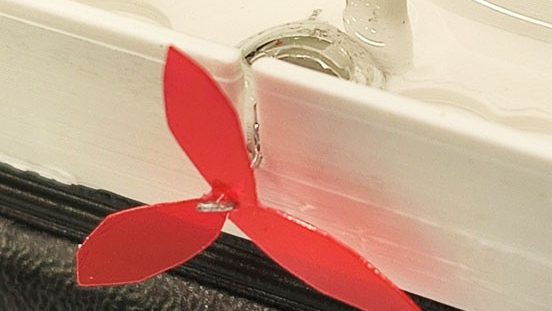
Dr Priyank Kumar says reaching speeds of 320 revolutions per minute, the motor sets a new benchmark for liquid metal actuators.
“It proves that simple, flowing metals can drive rotation and opens the door to an entirely new class of motors,” Kumar says.
UNSW notes that the rotary motors convert energy, whether electricity or mechanical flow, into torque, which keeps the shaft turning and powers everything from washing machines to drones.
The liquid motor can be valuable in applications where traditional rigid components are unsuitable. For example, soft robotics require machines that can bend, stretch or squeeze into confined spaces.
Beyond robotics, liquid metal motors could be used in flexible electronics, microfluid devices, and biomedical implants where compact, self-contained motion is required in confined or delicate environments.
Write to Aaliyah Rogan at Mining.com.au
Images: UNSW Sydney


