


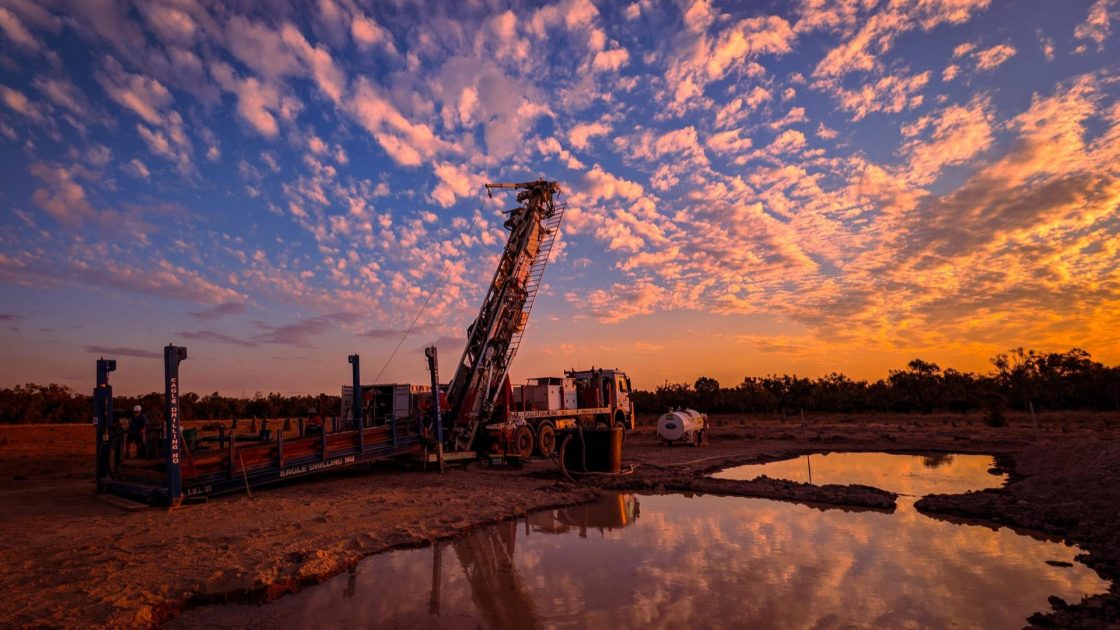
Lightning Minerals (ASX:L1M) has commenced phase-three soil sampling at its 100%-owned Warby Tungsten Project in North Queensland to define maiden drill targets.
The company has dispatched the first 162 samples to ALS Laboratories in Townsville, with assays expected in October 2026. A further 100 samples are also underway.
The program infills and extends the phase-two soil grid at 25m spacing along lines spaced 125m apart.
Phase-two results showed tungsten anomalies that remain open to the northeast, southwest, north, and west.
Reconnaissance soil and panned-concentrate results indicated that the known quartz-wolframite veins form part of a broader vein swarm. The swarm extends over a larger mineralised footprint than the historical workings suggested.
Seven rock-chip samples of wolframite and scheelite quartz vein and wall rock have been sent to the University of New South Wales (UNSW). There, the samples will undergo petrological and mineralogical study.
Managing Director Troy Brice says the program is designed to establish the extent of the system.
“Phase three is about defining how far the Warby system extends. Our phase-two soils showed tungsten anomalies that remain open in multiple directions. This infill and extension program is designed to refine and sharpen our targeting ahead of a maiden drill program,” Brice notes.
“With the first 162 samples now at the laboratory and a further 100 being collected presently, we look forward to updating shareholders as results are received. Tungsten is increasingly recognised as a strategic critical mineral, and Warby’s location in North Queensland positions Lightning well in that context.”
Tungsten has the highest melting point of any metal and is essential in cutting tools, drill bits, aerospace alloys, and advanced manufacturing.
China accounts for 80% of processed tungsten production, with recent export restrictions tightening global supply.
Lightning will integrate the UNSW results into its geological model. In parallel, the company will assess additional panned-concentrate drainage sampling across the broader Lyndbrook Complex.
Targets include the 13km Angore Granite contact and where northwest structures cross the permissive terrain.
The company also plans to acquire light detection and ranging (LiDAR) data to delineate concealed historical workings and support structural analysis. That work will help reduce follow-up sampling costs before ranking targets for trenching and a maiden drill program.
Lightning Minerals is an Australian explorer advancing a portfolio of gold, copper, and critical mineral assets.
Write to JC Villarba at Mining.com.au
Images: Lightning Minerals


