

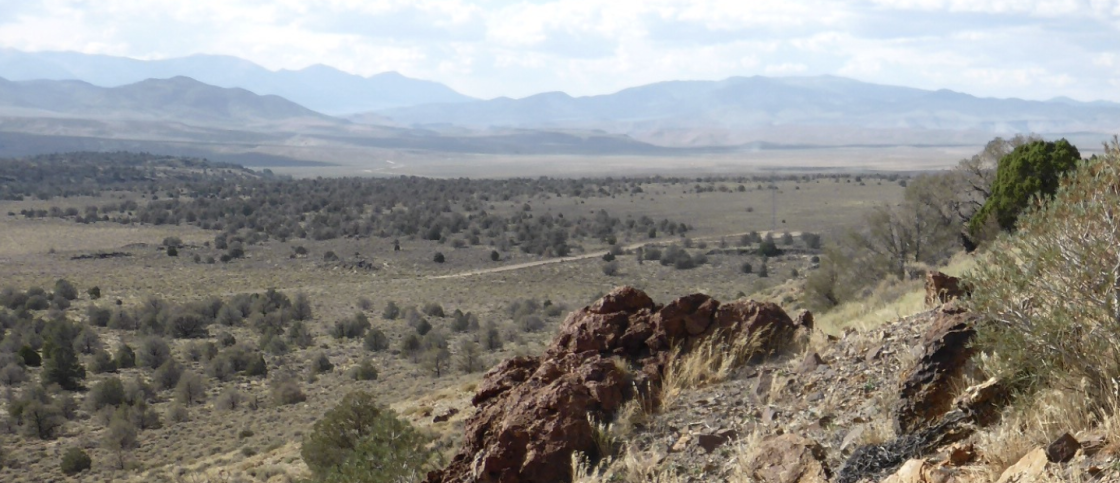
Headwater Gold (CSE:HWG) has completed drilling programs at its Lodestar and TJ projects in Nevada, with both campaigns funded through earn-in agreements with major mining companies.
Laboratory analysis results from both drilling programs are expected in the coming weeks.
The company drilled 2,950m across four core holes and five reverse circulation holes at the Lodestar Project, which is funded by Newmont (ASX:NEM).
At the TJ Project, funded by OceanaGold (TSX:OGC), Headwater completed about 1,350m of core drilling over five holes before winter weather suspended operations.
CEO Caleb Stroup says the company has intersected the targeted structures and associated hydrothermal alteration at Lodestar.
“At TJ we confirmed the scale and continuity of epithermal veining along the East Sinter fault system,” Stroup says.
The Lodestar drilling focused on the Zodiac Fault, a northwest-striking structure hosted in Miocene volcanic rocks exposed over a 550m strike length. Exploratory holes confirmed a 600m by 700m zone of pervasive illite-pyrite-silica epithermal alteration.
At TJ, the East Sinter fault was intersected in three of four holes designed to test the target. Thick intervals of epithermal veining, fault gouge and silicified fault breccias were encountered in the main structural target area.
The Lodestar Project is located in the Aurora Mining District, about 10km north of Headwater’s Spring Peak project and adjacent to Hecla Mining Company’s past-producing Aurora mine complex.
The TJ Project, situated about 25km southeast of Jackpot, contains indications of a fully preserved epithermal system including thick silica sinter accumulation.
Edited by Adam Orlando.
Write to info@mining.com.au at Mining.com.au
Images: Headwater Gold