



This article is a sponsored feature from Mining.com.au partner Hamelin Gold. It is not financial advice. Talk to a registered financial expert before making investment decisions.
In a sector filled with polished presentations, carefully rehearsed investor decks, and corporate buzzwords, Peter Bewick stands apart.
The Hamelin Gold (ASX:HMG) Managing Director talks about geology the way lifelong surfers talk about waves or farmers talk about rain. There is instinct in it. Passion, too.
He lights up when describing drill targets, structural systems, and historical datasets, but underneath the technical language sits something simpler: a genuine fascination with discovery.
“You can walk over quartz veins with visible gold and stand above targets that have never really been tested properly,” Bewick says.
“That’s the exciting part of exploration.”
That fascination is now driving Hamelin Gold towards one of Western Australia’s most intriguing gold frontiers, from the Paterson Province near Telfer through to the historic Murchison goldfields around Cue.
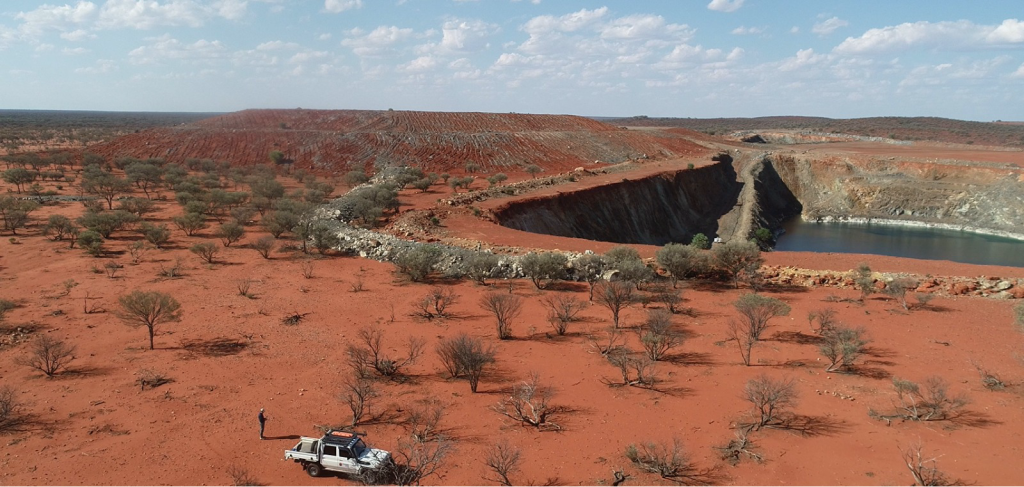
At one end sits Day Dawn, a newly granted project where Hamelin is preparing to test whether historical drilling missed the true shape of the mineralised system.
At the other sits Venus near Lake Austin, where salt lake terrain, structural complexity, and renewed regional activity are bringing fresh attention to ground that has never been fully unlocked by modern exploration.
For Hamelin, the opportunity is not simply about picking up ground in proven gold country. It is about testing whether older districts may still hold untapped scale when viewed through a different geological lens.
Day Dawn is the first major test of that thinking. Its exploration licence has been approved, and a WA Government co-funded drilling grant adds weight to Hamelin’s geological thesis.
Meanwhile, activity around Cue is putting Venus back in the spotlight.
Together, the projects give Hamelin two very different chances to challenge old assumptions across WA’s goldfields.
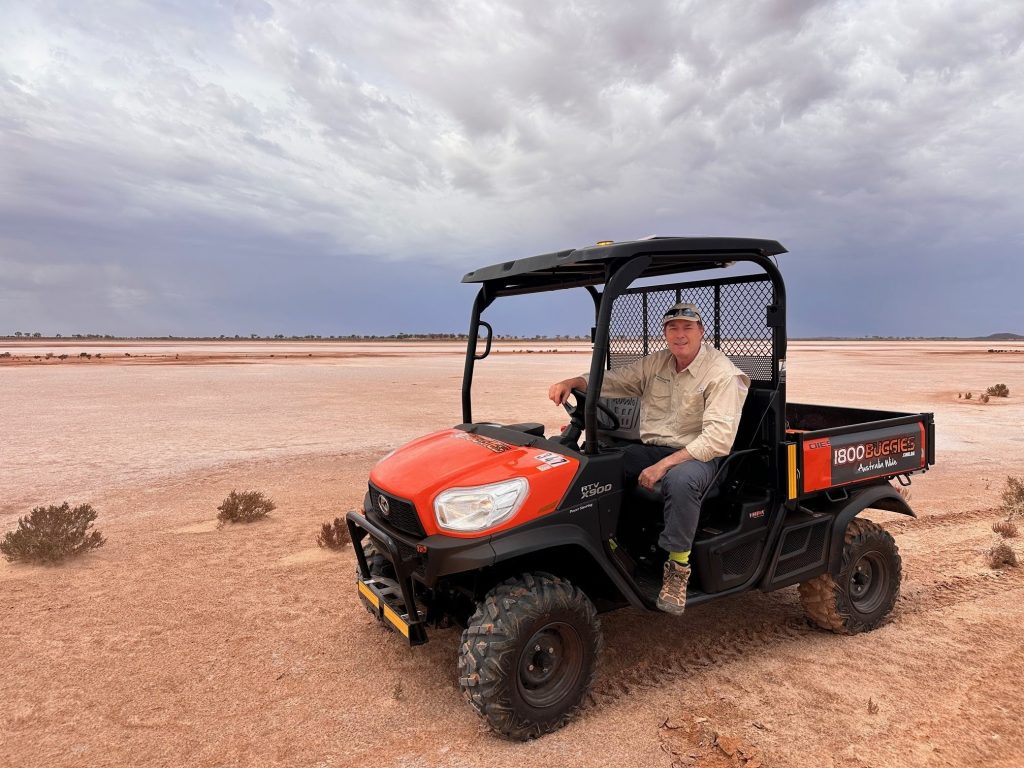
The thrill of the hunt never fades
For Bewick, Day Dawn is less a blank canvas and more a half-finished map.
At Day Dawn, Hamelin Gold has inherited years of fragmented exploration work from previous operators, including historical drilling completed decades ago. The team is now validating that old information hole by hole and reinterpreting the broader mineral system.
“The old drilling was effectively going the same way as the veins,” Bewick says.
“We needed to go back through the historical work hole by hole and rebuild the geological understanding properly.”
That work has sharpened Hamelin’s focus on Aurora, a coherent, sub-vertical sheet-like gold structure that Bewick believes previous explorers never properly tested.
By reorienting its drilling to cut across the structures at right angles, Hamelin is trying to answer a simple but important question: was the system missed because it was never truly drilled the right way?
“We’re trying to steadily reduce uncertainty with each phase of drilling,” Bewick says.
“It’s about understanding the system properly before making bigger decisions.”
Why Day Dawn matters
The Day Dawn project sits in a neighbourhood with serious gold pedigree.
It is located roughly 10km from Greatland’s 300,000oz per annum Telfer mine and is surrounded by active gold exploration tenure. The project lies within a highly prospective region where major players continue searching for scale.
Bewick says the reinterpretation work is reshaping how Hamelin thinks about what the area could host.
“We’re not simply chasing isolated high-grade veins,” Bewick says.
“We think there may be a much broader mineralised system here with multiple vein orientations and significant depth potential.”
That conceptual approach is what helped Hamelin secure a highly competitive Exploration Incentive Scheme (EIS) grant from the Western Australian Government.
The funding will be used in the next phase of work to support deeper drilling and test Hamelin’s evolving 3D geological model.
“The EIS grant gives us confidence that independent experts can see merit in the geological concept as well,” Bewick says.
Hamelin is planning about 3,000m of reverse circulation drilling before following up with deeper diamond holes. If approvals and rig availability line up, Bewick says the first phase could begin as early as June, with results expected in July and follow-up drilling potentially underway again by August.
“We want to get three phases of drilling done this year,” Bewick says.
“It will be a super busy couple of months in front of us.”
This next phase is not about drilling for noise. It is about testing the architecture of the system, tightening the model, and working out whether Aurora has the scale Hamelin suspects.
Plenty of juniors sell drilling as a make-or-break moment, but Hamelin is taking a cooler view. The excitement is there, but so is the discipline.
Each hole has a job to do. Each result should sharpen the picture, and if Hamelin is right, Aurora could prove there is a lot more gold hiding in the system than history ever gave it credit for.
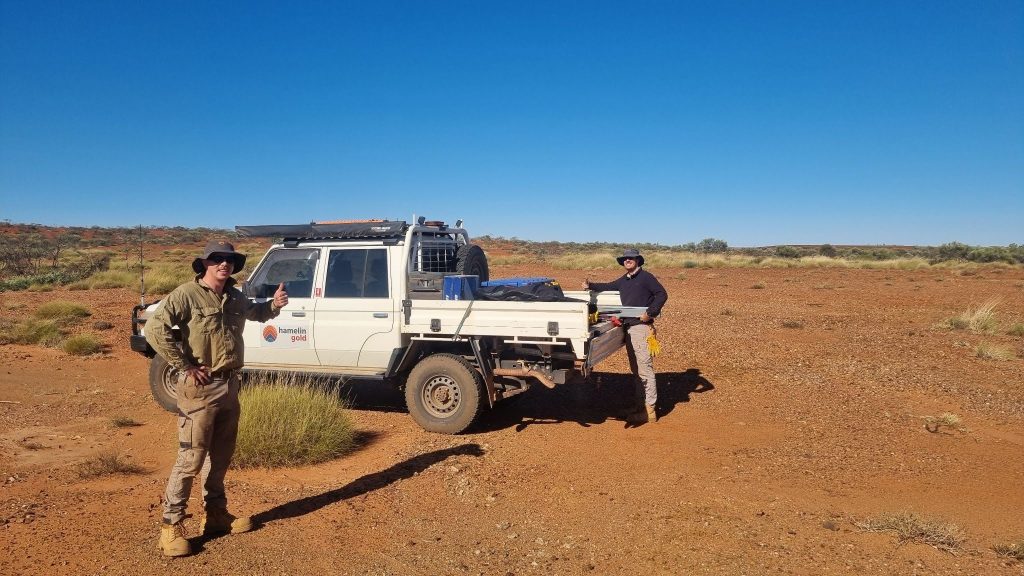
Old rocks meet modern technology
Hamelin is pairing old-school geology with newer technology to get a clearer look at what Day Dawn may be hiding.
One of the key tools is photon analysis, which sounds complicated but has a simple job: test bigger samples and give Hamelin a better read on where the gold is.
That matters at Day Dawn because the gold can be coarse and nuggety. In those systems, a small sample can miss the full picture.
“Photon analysis allows us to process much larger sample sizes,” Bewick says.
“In coarse gold systems, that can give you more representative results than conventional methods.”
In plain English, Hamelin wants fewer guesses and cleaner data.
The company is also using 3D modelling to build a clearer conceptual model before sending drills deeper. Instead of drilling blind, Hamelin can see where the veins may sit, how they might link together, and where the next holes should go.
“The 3D modelling helps us visualise the structures before we commit to deeper drilling,” Bewick says.
“It doesn’t replace field geology. It sharpens the interpretation.”
It is that mix of boots-on-ground geology and sharper modern tools that is helping explorers find what earlier generations may have missed.
Venus brings fresh attention near Cue
While Day Dawn is moving toward its next drilling phase, Hamelin’s Venus Project near Cue is also beginning to draw attention.
Situated around Lake Austin, about 15km southeast of Cue, Venus gives Hamelin a foothold in the resurgent Murchison goldfield, where fresh discoveries and renewed exploration are turning old gold country back into hunting ground.
Bewick sees the project as a different style of opportunity compared to Day Dawn, but one that remains highly prospective.
“The lake environment creates a completely different exploration challenge,” Bewick says.
“But it’s also an area that remains relatively underexplored using modern techniques.”
Venus presents a different challenge
If Day Dawn is about structural complexity and historical reinterpretation, Venus introduces a very different exploration puzzle centred on the vast dry salt lake environment of Lake Austin.
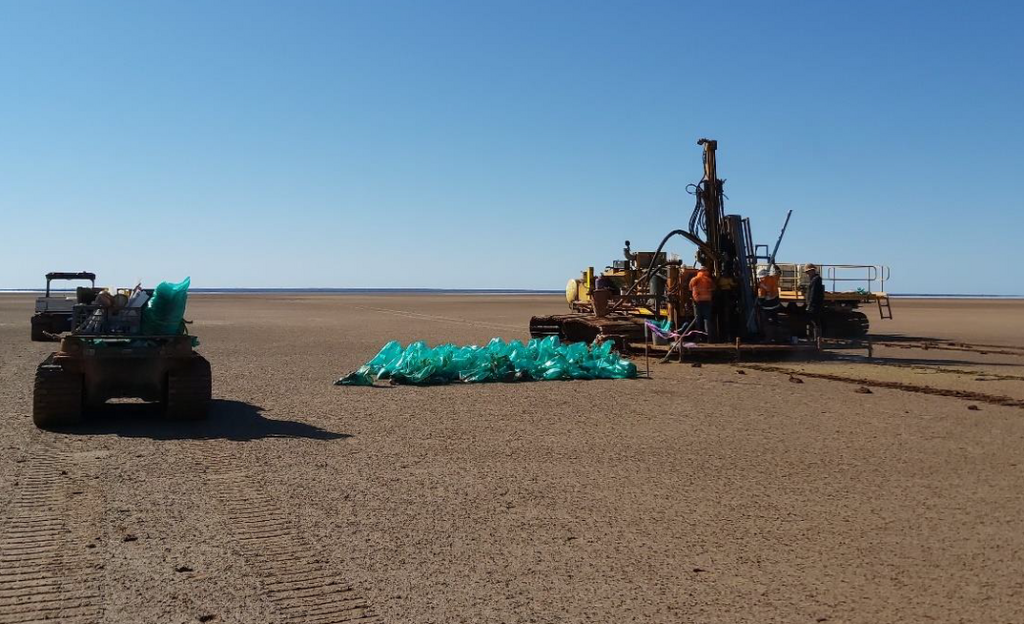
Exploration on salt lakes is not straightforward. Access can become difficult, drilling requires specialised equipment, and heritage clearances remain essential before work can begin.
Hamelin expects to use a specialised low-ground-pressure, “Avatar-style” lake rig designed to move across soft salt lake surfaces without the footprint of a standard drilling setup.
According to Bewick, that difficulty is part of the reason the opportunity remains interesting.
“That’s probably part of the reason some of these areas haven’t been properly tested historically,” he points out.
Cue is an early-stage proof-of-concept exercise, testing priority targets, refining the model, and working out where the system may open up.
Initial air core drilling is planned to test geological assumptions and help decide where more focused follow-up work should go.
“We want to understand the full picture first,” Bewick says.
“Then we can make more informed decisions about where to scale up exploration.”
A company built around conviction
Like many junior explorers, Hamelin Gold operates in a competitive capital environment where market attention can shift quickly.
Bewick believes the company benefits from a tightly held register and a growing base of supportive shareholders who understand the longer-term vision.
“Investors want to see a genuine geological thesis underpinning the work,” Bewick says.
“That’s what we’re trying to build here.”
Broker interest is increasing as drilling programs approach, while anticipation builds around the next round of exploration milestones. Still, Bewick remains most energised by the field itself.
Looking for the next chapter
For Hamelin, the opportunity is simple: old gold ground can still deliver surprises when explorers are willing to look at it differently.
At Day Dawn that means testing whether historical drilling missed the real shape of the Aurora system. At Venus, it means taking modern exploration into parts of the Murchison that have been difficult, underexplored, and easy to overlook.
Bewick keeps coming back to the same point: understand the geology properly before making bigger calls.
“You have to stay open-minded in exploration.”
“The moment you assume you already know the answer, you can miss something important.”
That philosophy runs through Hamelin’s broader approach.
The company is not rushing toward resource headlines or trying to force a discovery narrative before the geology supports it. Instead, the focus remains on steadily refining the model, improving the structural understanding, and using each drilling phase to sharpen the next.
For investors, that is where the intrigue sits.
Hamelin is operating in proven gold country, but it is not simply chasing what has already been found. It is asking whether fresh geological thinking and modern exploration tools can uncover something new.
The next phase of drilling will ultimately determine how far that thesis can go.
If Hamelin’s interpretation of Aurora proves correct, the company may have uncovered far more scale within the system than historical exploration ever recognised.
Write to Kate Ryan at Mining.com.au
Images: Hamelin Gold


